Revitalizing Provincial City Centers Through Urban Renewal... Government Launches KRW 36.5 Billion Pilot Project
- Input
- 2026-09-08 11:00:00
- Updated
- 2026-09-08 11:00:00
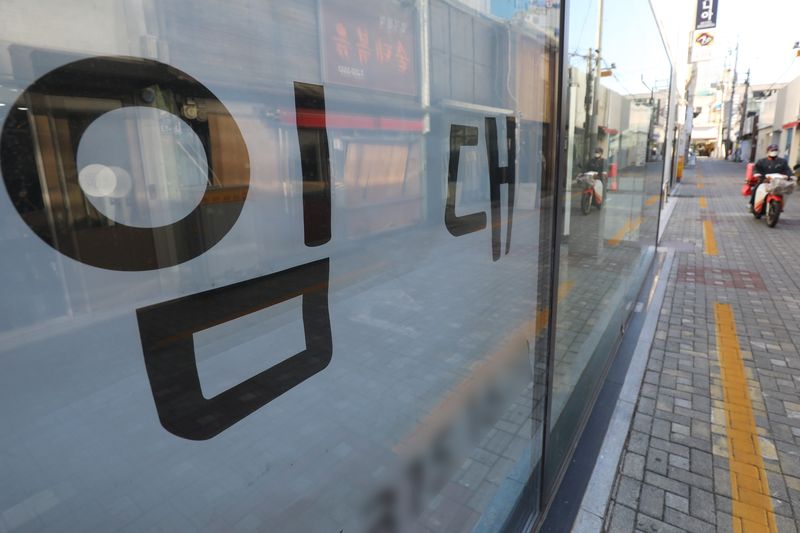
[Financial News] The government is launching a pilot project with up to KRW 36.5 billion in funding to fill the old city centers of provincial areas that are being emptied by population decline.
The Ministry of Land, Infrastructure and Transport (MOLIT), the Ministry of Culture, Sports and Tourism (MCST), and the Ministry of SMEs and Startups announced on the 8th that they would launch the Original City Center RE:CORE Project as a pilot program.
The project is a cross-ministerial urban-regeneration initiative designed to revive provincial cities struggling with population decline and weakening commercial districts. It aims to restore their core functions by renovating old city-center spaces.
According to MOLIT, provincial cities are losing residents to the Seoul metropolitan area for reasons such as employment, while their commercial districts are also deteriorating. The vacancy rate for small commercial properties rose from 6.7% in the first half of 2022 to 8.5% in the first half of this year, making vacant properties in provincial city centers another growing problem.
The government plans to focus on renovating vacant shops and underused buildings in provincial city centers and converting them into new spaces. These spaces will be offered to young people, cultural and artistic workers, and entrepreneurs to encourage them to move in and settle there. If they establish themselves in the area, the government also expects a secondary effect: revitalized commercial districts and stronger local economies.
Specifically, MOLIT will transform vacant shops in provincial city centers into spaces for new activities. It plans to purchase vacant shops, lease them for extended periods, or sign win-win agreements to create “city-center revitalization shops.” Under MOLIT’s supervision, the properties may be remodeled and used as studios, startup spaces, shared offices, or pop-up stores. The ministry also plans to provide rent support to ensure that occupants can operate there stably.
Underused facilities of a certain scale, including unused public facilities, motels, and clusters of vacant shops, will also be transformed. MOLIT plans to convert medium-sized and larger idle facilities into specialized hubs tailored to local characteristics. Depending on local conditions, they may become cultural and artistic centers, startup-support and incubation spaces, or venues for showcasing local brands, with links to nearby individual vacant shops.
The government plans to first select one or two locations in each of the four major and three special regions outside the Seoul metropolitan area and begin the pilot projects in earnest in 2027. It intends to gradually expand the program to two or three locations by 2029.
Eligible areas will be selected from downtown or sub-downtown districts with clusters of vacant shops that meet criteria such as significant population decline, industrial outflow indicated by a decrease in the number of businesses, and weakened residential conditions reflected in an increase in aging housing.
The government plans to provide up to KRW 36.5 billion in project funding per selected area. MOLIT has set the project budget at KRW 30 billion per location, including matching local funds, with up to KRW 21 billion in national funding provided over four years.
To prepare for the project, the government will hold a preliminary briefing for local governments on the 17th at the headquarters of Korea Railroad Corporation (KORAIL) in Daejeon. Once the budget is finalized, it will also begin the project-selection process in earnest.
Kim Yun-duk, Minister of Land, Infrastructure and Transport, said, “Old city centers are the central spaces of local communities where economies, daily life, and culture have accumulated and people have gathered over many years. Their decline can lead to the weakening of vitality across an entire region, going beyond a simple increase in vacancies.” He added, “We will connect the assets and potential of old city centers with new demand so that they can once again serve as a foundation for regional growth and change.”
[email protected] Jung Kyung-soo Reporter