Seven in 10 Households Leaving Long-Term Jeonse Housing Secure Their Own Homes... Oh Se-hoon: “A Virtuous Housing Ladder Cycle”
- Input
- 2026-09-08 10:30:00
- Updated
- 2026-09-08 10:30:00
According to Seoul Metropolitan Government on the 8th, SH Corporation surveyed 1,708 households that moved out of long-term jeonse housing between 2016 and 2021. The survey found that they had lived there for an average of 8 years and 4 months, and that 72.0% had secured and were living in their own homes after moving out. This was significantly higher than the 60% homeownership rate among all former public rental housing tenants. Before completing the maximum 20-year residency period, they voluntarily moved into their own homes or private jeonse housing after an average of seven to eight years, using reduced housing costs and savings as a foundation.
The average deposit for long-term jeonse housing is currently about 293 million won, or 41% of the average jeonse price for apartments in Seoul. Analysts found that residents were able to save regularly and prepare for housing subscriptions each month because their housing costs were lower than market rates. In fact, 69.9% of resident households were saving money, while 83.7% held housing subscription accounts.
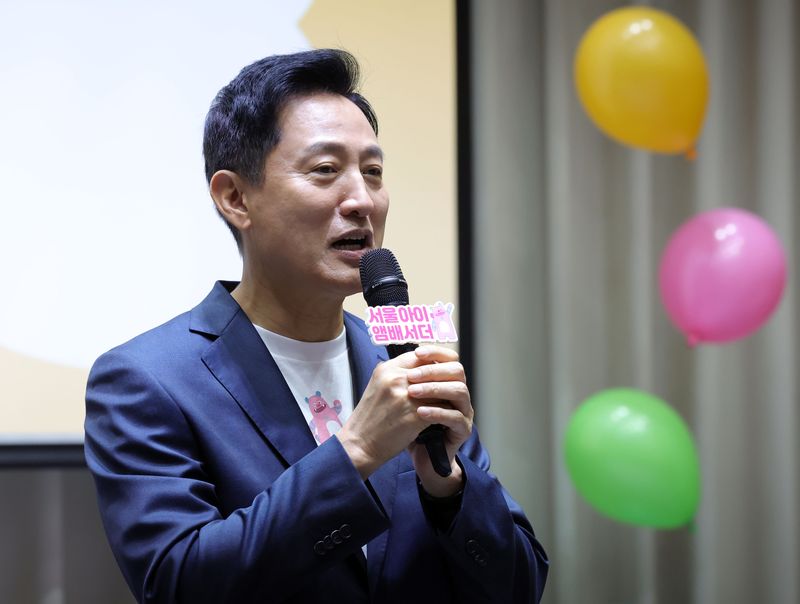
Oh Se-hoon held a discussion at Seoul Metropolitan Government that day with current and former residents of long-term jeonse housing under the theme “From Long-Term Jeonse Housing to My Own Home: Seoul’s Housing Ladder Hope Talk,” where he also shared the program’s achievements.
The event was attended by Mr. Kim, along with households that had succeeded in securing their own homes or were preparing to do so, households that had steadily built assets after moving in, and households preparing to move up the housing ladder through public or private housing sales.
Mr. Kim, a resident of long-term jeonse housing in Guro-gu, said that before moving in, he had lived on the fourth floor of a villa without an elevator, where there was not even enough space for a washing machine. After moving into long-term jeonse housing, he was able to raise his two daughters in stable conditions for 16 years and increase his savings. He eventually won a subscription for housing in the Third New Towns. Mr. Kim said, “Because I was able to live stably with an affordable deposit, I was able to save little by little and build a foundation for securing my own home.”
Starting next year, Seoul Metropolitan Government plans to re-supply approximately 9,300 units whose 20-year leases will expire sequentially for households such as young adults and newlyweds through the Mirinae House public housing program and long-term jeonse housing by 2031. The city plans to re-supply homes reaching their 20-year limit to other citizens without homes, without converting them to ownership, in line with the principle of circulating public rental housing.
Meanwhile, an awareness survey of 1,000 citizens conducted by Seoul Metropolitan Government showed broad support for the program’s purpose. Some 78.3% supported expanding the supply of long-term jeonse housing, while 73.9% supported the principle that tenants should move out after 20 years.
Mayor Oh Se-hoon emphasized, “Long-term jeonse housing is a stepping stone that eases housing concerns, helps people build assets, and enables them to move toward securing their own homes.” He added, “We will continue strengthening the virtuous cycle in which vacated homes become opportunities for other citizens without homes.”
[email protected] Min-kyung Jeon Reporter