'Semiconductors and Expansionary Fiscal Policy': South Korea's Economy Grows 0.6% in Q2; Gross National Income Up 3.1%
- Input
- 2026-09-08 08:43:59
- Updated
- 2026-09-08 08:43:59
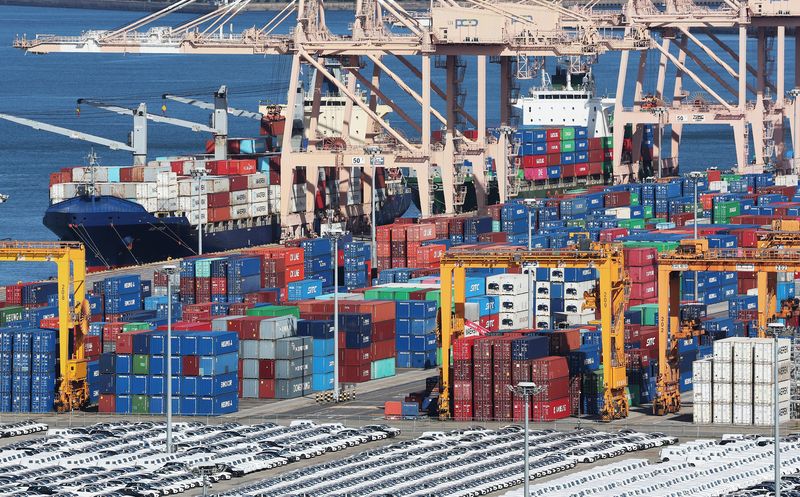
[Financial News] Driven by record-breaking semiconductor exports and the government's expansionary fiscal policy, real gross domestic product (GDP) grew by 0.6% in the second quarter of this year compared to the previous quarter. This matches the preliminary figure announced last July. Nominal GDP, which indicates the size of the national economy, increased by 9.2% compared to the previous quarter. This is the highest level in 47 years.
Real Gross National Income (GNI) reached a record high of 666.8 trillion won. This represents a 3.1% increase from the previous quarter (647 trillion won) and a 15.6% increase from the same period last year. Compared to the same period last year, this is the highest figure in 37 years and 6 months (150 quarters) since the fourth quarter of 1988 (15.7%).
Nominal GNI increased by 8.8%. If this growth trend continues, it is projected that a growth rate in the 3% range will be achieved this year.
On the 8th, the Bank of Korea (BOK) announced preliminary national income figures for the second quarter.
Real GDP increased by 0.6% compared to the previous quarter and by 3.7% compared to the same period last year. GDP rebounded sharply from -0.1% in the fourth quarter of last year to 1.8% in the first quarter of this year. The growth trend continued into the second quarter.
Nominal GDP increased by 9.2% from the previous quarter and 26.4% from the same period last year. This was the largest increase in 46 years and 9 months (187 quarters) since the third quarter of 1979 (27.7%).
The manufacturing sector increased by 1.4% compared to the previous quarter, led by computers and electronic and optical equipment. The service sector grew by 1.0%, led by wholesale and retail trade, accommodation and food services, finance and insurance, and information and communication.
However, the construction industry, which continues to face an economic downturn, fell by 1.9% as civil engineering construction declined.
Consumption increased due to strong exports and the effects of the government's supplementary budget execution.
Private consumption increased by 0.4% compared to the previous quarter, as consumption of goods such as home appliances and services such as food and accommodation increased.
Government consumption increased by 0.1%, led by spending on health insurance benefits.
Capital investment increased by 0.2% due to an increase in machinery, such as semiconductor manufacturing equipment. Investment in intellectual property products increased by 3.4%, led by research and development and software.
Exports increased by 1.3%, led by semiconductors, machinery, and equipment, while imports increased by 0.7%, led by automobiles, machinery, and equipment.
However, construction investment decreased by 0.1% as civil engineering construction declined.
In the second quarter, domestic demand and net exports (exports minus imports) each boosted the growth rate by 0.3 percentage points. Domestic demand, including private consumption (+0.2 percentage points) and investment in intellectual property products (+0.2 percentage points), contributed 0.3 percentage points to quarterly growth.
Nominal GDP, including inflation, also increased by 9.2% compared to the previous quarter. Employee compensation rose by 1.9%, led by manufacturing and other sectors. Total operating surplus increased by 18.5%, led by manufacturing, finance, and insurance.
The GDP deflator, which shows the level of inflation as the difference between nominal GDP and real GDP, rose 21.9% year-on-year. This is a sharp increase from 12.9% in the previous quarter.
Gross national income, which is the sum of the people's income from productive activities, increased significantly.
Nominal GNI increased by 8.8% compared to the previous quarter. It increased in tandem with the growth of nominal GDP (9.2%).
Real GNI, which represents the real purchasing power of the entire population, increased by 3.1% compared to the previous quarter. It rose by 15.6% compared to the same period last year, marking the highest level in 37 years and 6 months since the fourth quarter of 1988 (15.7%). This is attributed to a significant rise in the unit prices of export products, particularly semiconductors, and is more than five times the economic growth rate (0.6%).
A Bank of Korea (BOK) official explained, "As real trade gains increased from 38.7 trillion won to 58.5 trillion won due to improved terms of trade, they surpassed the real GDP growth rate of 0.6%."
The total savings rate stood at 45.6%, up 3.9 percentage points from the previous quarter. This is the highest level since statistics began being published in 1970.
[email protected] Normal bacteria Reporter