"No Matter How Much AIDC Supply Increases, It Cannot Keep Up with Demand" [Global AI Briefing]
- Input
- 2026-09-08 09:02:01
- Updated
- 2026-09-08 09:02:01
As AI computing capacity grows, AI adoption is expanding and new services are emerging, creating an “AI amplification cycle” in which computing demand itself increases severalfold.
Daniel Roberts, co-CEO of IREN Limited, an AI infrastructure provider and major partner of NVIDIA, said in a July 7 interview with the Financial Times (FT) that “it is difficult to imagine a situation in which the supply curve for AI computing exceeds demand.”
“The AI industry is unique. A new AIDC does not simply meet demand for AI computing; instead, it creates additional demand several times larger,” he explained.
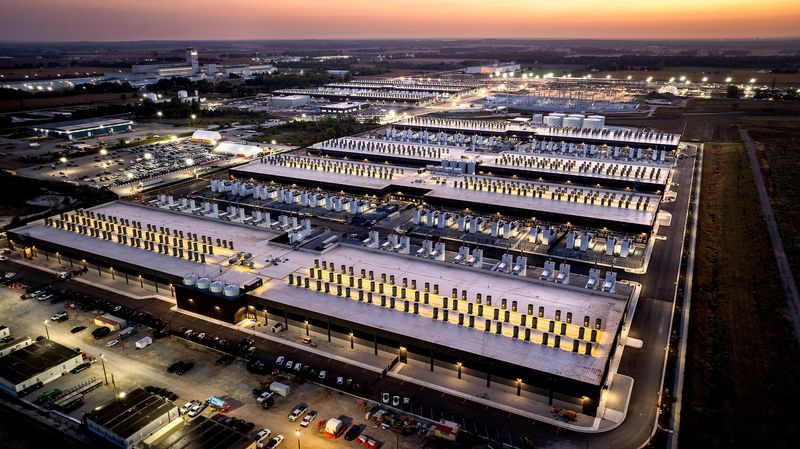
Although AIDC construction is expanding explosively worldwide, particularly in the United States, it is difficult to predict an oversupply that exceeds demand. Roberts’ argument is that adding infrastructure such as GPUs will not resolve the GPU shortage. Instead, cheaper and faster AI will generate even more AI usage, further increasing demand for GPUs.
Roberts said, “The growth of AI agents and faster processing times are factors driving greater consumption of computing resources.”
“Better AI requires more computing power to run, while cheaper AI is used more, not less,” he explained. He also argued that each advance in AI performance creates new use cases that did not exist just one year earlier.
Under the traditional industrial logic, technological advances raise productivity, increasing supply and lowering prices until supply and demand eventually reach equilibrium. In the AI industry, however, technological progress itself may cause demand to surge.
Roberts predicted that AI-computing supply cannot be expanded indefinitely. “AIDC builders are already running into physical, social, and political limits related to securing power,” he pointed out.
He was referring to growing opposition from local communities to data center construction across the United States. As concerns grow over the electricity and water consumed by data centers and their impact on local infrastructure, the pace at which AI-computing capacity can expand may itself be constrained.
Meanwhile, IREN Limited is a company that shifted its business from Bitcoin mining to AIDC operations and is a major neocloud partner of NVIDIA. In May, it signed a five-year AI cloud contract worth $3.4 billion (approximately 4.5696 trillion won) with NVIDIA. NVIDIA secured the right to supply up to 600,000 GPUs and invest up to $2.1 billion (approximately 2.8224 trillion won) in IREN shares. IREN plans to invest up to $30 billion (approximately 40 trillion won) in AI infrastructure over the next year.
[email protected] Lee Gu-soon Reporter