China Also Turns to Buying; Goldman Says, "Oil Prices Will Reach $120"
- Input
- 2026-09-08 04:48:02
- Updated
- 2026-09-08 04:48:02
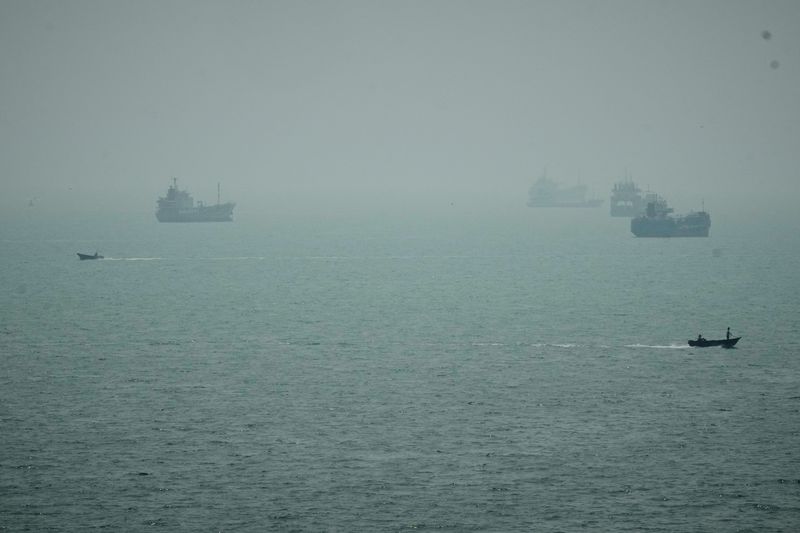
International oil prices surged on July 7 local time to nearly $100 per barrel. As the United States is being drawn into a quagmire of war while being led around by Iran, which is holding the Strait of Hormuz hostage, concerns over supply disruptions are pushing oil prices higher again.
Oil Prices Near the $100 Era Amid Rising Tensions
Brent crude, the international benchmark, for November delivery rose as high as $98.06 per barrel during the session. West Texas Intermediate crude (WTI), the U.S. benchmark, for October delivery also climbed to $93.29 per barrel.
Brent crude surpassed $98 during intraday trading for the first time since late July. Concerns over additional supply disruptions emerged after Iran’s Islamic Revolutionary Guard Corps (IRGC) fired missiles at two U.S. Navy warships, prompting the U.S. military to attack and disable three Iranian oil tankers in retaliation.
On July 7, Saudi Aramco oil facilities in Jizan, Saudi Arabia, were attacked.
Arne Roman Rasmussen, a senior analyst at Global Risk Management, told the Financial Times (FT), "This is a serious escalation." He noted that the market is now closely watching whether ship-to-ship oil transfers outside the Gulf will be disrupted. Such transfers, he said, have served as a lifeline for the oil market in recent months. If they are also blocked, supply disruptions in the market will worsen.
Goldman Sachs: "$120 per Barrel"
International oil prices surged to $126 per barrel in late April before falling to just above $70 in early July. Expectations that a ceasefire agreement between the United States and Iran would lead to a permanent peace deal helped drive the decline.
However, prices turned upward as both sides gradually raised tensions again. The increase accelerated as concerns grew that the market’s safety net had weakened after countries released large amounts of strategic petroleum reserves (SPR) to contain a price surge following the outbreak of war on February 28.
Dan Struyven, global co-head of commodities research at Goldman Sachs, warned in a Bloomberg TV interview on July 7 that Brent crude could rise to $120 per barrel "if attacks on vessels expand and intensify." He added that recent events suggested this forecast was increasingly likely to materialize.
Commodity Funds and China Also Turn to Buying After Waiting on the Sidelines
Consulting firm Energy Aspects said commodity funds that had bet on falling oil prices or stayed on the sidelines after the war in Iran have now "turned bullish." It said, "This is mainly driven by the view that global oil inventories are approaching a critical threshold." The firm added that inventories outside China had fallen by more than 400 million barrels since the war began, while the amount of oil aboard seaborne tankers had also dropped to "the lowest level in years."
According to Jun Go, an analyst at Sparta Commodities, China has also recently reentered the market. When oil prices were rising early in the war, Chinese buyers cut their purchases by one-third and instead released oil from their reserves. This helped limit the price increase. Their return to buying, however, means upward pressure on oil prices is now more intense than it was at the start of the war.
Go said Chinese buyers had turned to Iraqi and Saudi oil despite the high prices because they could no longer manage with Russian and Iranian oil alone.
An executive at a major oil-trading firm said oil prices would "continue their upward trend," adding that "the only question is whether they rise gradually or rapidly." He explained that buyers had held back in anticipation of an end to the war, but now believed the market would find balance only when "one side has to break." In other words, either crude prices or refined-product prices must rise sharply enough, or demand must fall enough, to restore balance with supply.
Diesel Twice as Expensive as Crude for the First Time Ever
Prices for some refined petroleum products have already reached record highs. U.S. wholesale diesel prices have been trading more than $100 per barrel above crude prices since last month, while European wholesale prices have done so since last week.
Martin Rats of Morgan Stanley said, "In terms of refined products, we have already reached the critical point." He added, "That is exactly what the record-high diesel price shows. Diesel is trading at twice the price of crude. That has never happened before."
The main reason refined-product prices are surging is that the Strait of Hormuz has been blocked. Refined products produced in the area have become difficult to transport, while some refining facilities have suffered operational disruptions because of repeated attacks.
Making matters worse, Ukraine is attacking Russian refining facilities and tightening supplies to international markets. Ukraine said it attacked refining facilities in Russia’s Perm region and Tatarstan on the night of July 6. A series of drone attacks has eliminated more than 30% of Russia’s refining capacity.
"The Strait of Hormuz Will Never Return to Normal"
Oil brokers who initially expected a short war are now preparing for a prolonged conflict. They have begun to realize that the war in Iran could last far longer than previously expected.
An executive at a brokerage firm said the base case is now that the Strait of Hormuz "will never return to normal." The era when 20 million barrels per day were supplied through the strait, as before the war, is over, he said.
Spencer Dale, a professor at the London School of Economics (LSE) and a former chief economist at the Bank of England (BoE) and British Petroleum, explained that oil prices had remained lower than expected because, contrary to concerns, crude continued to flow steadily through the Strait of Hormuz and reserve oil was also consistently supplied to the market.
Dale, however, said, "You cannot draw down reserves indefinitely." He added, "If you had told 100 oil experts six months ago, 'This is what is going to happen,' not one of them would have said oil prices would still be below $100." His point was that current conditions are abnormal and that an era of $100-per-barrel oil is inevitable.
[email protected] Song Kyung-jae Reporter