Yoo Hae-jin Also Saw 'Yakiniku Dragon' in Japan... 'Sumire Beauty Salon,' the Final Installment of the Trilogy, Makes Its Korean Premiere: "Tragedy and Comedy May Be One"
- Input
- 2026-09-08 01:05:00
- Updated
- 2026-09-08 01:05:00
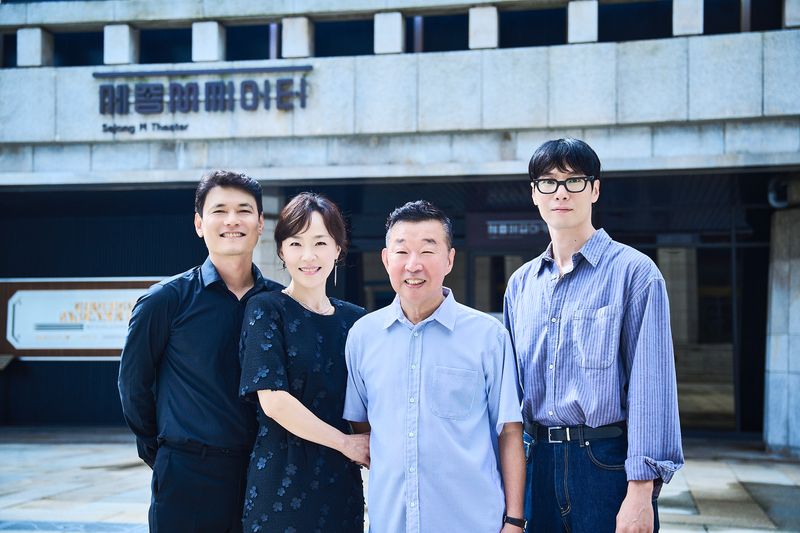
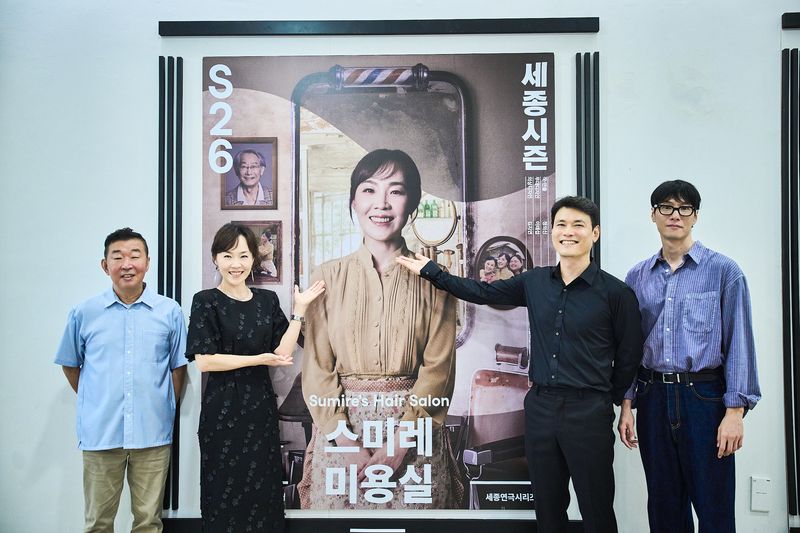
[Financial News] Actor Yoo Hae-jin also watched the play 'Yakiniku Dragon' in Japan. According to Ahn Ho-sang, president of Sejong Center, who happened to attend the performance with him, Yoo Hae-jin also showed interest in the Korean premiere of 'Sumire Beauty Salon' by playwright and director Chong Wishing. His possible participation was even discussed, but it did not materialize because the schedule overlapped with a film project.
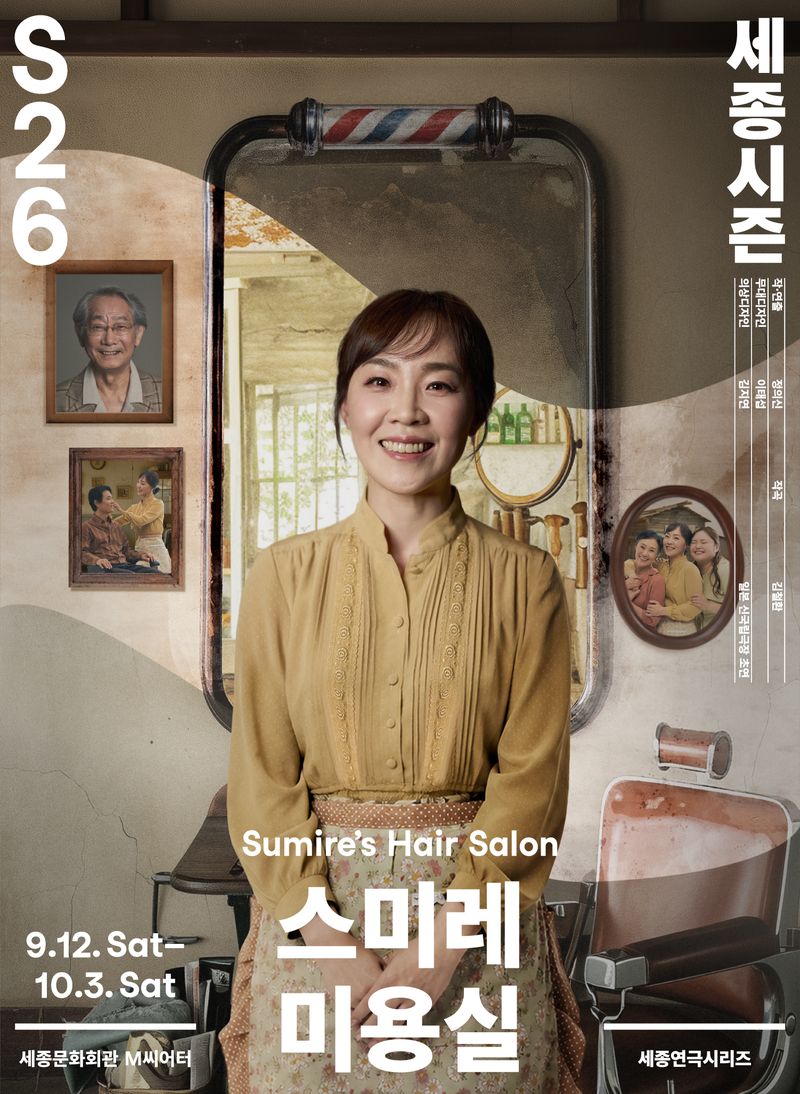
'Sumire Beauty Salon' is the final work in the 'Zainichi Korean Trilogy,' following 'For Example, Like Flowers Blooming in the Fields' and 'Yakiniku Dragon.' Set in the Arirang Pass coal-mining village in Kyushu, Japan, in 1965, it portrays the life of a family affected by a coal-mine explosion. The play was performed twice at the New National Theatre, Tokyo, and will have its Korean premiere at Sejong M Theater in Seoul from the 12th.
Ahn Ho-sang and director Chong Wishing’s 20-year relationship... The completion of the 'Zainichi Korean Trilogy'
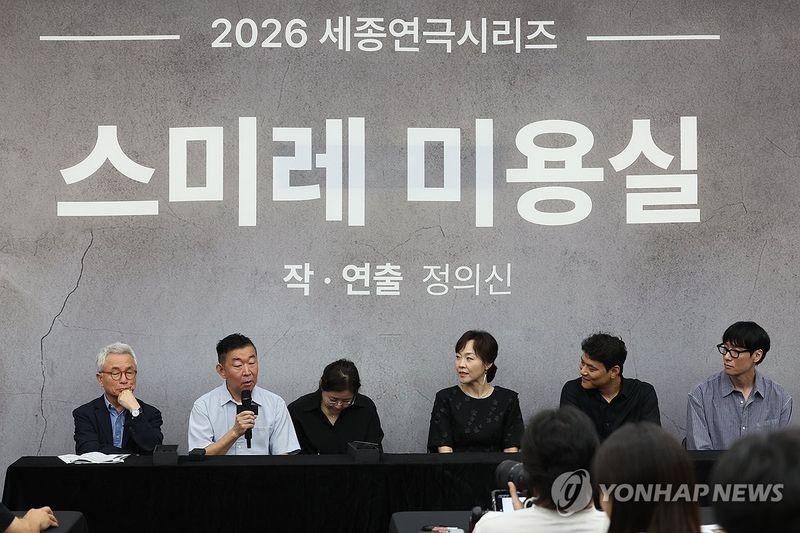
The production began with Chong Wishing’s strong proposal. At a press conference held on the 2nd at Sejong Center in Jongno District, Seoul, Ahn Ho-sang said, "Director Chong Wishing strongly proposed this work. He has created works that tell universal stories through the lives of Koreans in Japan and allow audiences to feel the power of theater itself every time they watch them. We judged that the work could still connect deeply with audiences today."
The two men’s relationship dates back more than 20 years. Ahn Ho-sang first learned about the writer Chong Wishing after seeing 'The 20th-Century Boys and Girls Songbook' in Daehangno in 2005. Later, while working at the Seoul Arts Center, he actively recommended Chong Wishing as he promoted exchanges between Japan’s New National Theatre and Korea, leading to the joint production of 'Yakiniku Dragon' in 2008. While working at the National Theater of Korea, he also collaborated with Chong Wishing on works including 'The Caucasian Chalk Circle,' adapted for changgeuk.
Ahn Ho-sang recalled, "There was even a time when guidelines were issued telling us not to stage joint productions because of disputes over Korean and Japanese textbooks. Korean-Japanese relations have changed so much that that period now feels like a distant memory." He added, "As second-generation Koreans in Japan are still alive and active in Japanese society, reconsidering their lives remains especially meaningful today."
'Yakiniku Dragon' premiered as a Korea-Japan co-production in 2008, returned to the stage in 2011, and was revived last year after a 14-year hiatus. Set in a Korean community in the Kansai region ahead of the 1970 Osaka Expo, it depicts the underside of development and economic growth through the life of a family running an offal restaurant in a neighborhood near an airport slated for demolition. The family’s life—eating, drinking and arguing while enduring poverty and discrimination—was portrayed with laughter and tears, earning acclaim in both Korea and Japan.
This time, the story travels back to a coal-mining village in Kyushu in the 1960s. Chong Wishing explained, "As I followed where the people in 'Yakiniku Dragon' had come from, I encountered the coal mines of Kyushu."
He said, "After the Kyushu coal mines closed, the workers moved to Osaka, relying on relatives or friends. When I learned that poor Japanese and Korean workers in Japan had supported the bottom of Japan’s economy, it was as if my eyes had suddenly opened. I thought this had to be documented and preserved as a play."
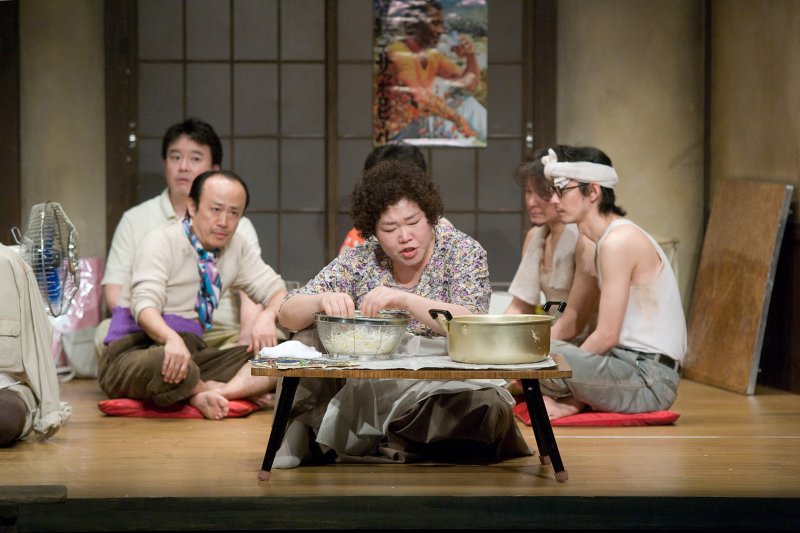
The protagonist, Sumi, runs a barbershop while dreaming of one day opening 'Sumire Beauty Salon' under her own name. Beside her are a husband who chose Japanese nationality to survive, a younger brother-in-law who cannot return to the mine because of a leg injury, and a father who refuses to give up his Korean nationality.
One day, a coal-mine explosion upends their lives. Chong Wishing pointed out that, as the Japanese government pursued a 'scrap and build' policy to restructure the coal industry and shift toward oil, workers were pushed out of their workplaces while companies cut labor and safety costs.
He said, "It was not only a problem for Koreans in Japan; poor Japanese workers were abandoned as well. If we dismiss it as merely a coal-mine accident from 60 years ago, the story ends there. But the structure in which safety is neglected and accidents occur in an effort to reduce costs and staffing has not changed even today."
"Tragedy and comedy may be one"... Bringing the nameless lives of a mining village to the stage
Although the play deals with the particular history of Koreans in Japan, what Chong Wishing discovered in the work was a story of families and immigrants that transcends nationality.
He said, "When I wrote 'Yakiniku Dragon,' I thought it was a small story about a Korean family in Japan based on my own experience. But after taking the work abroad, I realized that it was also a story about immigrants and modern families."
At a staged reading in Australia, a Vietnamese member of the staff said, "This is our story." To someone who had moved to Australia after the Vietnam War, the history of a Korean family in Japan appeared to be his or her own story. Audiences in New York also accepted the work as a story about their lives today.
Chong Wishing said, "In the end, I think I wanted to write about people who had no choice but to leave the places where they had lived." He added, "Of course, it is also the story of my family."
Although he deals with tragic history, Chong Wishing’s stage is filled with laughter and vitality. He said that he approaches each work seriously, but deliberately adds humor whenever writing becomes suffocating.
"Comedy and tragedy are very close to each other, and I think they may be one. Something tragic for the person involved may look like comedy to someone else, and the reverse can also be true. That is one aspect of being human. Basically, I like making other people laugh."
[email protected] Shin Jin-a Reporter