[Editorial] Stricter Delisting Standards Needed, but Sophisticated Safeguards Must Be Put in Place
- Input
- 2026-09-07 18:29:04
- Updated
- 2026-09-07 18:29:04
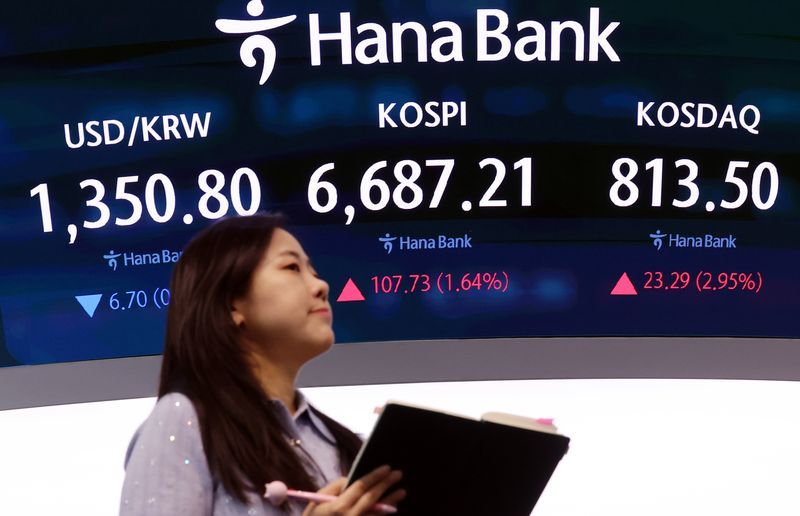
According to data that Democratic Party of Korea lawmaker Park Min-gyu obtained from the KRX, 238 companies as of the 25th of last month would be subject to the proposed improvements to the delisting system because their current share prices are below 1,000 won or their market capitalizations fall short of the listing-maintenance requirements—300 billion won on the Korea Exchange Main Board and 200 billion won on the KOSDAQ market. Among them, companies whose share prices remain below 1,000 won for 30 consecutive trading days or whose market capitalizations fall below the thresholds will be designated for administrative management. If they fail to meet the requirements for at least 45 trading days within the following 90 trading days, they will enter delisting proceedings.
More than 50 issues have been designated for administrative management because they failed to meet the share-price or market-capitalization requirements since the revised listing rules took effect on July 1 through the 4th of this month. Starting in the second half of next year, the listing-maintenance requirements will rise to 50 billion won on the Korea Exchange Main Board and 30 billion won on the KOSDAQ market. Applying these standards would nearly double the number of companies at risk to 471.
The problem is that the standards are too uniform. With the KOSDAQ index having fallen sharply from its peak, there are growing concerns about the consequences of determining whether companies should be removed from the market solely on the basis of short-term price indicators such as share price and market capitalization. Companies with growth potential or technological capabilities that received special listing treatment, as well as sound companies experiencing temporary funding difficulties, could be swept out along with them.
The damage to minority shareholders would also be enormous. Across the Korea Exchange Main Board and the KOSDAQ market, 3.127 million minority shareholders hold shares in the affected issues, with an estimated value approaching 8 trillion won. One investor may hold several issues, and delisting does not automatically mean a total loss, but substantial damage will be unavoidable.
Financial authorities have also decided to delay the next increase in the market-capitalization threshold by six months, from January next year as originally planned, in consideration of the shock to the market. Companies designated for administrative management because they fell short of the market-capitalization requirement after July 1 will be allowed to transfer to KONEX without liquidation trading, while retaining their existing prices, if they meet certain financial requirements and wish to transfer.
However, market observers say the measure amounts to little more than simply buying time. The policy direction of decisively removing financially weak companies should be maintained, but sophisticated safeguards are needed to comprehensively assess financial soundness, technological capabilities, growth potential, and whether share prices were deliberately manipulated.
Marginal companies and their controlling shareholders must prove for themselves that they can meet the listing-maintenance requirements through efforts to support their share prices, raise capital, and make substantive management improvements. They must first abandon attempts to survive through expedients and loopholes. Authorities and companies must establish investor-protection measures at every stage of the delisting process, including sufficient information disclosure and opportunities for liquidation trading, so that a recurring tragedy for retail investors involving losses of trillions of won is not repeated.