Research Misconduct to Bring 20-Year Restriction on Research Participation, Effectively Removing Violators from the Field
- Input
- 2026-09-08 17:13:44
- Updated
- 2026-09-08 17:13:44
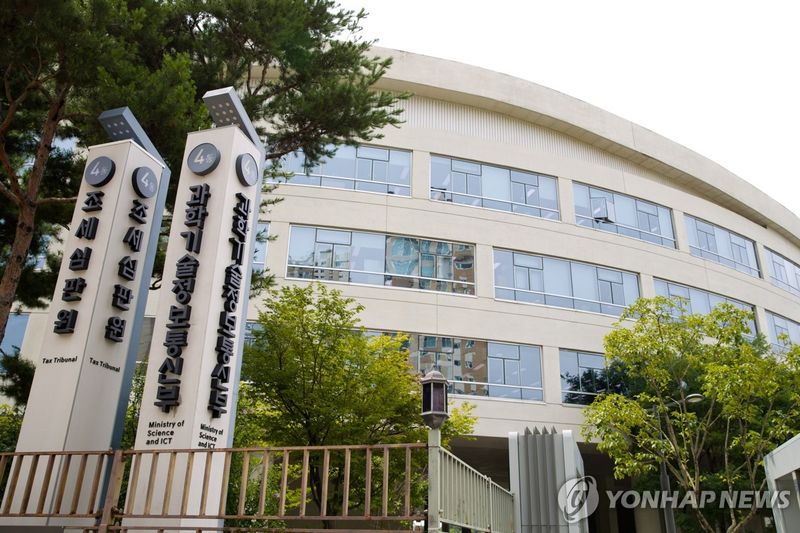
[Financial News] In cases of research misconduct, the restriction period on research participation will be extended to 20 years, effectively removing violators from the research field.
The Ministry of Science and ICT announced that the promulgation bill for partial amendments to the NATIONAL RESEARCH AND DEVELOPMENT INNOVATION ACT, which passed the plenary session of the National Assembly of the Republic of Korea on August 20, was deliberated and approved at Tuesday’s State Council of South Korea meeting on the 8th. The amended law will take effect six months after its promulgation and is scheduled to come into force next March.
The amendments are intended to build a national R&D ecosystem based on trust and accountability by enhancing researchers’ autonomy and willingness to take on challenges while strengthening accountability commensurate with research misconduct.
The key changes include substantially raising the maximum restrictions on participation in national R&D activities and the ceiling on punitive surcharges for research misconduct. They also establish a legal basis for reporting misconduct involving suspected crimes to investigative authorities or requesting investigations.
The maximum period for restricting participation in national R&D activities due to research misconduct and related violations will be extended from the current 10 years to 20 years. The ceiling on punitive surcharges will also be raised from five times to 30 times the government-funded R&D expenses already paid.
As a result, researchers who maliciously or repeatedly misuse research funds will be barred from participating in national R&D activities for up to 20 years, effectively removing them from the research field. In addition, punitive surcharges of up to 30 times the government-funded R&D expenses may be imposed. The government plans to eradicate misconduct in the research field by applying severe sanctions to serious violations, including embezzling student labor costs and misappropriating research funds for personal use.
The amendments also clarify the legal basis for the heads of central administrative agencies to report suspected criminal misconduct to the relevant investigative authorities or request an investigation when they determine that there are reasonable grounds to believe a research violation involves a crime. This will enable a swift response to serious research misconduct involving suspected criminal activity.
At the same time, follow-up support for outstanding R&D projects will be expanded, and the criteria for sanctions will be revised to assess the integrity of the research process rather than focusing solely on research results. The changes are designed to encourage researchers to pursue ambitious projects.
The evaluation criteria will be revised so that the “innovativeness of research objectives” is assessed as a key factor from the project-selection stage. This will allow the government to actively support researchers who set ambitious goals instead of favoring safety-oriented projects. In phased and final evaluations, the system will shift from results-based grading, following up on the abolition of output-centered grading, to qualitative assessments focused on “the excellence of achievements” and “the process of challenging research.” The revised system will identify outstanding projects and provide incentives.
In particular, the amendments establish a basis for continuing not only “outstanding projects” with significant academic or technological impact, but also “outstanding challenge projects” that may not have achieved their innovative goals but generated exceptional knowledge through trial and error.
Park In-gyu, head of the Science, Technology and Innovation Office at the Ministry of Science and ICT, said, “This amendment follows measures introduced in June to expand researchers’ autonomy, including the creation of a research innovation fund, the conversion of indirect costs to a negative-list system, and the simplification of R&D forms. It is intended to impose accountability commensurate with serious misconduct. We will further expand research autonomy so that researchers can take on challenges without fearing failure, provide more bold support for sincere efforts and outstanding research, and establish an ‘innovative research ecosystem based on trust and accountability.’”
[email protected] Yeon Ji-an Reporter