BAI: Illegal Subcontracting Caused National Information Resources Service Fire; Oversight Also Inadequate
- Input
- 2026-09-07 16:17:33
- Updated
- 2026-09-07 16:17:33
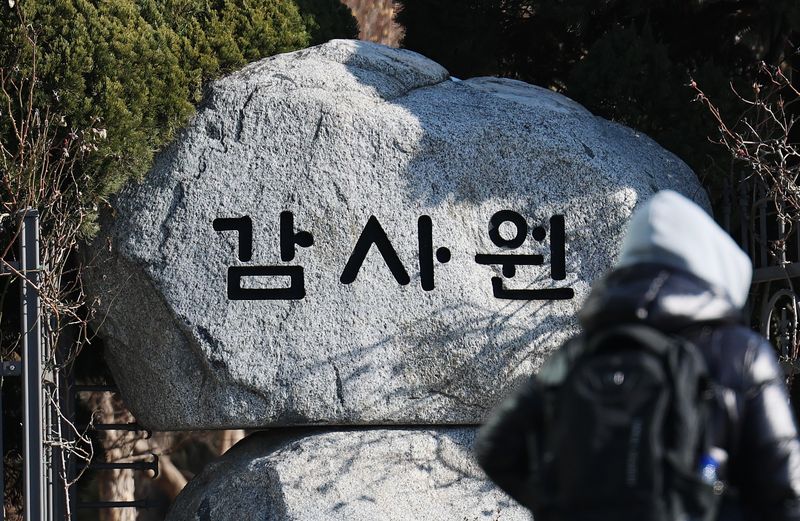
[Financial News] The fire that broke out at the National Information Resources Service last September was caused by an unregistered electrical construction company illegally subcontracting battery relocation work, according to the BAI’s audit findings.
On the 7th, the BAI released its audit findings on “The Circumstances of the National Information Resources Service Fire and the State of Response and Recovery.”
The National Information Resources Service recognized the fire risks posed by lithium batteries in computer rooms after the 2022 Pangyo data center fire and decided to move the batteries to a basement level. Accordingly, it signed a 3.04 billion won contract last June for electrical work to relocate the batteries with a joint venture consisting of Companies A and B.
Under the State Contract Act and the ELECTRICAL CONSTRUCTION BUSINESS ACT, members of a joint venture must participate in contract performance according to their investment shares. In principle, electrical construction may not be subcontracted, and companies not registered for electrical construction may not perform such work.
However, in July last year, Company A subcontracted all of the work corresponding to its share to Company C for 1.03 billion won. Company B was also found to have entrusted all of its share of the work to Company A for 910 million won that same month.
Company C further subcontracted the UPS and battery transport work, as well as the dismantling, reinstallation and test operation of battery racks, to two companies that were not registered for electrical construction. The project therefore proceeded through an illegal subcontracting and re-subcontracting structure that differed from the contract.
The National Information Resources Service also failed in its management and oversight. Although an employee of Company B did not attend any of the 10 progress meetings held from July to September last year, providing sufficient indication that Company B was not actually participating in the work, the Service did not verify whether the contracted companies were carrying out the project.
In August last year, the Service even received a report from Company A’s site manager that outside personnel were scheduled to be brought in. However, it did not check the personnel’s affiliations or whether they were registered for electrical construction.
The BAI also said that the Service failed to require the construction companies to prepare work plans or have the supervising company review and confirm them. In addition, when the contractor reported that it had recruited another outside company because support from the manufacturer would be difficult, the Service accepted the arrangement without checking the company’s expertise or whether it had cooperation or technical partnership arrangements with the manufacturer.
As a result, unregistered electrical construction companies carried out the battery relocation and installation work without the manufacturer’s assistance. Dismantling proceeded without fully cutting power to the battery racks, and the cable terminals were not properly insulated. The BAI presumed that the fire began when sparks occurred between battery racks 4 and 5.
The BAI also pointed out that the Service failed to follow its fire-response manual. It did not take initial measures such as cutting power to the computer room or delivering waterproof sheets before firefighters arrived. Instead, it asked firefighters to refrain from using water to extinguish the fire.
In addition, when the Service established its 2025 manual, it failed to develop a strategy and plan that included recovery target times by level. Consequently, when restoring systems after the fire, it focused first on restoring the computer rooms that had suffered the greatest damage, without considering recovery priorities or target restoration times.
The BAI said recovery was delayed as a result. Of the 58 systems requiring the highest recovery priority, 12 took more than three weeks to restore, including 10 that took more than four weeks.
A fire broke out at the National Information Resources Service’s Daejeon Center on September 26 last year, disrupting public administrative services and causing the loss of government work data, which inconvenienced the public and disrupted government operations. The Service estimated direct damage, including building and facility losses, and indirect damage, including the cost of removing remaining materials, at 59.7 billion won based on market value and 107 billion won based on replacement cost. However, an analysis commissioned by the BAI from The Korean Association for Public Administration estimated the total damage at approximately 351.1 billion won.
[email protected] Choi Jong-geun Reporter