Normalization of the Strait of Hormuz Appears Increasingly Distant as Uncertainty Persists
- Input
- 2026-09-08 06:59:00
- Updated
- 2026-09-08 06:59:00
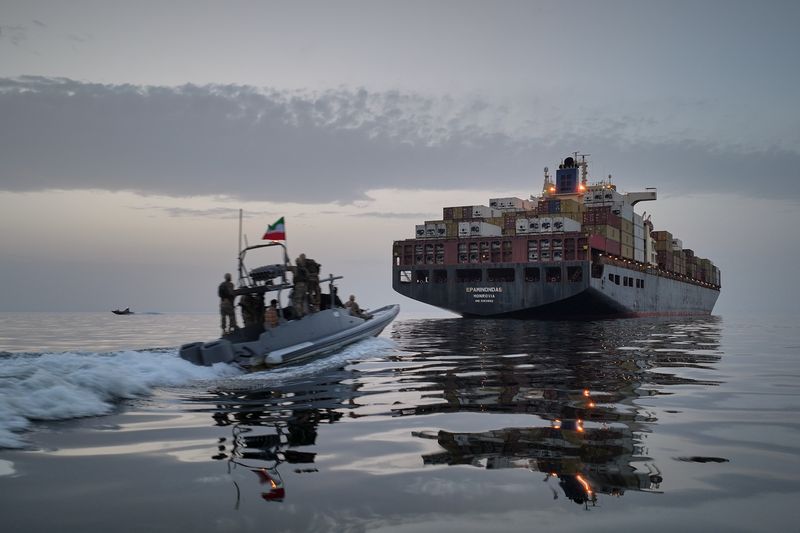
[Financial News] Expectations for the normalization of Middle East routes among South Korean shipping companies are fading again as Iran signals plans to expand its vessel-control measures beyond the Strait of Hormuz. The shipping industry is watching closely not so much because of freight costs, but because of the uncertainty over when vessels will be able to return.
According to the shipping industry on the 8th, South Korean carriers are finding it increasingly difficult to determine when operations can resume as Iran tightens its control over the strait. Industry officials explained that the possibility of additional restrictions is adding to the burden, with traffic through the Strait of Hormuz already sharply reduced.
Mohsen Rezaei, secretary of the Supreme National Security Council of Iran, said in a state television broadcast the previous day that Iran plans to establish a new maritime control zone near the Strait of Hormuz within the next few days or weeks. A plan has also been discussed to identify vessels entering the zone to pass through the Strait of Hormuz and place them under Iranian sanctions. Iran has specifically signaled that it will expand the scope of its vessel controls beyond the strait.
According to vessel-tracking company Kpler, the average number of raw-material carriers passing through the Strait of Hormuz over the past 10 days fell to 10 per day, the lowest level since May. On the 5th, only two vessels passed through. Given that the Strait of Hormuz was a key passage for approximately 20% of the world’s crude oil supply before the conflict, the disruption is effectively continuing at a standstill.
South Korean shipping companies are also facing direct restrictions on their Middle East routes. A shipping-industry official said, "Unlike the Red Sea, the Strait of Hormuz cannot be bypassed through an alternative route, so if passage through the strait becomes difficult, vessels cannot enter the Persian Gulf. The issue is no longer whether freight rates will rise or fall; it is difficult even to determine whether we can go there at all."
If the Strait of Hormuz crisis continues, indirect pressure from higher oil prices could also intensify. After military clashes between the United States and Iran resumed on the 30th of last month, Brent crude rose 2.7% in a single day to close at $90.49 per barrel. The upward trend continued, with prices reaching $97.37 per barrel on the 7th. Brent crude rose approximately 8% over the past week. An industry official said, "The Strait of Hormuz crisis is not merely a question of whether we can operate Middle East routes; it is also affecting oil prices. When oil prices rise, vessels operating routes to the Americas or Europe that do not pass through the Strait of Hormuz inevitably face higher fuel costs."
In the short term, however, higher freight rates and changes in vessel-capacity supply and demand could have a positive effect on carriers’ earnings. The official explained, "In the short term, demand is currently increasing and higher freight rates are showing up in our results, so it is difficult to say that the situation is entirely negative. If insurance premiums and other costs rise, we are minimizing losses by negotiating with shippers and adding fuel surcharges."
South Korean shipping companies are also seeking to protect their earnings by redeploying vessels assigned to Middle East routes to other routes. Although revenue losses that could have been generated on Middle East routes are unavoidable, the strategy is to minimize losses by deploying those vessels on routes to the Americas, India, Europe and elsewhere. However, industry voices say that the greatest burden for South Korean companies is not the profit-and-loss impact of a closure of the Strait of Hormuz, but the uncertainty over when normal operations will be possible again.
[email protected] Jung Won-il Reporter