A Home in Dangsan-dong Bought with a 300 Million Won Loan, 1.6 Million Won in Monthly Interest... Highly Leveraged Buyers in Their 30s Sigh
- Input
- 2026-09-08 06:00:00
- Updated
- 2026-09-08 06:00:00
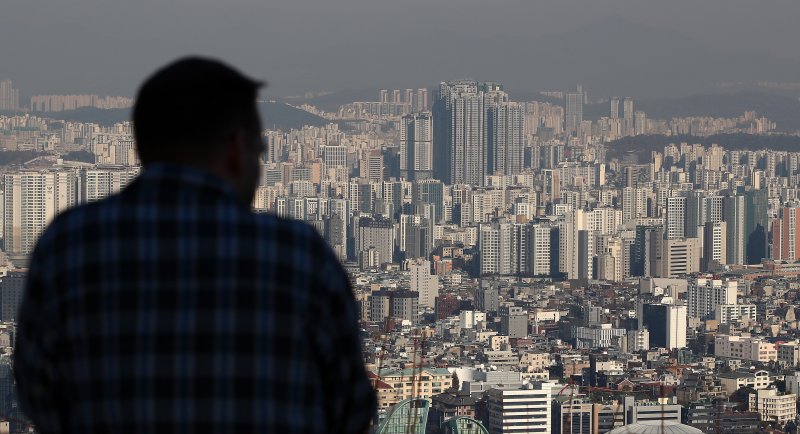
As the Bank of Korea has repeatedly raised its base rate, owner-occupiers who purchased homes with loans are struggling. Those who chose variable-rate loans instead of fixed-rate products have taken on additional interest burdens ranging from tens of thousands to hundreds of thousands of won per month.
Some owner-occupiers who can no longer afford the interest are considering whether to put their homes on the market. Market analysts say higher-rate pressures could lead to a transaction freeze, but that next year’s potential increase in liquidity must also be taken into account.
According to the real estate industry on the 7th, the Bank of Korea had kept its base rate at 2.5% since July last year. However, it raised the rate by 0.25 percentage points in July and again last month, bringing it to 3.0%.
The burden is particularly heavy for highly leveraged owner-occupiers who chose variable-rate loans. A’s rate rose from 4% to 5.22%. This was driven by a 1.22-percentage-point increase in the one-year financial bond yield, resulting in more than 300,000 won in additional interest.
A is not the only owner-occupier complaining about the interest burden. B, who moved into Mokdong Complex 12 after taking out an 800 million won loan, said the monthly interest payment alone had risen by nearly 1 million won. Mortgage rates have recently climbed from 5% to as high as 7%. The interest burden on genuine homebuyers has increased accordingly.
Posts are also appearing on real estate internet communities from people wondering whether to cut living expenses or sell their homes because of rising mortgage rates. As further rate hikes are expected, concerns are growing that demand from owner-occupiers could plunge. When rates rise, the monthly principal-and-interest payment owed to banks increases. With supply already somewhat constrained, a decline in demand as well could cause the market to freeze for the time being.
Kim Deok-rye, a senior researcher at the Housing Industry Research Institute, explained, “If interest rates rise, they will inevitably have an impact by weakening demand. Only those holding substantial liquid assets will continue to demand real estate, which will lead to polarization.”
However, experts are cautious about predicting a decline in home prices. There are many variables, including liquidity and housing supply. They say it will take at least a year to determine whether rate increases will lead to a flood of court auctions or public sales.
Seo Jin-hyung, a professor at Kwangwoon University, predicted, “Even if interest rates rise because of expanded liquidity, real estate prices could still increase.” Ko Jong-wan, head of the Korea Asset Management Research Institute, said, “The current rise in home prices is not due to low interest rates. Liquidity could flow into real estate as liquidity expands, so the situation must be examined comprehensively.”
[email protected] Jung Kyung-soo Reporter