China's Semiconductor Equipment Self-Reliance Exceeds 35%... Threat to South Korea's Semiconductor Market Intensifies
- Input
- 2026-09-07 15:21:40
- Updated
- 2026-09-07 15:21:40
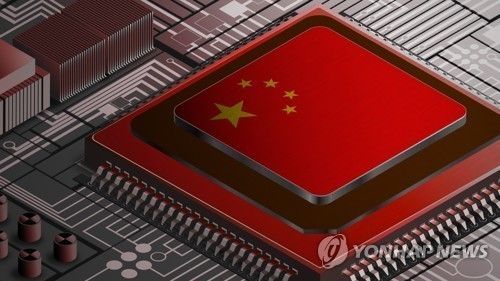
[Financial News] Despite intensifying U.S. semiconductor export controls on China, it appears that China is increasing its semiconductor self-reliance by building the world's largest domestic market for semiconductor equipment. It is pointed out that as China secures technological capabilities in core processes such as etching, deposition, and cleaning, its pursuit is intensifying beyond memory and foundry to encompass the entire equipment ecosystem.
According to Deloitte China’s ‘2026 China Semiconductor Industry White Paper’ and other sources on the 7th, the localization rate of Chinese-made semiconductor equipment in the Chinese semiconductor equipment market was analyzed to be 35% in 2025. The size of China's semiconductor equipment market is $55.9 billion, forming the world’s largest single market for the sixth consecutive year.
Analysis suggests that the successive verification of key equipment, such as etching, deposition, and cleaning tools, at wafer factories in China is threatening the market position of South Korean-made equipment.
China's rapid pursuit is also confirmed in other studies. According to the "Mainland China Semiconductor Equipment Industry 2026" report released this year by the global market research firm Yole Group, the localization rate of semiconductor equipment in China rose from 8% in 2021 to 23.2% in 2025. This represents a 15.2 percentage point increase in just four years. Yole Group projected that this proportion would rise to 39% by 2030.
Based on various analysis results, it is understood that the localization rate of Chinese-made equipment is on an increasing trend.
However, self-reliance on Chinese-made equipment does not proceed equally across all processes.
While Chinese-made equipment is rapidly replacing foreign equipment in areas such as etching, thin film deposition, chemical mechanical polishing (CMP), and wafer thinning, advanced lithography equipment remains the biggest weakness in China's semiconductor self-reliance.
There remains a significant technological gap with global leaders such as ASML Holding N.V. (ASML) in areas like extreme ultraviolet (EUV) lithography and advanced metrology and inspection. Consequently, analysts suggest that the greatest impact of U.S. export controls on China is being most pronounced in the field of lithography equipment.
"There is a trend in China to compensate for limitations in advanced processes through advanced packaging," an industry official pointed out. "As China is moving beyond simple chip competition to compete in the semiconductor ecosystem, we also need measures to strengthen the overall ecosystem so that we can secure competitiveness in core equipment and components."
In the case of South Korea, the localization rate of domestic semiconductor equipment is known to remain around 20%.
While it is difficult to make a simple comparison of the localization rates of semiconductor equipment between China and South Korea, it is pointed out that the situation is challenging, especially when compared to 2021, when China's localization rate was merely in the single digits.
[email protected] Kim Hak-jae Reporter