Semiconductor Stocks Catch a Tailwind as OpenAI’s GPT-6 Astra Emerges... KOSPI Nears 7,000
- Input
- 2026-09-07 16:19:03
- Updated
- 2026-09-07 16:19:03
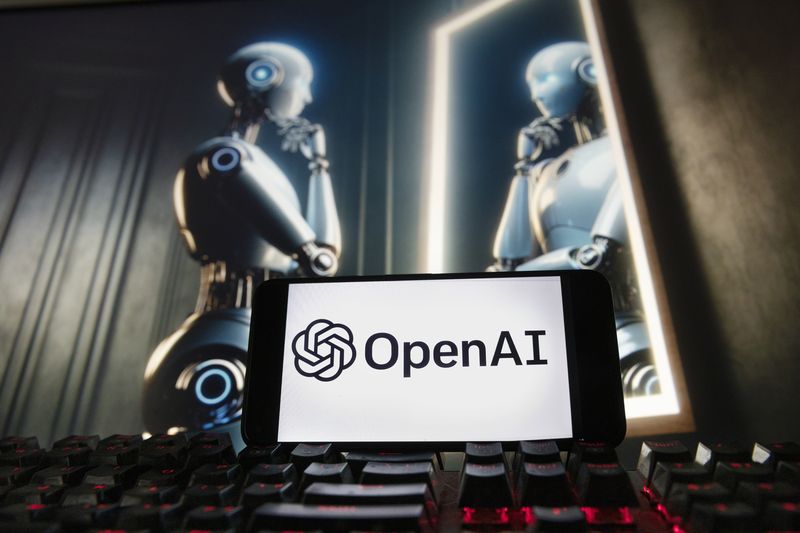
[Financial News] Semiconductor stocks are heating up again following OpenAI’s unveiling of its next-generation artificial intelligence (AI) model, GPT-6 Astra. Expectations are spreading that demand for large-scale computing infrastructure and memory semiconductors will grow further as AI evolves to the point of directly handling complex corporate tasks. With a favorable tailwind returning to the semiconductor market, which had been weighed down by concerns over an “AI bubble,” the KOSPI Composite Index also came close to the 7,000 level.
NVIDIA CEO Jensen Huang added momentum by declaring that “artificial general intelligence (AGI) has arrived” following Astra’s unveiling. On the 6th (local time), Jensen Huang congratulated the OpenAI team in a post on X, formerly Twitter, emphasizing, “It took four years to go from ChatGPT to GPT-6 Astra. AGI has arrived.” He also forecast further expansion of computing infrastructure, saying, “Next, 400,000 graphics processing units (GPUs) will be put into operation.” GPUs are key semiconductors used to train and run generative AI models.
After U.S. semiconductor stocks rose across the board following Astra’s unveiling, semiconductor stocks also surged in South Korea. According to the Korea Exchange (KRX), the KOSPI Composite Index closed at 6,995.39 on the 7th, up 4.61% from the previous trading day. Based on the closing price, it was just 4.61 points short of the 7,000 level.
Samsung Electronics, the company with the largest market capitalization, closed at 270,000 won, up 5.68% from the previous trading day. SK hynix ended at 1.783 million won after jumping 8.26%. It recorded its largest gain since the 20th of last month and recovered in one day the losses accumulated over 12 trading days.
Semiconductor stocks also performed strongly in the U.S. market. Although the broader U.S. stock market fell on the 3rd (local time), when Astra was unveiled, the Philadelphia Semiconductor Index (SOX) rose 3.38%. SK hynix American depositary receipts (ADRs) also climbed 8.14%.
Some market observers also expect the latest rally may not be limited to a one-off rebound.
The expectation is based on the view that Astra’s significant expansion of the range of tasks AI can perform will accelerate corporate AI adoption, potentially leading to greater investment in AI infrastructure.
While earlier AI systems focused on carrying out tasks in response to specific user instructions, Astra has evolved toward an “AI agent” that can directly operate a computer and perform the necessary tasks when given only a goal. As the areas in which AI can be used for complex corporate work—including tax, finance, coding, and data analysis—expand, the growth potential of the enterprise AI market is also considered to have increased.
As AI adoption spreads across companies and services, investment in data centers and computing infrastructure to support it is bound to increase. In particular, expectations are growing that demand for high-performance semiconductors needed to train and run large-scale AI models will rise, driving up demand for high-bandwidth memory (HBM) and high-capacity DRAM. If increased demand leads to actual memory-price increases, expectations for improved earnings at Samsung Electronics and SK hynix could also grow. The sharp rebound in semiconductor stocks is expected to become a new variable in the debate over an “AI bubble,” which has recently weighed on the market.\u00a0\u00a0
[email protected] Seok-woo Lee and Young-jun Han Reporter