“Could a Detention Warrant Possibly Be Sought?” Kim Byung-gi Said—Police Apply for Warrant
- Input
- 2026-09-07 15:17:41
- Updated
- 2026-09-07 15:17:41
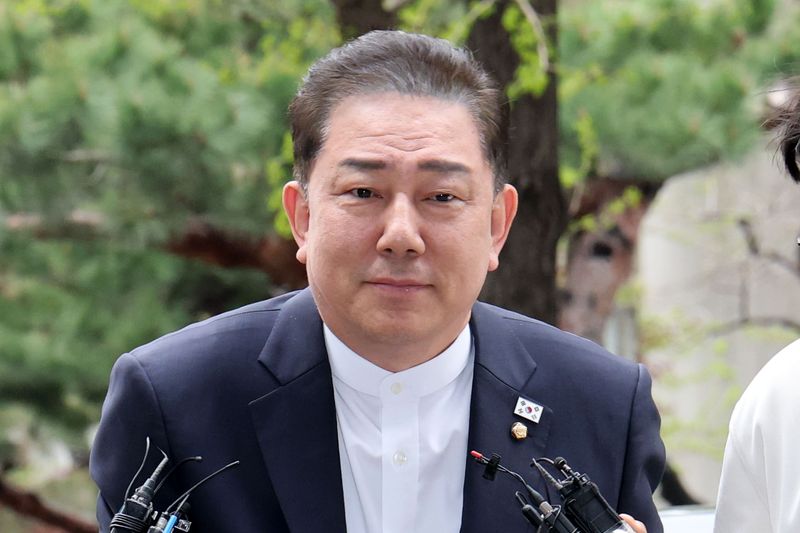
According to police on the 7th, the Public Crimes Investigation Unit of the Metropolitan Investigation Division, Seoul Metropolitan Police Agency, applied to the Seoul Central District Prosecutors' Office that day for a pretrial detention warrant for Kim on charges including violation of the Act on the Aggravated Punishment of Specific Crimes (bribery) and obstruction of business.
Police said they considered the fact that "the investigation found that the allegations had been substantiated by objective evidence and that there is a risk of evidence destruction" when deciding to apply for the warrant.
The charges covered by the warrant application reportedly include requests for favorable treatment regarding Kim's second son's employment and transfer admission to Soongsil University; his alleged acquiescence in independent lawmaker Kang Sun-woo's receipt of 100 million won; receipt of political donations and hotel accommodation vouchers; and allegations that official activity expenses of the Dongjak District Council were misused.
Police began investigating Kim last September after a civic group filed a complaint. The allegations later expanded to include requests for favorable treatment regarding his second son's university transfer and employment, allegations involving nomination-related political donations, the alleged misuse of a Dongjak District Council corporate card by his spouse and attempts to suppress the investigation, and requests for unfavorable personnel treatment of former aides. Police raided Kim's home and office in the National Assembly Members' Office Building and questioned him as a suspect seven times. Kim is known to have denied most of the allegations.
During questioning last April, Kim said, "It seems they are calling me in too often, but I will explain myself fully," adding, "Could a detention warrant possibly be sought? I am confident I can prove my innocence."
The investigation into Kim also sparked controversy over delays after failing to reach a conclusion for an extended period. On the 25th of last month, the Investigation Review Committee of the Seoul Metropolitan Police Agency recommended that the investigative team "process the case promptly within one month."
Although police have applied for a detention warrant, Kim's detention will not be decided immediately. Prosecutors must review the police application and request the warrant from the court. Because Kim is a sitting National Assembly member, the National Assembly's consent to arrest is also required.
If prosecutors request the warrant, the court sends a request for consent to arrest to the government, which then asks the National Assembly for its consent. The motion is put to a vote between 24 and 72 hours after it is reported to a plenary session. If the motion passes, the court holds a hearing to determine whether to issue a detention warrant for Kim.
In the case involving lawmaker Kang Sun-woo earlier this year, the prosecution's request for a detention warrant was followed by a vote on the National Assembly's consent to arrest and a court hearing on the warrant. If the prosecution's request and the National Assembly's consent procedure proceed without delay in Kim's case, his detention could be decided around Chuseok, observers say.
[email protected] Choi Seung-han Reporter