“Not Buying It at That Price”: As 60 Million Consumers Turn Away, Market Value Is “Cut in Half”... Louis Vuitton’s Humiliation [Luxury Price Story]
- Input
- 2026-09-07 15:13:50
- Updated
- 2026-09-07 15:13:50
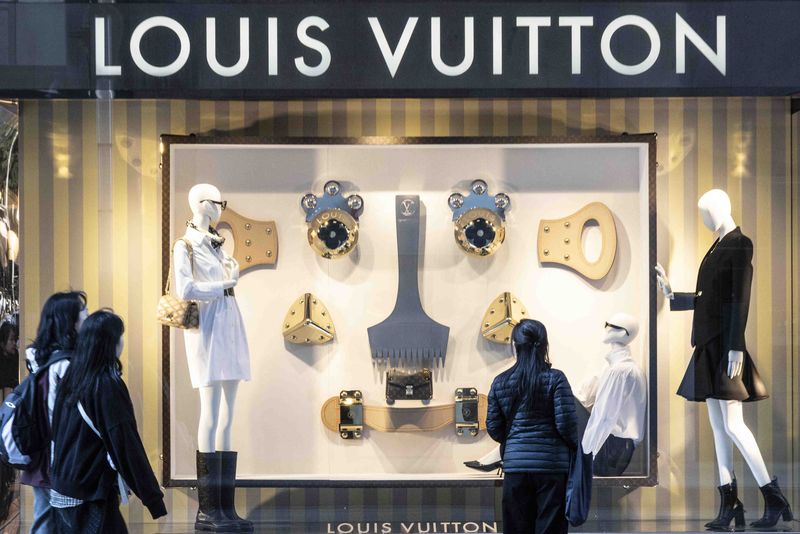
[Financial News] The market capitalization of LVMH Moët Hennessy Louis Vuitton (LVMH), the world’s leading luxury group that enjoyed a boom during the pandemic, has returned to pre-pandemic levels as middle-class consumers have left the market and consumption in China has weakened.
Middle-class consumers leave the luxury market amid price increases
On the 6th, local time, the Financial Times (FT) reported that LVMH’s market capitalization had fallen by more than half from its 2023 peak to €213 billion (approximately 332.9 trillion won).
As luxury consumption surged after the pandemic, LVMH became the first European company to surpass a market capitalization of $500 billion (approximately 672.85 trillion won) in 2023. However, its share price declined along with the downturn in the luxury market, ultimately giving back most of the gains accumulated during the pandemic.
The departure of middle-class consumers is one factor behind the downturn. Global consulting firm Bain estimates that approximately 60 million middle-class customers have stopped buying luxury goods over the past three years. That represents about 15% of all luxury consumers.
Luxury brands’ successive price increases are also cited as a factor behind the decline in sales. According to Bain, prices for many luxury products have risen by 50% to 70% from 2019. For consumers whose purchasing power has weakened because of inflation, these increases have created an additional burden. Analysts also say that consumers in China, once considered major spenders in the luxury market, have closed their wallets as the Chinese market has stagnated.
“Jewelry Instead of Bags”... Cartier and Van Cleef & Arpels Continue to Rise
However, performance varied significantly by brand. Ultra-high-end brands and luxury jewelry brands continued to post solid sales growth.
French luxury brand Hermès and Italian luxury brand Brunello Cucinelli, both considered ultra-high-end labels, performed well. By contrast, Kering, the French luxury group that owns Italian luxury brand Gucci, and British luxury brand Burberry reported lackluster results.
Shares of Richemont, which owns global luxury watch and jewelry brands including French luxury brand Cartier, French luxury jewelry brand Van Cleef & Arpels, and Swiss luxury watch and jewelry brand Piaget, have risen 28% over the past six months. Its market capitalization has surpassed €100 billion (approximately 156.3 trillion won). Demand for LVMH’s jewelry brand Tiffany & Co. and Italian luxury jewelry and watch brand BVLGARI has also remained steady.
Industry analysts say consumers have shifted from handbags, whose prices have become increasingly burdensome, to jewelry.
[email protected] Kim Soo-yeon Reporter