5 Million Won per Person for AI Training... Government Unaware of What the Program Is
- Input
- 2026-09-07 14:19:36
- Updated
- 2026-09-07 14:19:36
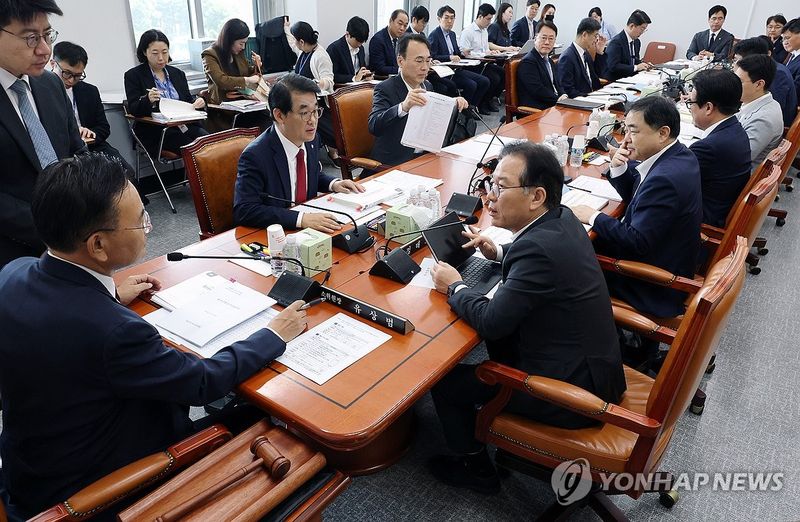
[Financial News] A government program to retrain retired broadcasters as artificial intelligence (AI) and digital broadcasting professionals is set to receive approximately 5 million won per person. However, during the budget review, government officials failed to properly explain the program’s details and necessity, drawing sharp criticism from lawmakers of both the ruling and opposition parties.
According to the National Assembly of the Republic of Korea on the 7th, lawmakers from both parties recently raised intensive questions about the Korea Media and Communications Commission’s “Broadcast Career Restart” program at the Subcommittee on Settlement Review of the Special Committee on Budget and Accounts.
The “Broadcast Career Restart” program retrains retired broadcasting industry workers to become specialized instructors or consultants in AI and digital broadcasting. It is intended to help them leverage their previous broadcasting experience while adapting to the rapidly changing AI and digital environment.
The issue is the amount of money being spent. When the program’s budget, including training and equipment costs, is divided by the actual number of participants, the expenditure comes to approximately 5 million won per person.
Yoo Sang-bum of the People Power Party criticized the program, saying, "What kind of budget is this? Is this a welfare budget?" His point was that, even considering the program’s aim of supporting retirees’ reemployment, the amount spent per person was excessive and the government had failed to present convincing evidence of its effectiveness.
Criticism also came from the opposition. When the government’s response proved insufficient, Kim Sung-hoe of the Democratic Party of Korea rebuked officials, saying, "There are only two items. Shouldn’t you have come prepared, knowing what they are about?" He was pointing out that the responsible agency had not properly familiarized itself with even the basic details, despite the limited number of programs under review.
The government’s vice chair also acknowledged, "We were not sufficiently familiar with it." Jung Tae-ho of the Democratic Party of Korea joined the criticism, saying, "The government needs to provide a sufficient explanation. This is extremely disappointing."
As the government promotes AI transformation and talent development as key policy priorities, calls are growing for AI-related education and workforce programs being introduced across ministries not to be deemed necessary simply because they carry the label “AI.” Programs with limited effectiveness should be screened out at the budget-planning stage by examining their target participants, costs, and employment and retraining outcomes.
An official from the National Assembly of the Republic of Korea said, "There is a need to retrain existing workers in response to new technological changes, but what ultimately matters is whether the program can deliver results commensurate with the budget invested. If the government cannot properly explain the program, the National Assembly has no choice but to question the validity of allocating the budget in the first place."
[email protected] Kim Kyung-min Reporter