[Exclusive] Despite talk of a 2030 grace period... National Pension Service (NPS) effectively 'stops' investment in coal power bonds [fn Market Watch]
- Input
- 2026-09-08 15:30:28
- Updated
- 2026-09-08 15:30:28
[Financial News] It has been confirmed that the National Pension Service (NPS) has effectively suspended new direct investments in bonds issued by state-owned coal-fired power companies. Although restrictions on domestic coal-related investments will officially take effect in 2030, the NPS has effectively begun a "preemptive divestment" four years ahead of schedule, starting from its bond management operations.
According to the investment banking (IB) industry on the 8th, it has been revealed that the NPS has effectively halted new direct investments in bonds of state-owned power companies operating coal-fired power plants, such as Korea South-East Power Co., Ltd., Korea Midland Power Co., Ltd. (KOMIPO), Korea Western Power Co., Ltd., Korea Southern Power Co., Ltd., and Korea East-West Power (EWP).
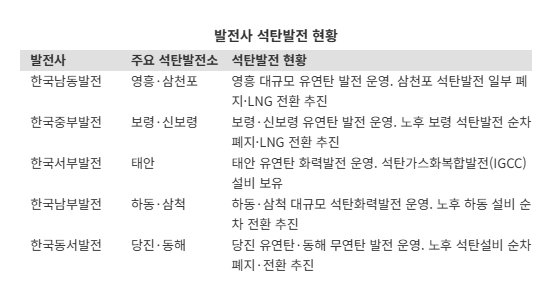
All five power generation companies directly operate coal-fired power generation businesses. Korea South-East Power Co., Ltd. operates Yeongheung power station and Samcheonpo; Korea Midland Power Co., Ltd. (KOMIPO) operates Boryeong power station and Shin Boryeong Power Plant; Korea Western Power Co., Ltd. operates Taean power station; Korea Southern Power Co., Ltd. operates Hadong power station and Samcheok Blue power station; and Korea East-West Power (EWP) operates Dangjin Power Station and Donghae power station as major coal-fired power generation sites. In particular, Yeongheung power station, Dangjin Power Station, Taean power station, and Hadong power station are large-scale coal power complexes with a scale of several thousand megawatts.
An official familiar with the NPS's affairs stated, "Investments in coal-fired power plants will be prohibited starting in 2030, but in reality, investments are not being made in advance." The official added, "There is a burden, particularly in the case of direct management, as criticism regarding related investments continues from the National Assembly and others." However, investment in power generation bonds within the NPS's total funds has not been officially banned. Entrusted fund managers may include power generation bonds based on their own investment judgment. The official explained, "Some entrusted fund managers make their own decisions to buy them, while others do not."
What stands out is the contrast with KEPCO bonds. While power generation bonds are excluded from direct management due to ESG issues, KEPCO bonds remain an investment target. This effectively creates a differentiation within the same KEPCO Group, where KEPCO bonds are purchased but coal power generation bonds are not in direct management. However, the market assessment is that demand for KEPCO bonds itself is not what it used to be. This is a result linked to changes in the NPS's asset allocation rather than ESG. A bond market official stated, "I understand that the NPS has relatively reduced its investment in KEPCO bonds as it recently increased its equity investment," adding, "KEPCO bond issuance is not what it used to be."
In fact, the volume of KEPCO bond issuance has decreased sharply over the past three years. According to Koscom CHECK, the net issuance volume of KEPCO bonds fell from 27.11 trillion won in 2022 to 6.54 trillion won in 2023, and since 2024, it has shifted to a net redemption trend, where redemptions exceed issuance. This year, the net issuance volume is expected to remain at around 620 billion won. Interest rates also surged during the same period. While the yield on 3-year government bonds rose by 96.5 basis points from 2.935% at the beginning of the year to 3.90% on the 7th of this month, the yield on 3-year KEPCO bonds increased by 108 basis points from 3.195% to 4.275%. This effectively means that a decrease in issuance and a widening of spreads are occurring simultaneously.
Concerns are rising that the NPS's preemptive move to divest from coal will become a variable affecting the financing conditions of state-owned power companies. The five power generation companies maintain the highest credit rating of 'AAA,' based on factors such as their status as wholly owned subsidiaries of Korea Electric Power Corporation (KEPCO). However, there is a view that if demand from the NPS—a representative long-term investor in the domestic bond market—disappears, it could impact issuance rates depending on whether alternative purchasing bases can be secured. An official stated, "If demand decreases, there could be a rise in interest rates."Observers suggest that the merger of the five power generation companies is unlikely to be a game-changer in reversing this trend. The five companies are scheduled to launch next October as a unified power generation company in the form of a 100% subsidiary of KEPCO. It is expected that they will maintain their existing AAA-rated corporate bond status even after the merger. The fact that the number of issuers will be reduced from five to one, allowing for the integrated management of bond issuance timing and volume, is considered a positive aspect in terms of fundraising.
However, it is pointed out that the consolidation of issuing entities does not necessarily mean that the NPS’s ESG investment standards will change. This is because, since the NPS judges investment decisions based on the coal-fired power generation business itself rather than the creditworthiness of individual power companies, the integrated power company is likely to face the same investment restrictions as long as it continues to operate the coal business.[email protected] Kim Hyun-jung Reporter