Parcel Delivery Firms Turn to Global and Specialized Cargo Businesses Amid Rate Competition
- Input
- 2026-09-07 15:42:44
- Updated
- 2026-09-07 15:42:44
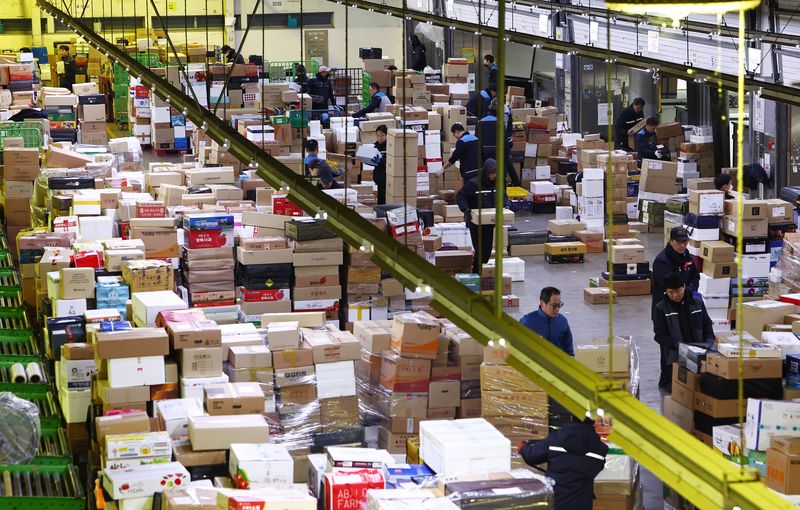
According to industry and securities-market sources on the 7th, CJ Logistics’ annual operating profit this year is projected to fall 7.5% from last year to 469.8 billion won. Hanjin’s operating profit is also expected to decline 33.6% year on year to 74.5 billion won.
Although both companies are expected to increase revenue and expand their business scale from last year, profitability is likely to deteriorate because of worsening external conditions and rising costs. CJ Logistics’ and Hanjin’s revenue this year is forecast to rise 7.9% and 4.3%, respectively, to 13.2514 trillion won and 3.1975 trillion won.
The three parcel-delivery companies had already reported declining operating profits in the first half of the year. CJ Logistics posted operating profit of 193.7 billion won in the first half, down 3.5% from the same period a year earlier. During the same period, operating profit at Lotte Global Logistics and Hanjin fell 11.2% and 22.7%, respectively.
Although total parcel volumes are increasing as the e-commerce market expands, analysts say a red flag has been raised over profitability because parcel-delivery rates continue to decline.
According to the Korea Association of Integrated Logistics, domestic parcel volume reached 6.41 billion items last year, a 253% increase from 1.81596 billion items in 2015. Parcel-delivery rates, however, have continued to trend downward. CJ Logistics’ average selling price (ASP) for parcel delivery was 2,262 won in the first quarter, marking its ninth consecutive quarter of decline. Seven-day-a-week delivery and nighttime and early-morning delivery have effectively become standard options, adding to the burden of labor and on-site operating costs.
As cutthroat competition intensifies, the three parcel-delivery companies are busy seeking new growth engines.
CJ Logistics is accelerating the expansion of its global business by securing a large logistics center in the United States. It completed construction of a logistics center in Elwood, Illinois, on the 3rd and began full-scale operations. CJ Logistics already has 60 logistics hubs across North America and plans to expand its logistics-business base throughout the region through the Elwood center.
Lotte Global Logistics is expanding its specialized-cargo business, including batteries. It is expanding inland transportation services for battery energy storage systems (BESS) produced by LG Energy Solution at its plant in Phoenix, Arizona, and delivered to customers across the United States. The company aims to increase second-half shipment volumes to three times the level recorded in the first half.
Hanjin is expanding partnerships with e-commerce sellers that use its logistics services. It is seeking to broaden the scope of logistics services it provides by identifying promising brands and sellers and supporting them from domestic parcel delivery to overseas expansion.
An industry official said, "With labor and other costs continuing to rise while parcel-delivery rates keep falling amid intensifying competition, it is becoming increasingly difficult to secure profitability. We are continuing to explore new strategies, including expanding into global markets."
[email protected] Lee Joo-mi Reporter