China Faces ‘Dyed Lettuce’ Controversy After ‘Cancer-Causing Cabbage’ Scandal—Vegetables Dipped in Mysterious Green Liquid
- Input
- 2026-09-07 14:25:57
- Updated
- 2026-09-07 14:25:57
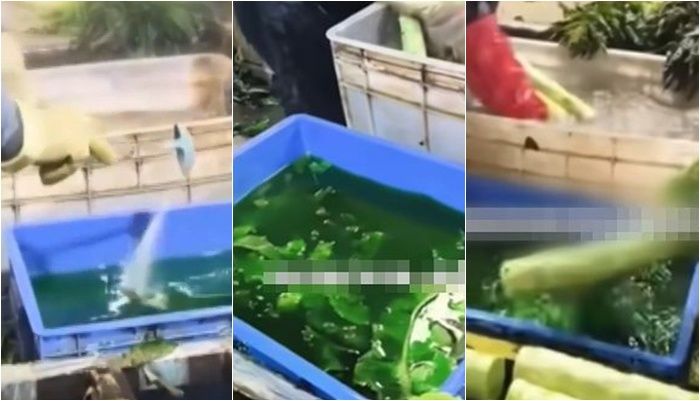
[Financial News] China is facing controversy over ‘dyed lettuce’ following the earlier scandal involving ‘cancer-causing cabbage.’
According to China Central Television (CCTV) and other local media outlets on the 5th, authorities in Yuzhong County, Lanzhou, Gansu Province, inspected 53 vegetable purchasing and storage businesses in the area. They found that six businesses had illegally used green food additives. The additives can be used in beverages and other products, but are reportedly prohibited for use on fresh vegetables.
The issue came to light after a Chinese blogger posted videos exposing the practice on social media. The videos alleged that vegetable businesses dyed stem lettuce to make it appear fresher before distributing it nationwide.
The blogger claimed to have visited 13 local vegetable-processing sites and witnessed stem lettuce being dipped in unidentified liquid at more than half of them.
After the videos were released and sparked controversy, local authorities launched an investigation. They subsequently found six businesses that had processed stem lettuce in the same manner.
It has not yet been confirmed whether the stem lettuce in question was distributed in South Korea.
However, consumers in South Korea are increasingly concerned because significant quantities of Chinese celtuce are also distributed domestically.
China has recently faced a series of controversies over food safety.
Last month, it was revealed that formaldehyde, known as a Group 1 carcinogen, had been used in some rural areas of China to preserve the freshness of cabbage, sparking public outrage.
On the 31st of the same month, the Ministry of Food and Drug Safety said it had confirmed that the cabbage treated with formaldehyde had not been exported to South Korea and announced that it would strengthen import-clearance inspections.
[email protected] Ahn Ga-eul Reporter