Aircraft Accident Response to Shift to Recovery of Human Remains After Rescue Operations—Transition Procedure Formalized for the First Time
- Input
- 2026-09-07 12:00:00
- Updated
- 2026-09-07 12:00:00
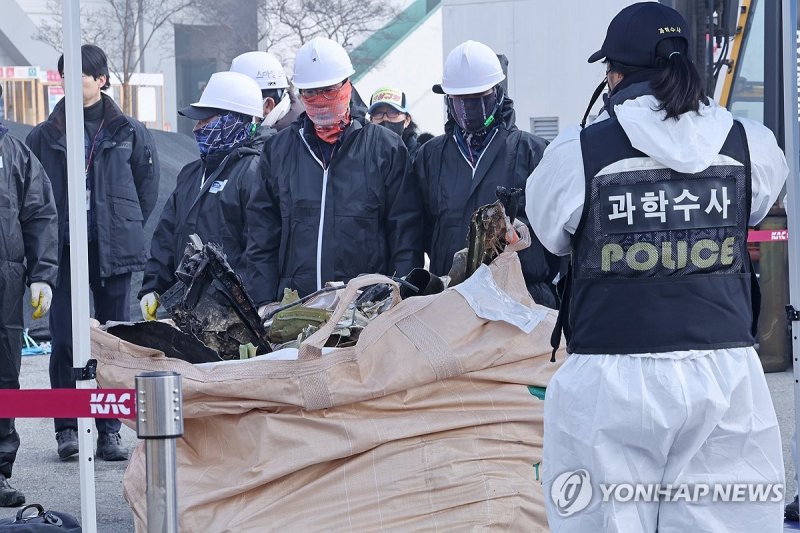
[Financial News] The government has established a nationwide standard procedure for relevant agencies to jointly respond to major aircraft accidents, from rescuing survivors to recovering and identifying victims’ remains and handing them over to bereaved families. Reflecting calls to systematize the recovery process following the December 29 passenger plane disaster, the government divided the accident-response process into nine stages and clarified the roles of each agency.
The government said on the 7th that it had established the “Manual for the Recovery of Victims’ Remains in Aircraft Accident Disasters,” with the participation of the Ministry of Land, Infrastructure and Transport (MOLIT), the Ministry of the Interior and Safety (MOIS), the National Fire Agency (NFA), the Korean National Police Agency, the National Forensic Service, and the Aviation and Railway Accident Investigation Board.
Following the December 29 passenger plane disaster, calls grew for procedures to systematically search for and recover the remains of aircraft accident victims. In response, the government formed an interagency task force led by the National Fire Agency in May. The manual was subsequently prepared after gathering opinions from central government agencies and local governments and consulting private experts in aircraft accidents and forensic medicine.
The government also referred to overseas examples, including the International Criminal Police Organization’s “Disaster Victim Identification (DVI) Manual” and the National Transportation Safety Board’s (NTSB) family-assistance system for aviation disasters. These examples were adapted to Korea’s disaster-management system and the statutory authority of each relevant agency.
The manual divides aircraft accident response into nine stages: initial on-site control, firefighting and lifesaving; on-site assessment and a joint situation-assessment meeting; setting the search area and forming joint search-and-recovery teams; preliminary training and preparations before remains recovery; search, rescue and remains recovery; dismantling large wreckage and recovering remains; transporting remains to a temporary mortuary and handing them over; cross-checking the passenger list and identifying victims; and handing remains over to bereaved families and completing remains-recovery operations.
In the initial stages of an accident, rescuing survivors takes priority. Authorities are instructed to focus first on controlling the site, extinguishing fires, searching for and rescuing people, providing emergency treatment and transporting them to medical institutions. To the extent that doing so does not interfere with rescue operations, remains, personal effects and aircraft wreckage are to be preserved as close as possible to their original condition.
Once lifesaving, emergency treatment and transportation have been completed, the response shifts to the remains-recovery stage following consultations among the relevant agencies. A joint on-site assessment and situation-assessment meeting determine the scale of the accident, the distribution of wreckage and hazards at the site before deciding the search area and recovery methods.
In particular, the accident site is to be divided into a grid so that joint search-and-recovery teams from the relevant agencies can search each section. When remains are found, their location and condition are recorded and a unique recovery number is assigned. After decontamination and disinfection, the remains are transported to a temporary mortuary. Recovery numbers and transfer records are cross-checked to maintain a chain of records from discovery and transport through postmortem examination and identification.
Victims’ identities are confirmed using the Korean Disaster Victim Identification (K-DVI) system. Postmortem materials, such as fingerprints, DNA and dental information obtained from the remains, are compared with antemortem materials, including medical and dental records and family genetic reference samples, to establish the victims’ final legal identities.
The government also strengthened procedures for providing information to bereaved families. From the start of remains-recovery operations, families are to be kept continuously informed about the search and recovery efforts and the identification process. Identified remains and personal effects whose owners have been confirmed are to be handed over with due respect.
Before remains-recovery operations end, the relevant agencies must comprehensively review the final search results. Before an official declaration of completion, they must also sufficiently explain the recovery process and results, as well as the condition of the remains, to bereaved families.
The government plans to assess whether the manual works effectively in the field through joint training and practical exercises by the relevant agencies. It will also update the manual by incorporating problems identified during actual disaster-response operations.
A government official said, “At an aircraft accident site, the top priority must be rescuing even one more survivor.” The official added, “A foundation has now been established for the relevant agencies to clearly understand their respective roles and respond as one team, from the initial stages of an accident through the completion of remains-recovery operations.”
[email protected] Bomi Lee Reporter