“What Matters More Comes After Repaying the Debt”···KAMCO Helps Debtors Achieve “Economic Recovery”
- Input
- 2026-09-09 15:20:18
- Updated
- 2026-09-09 15:20:18
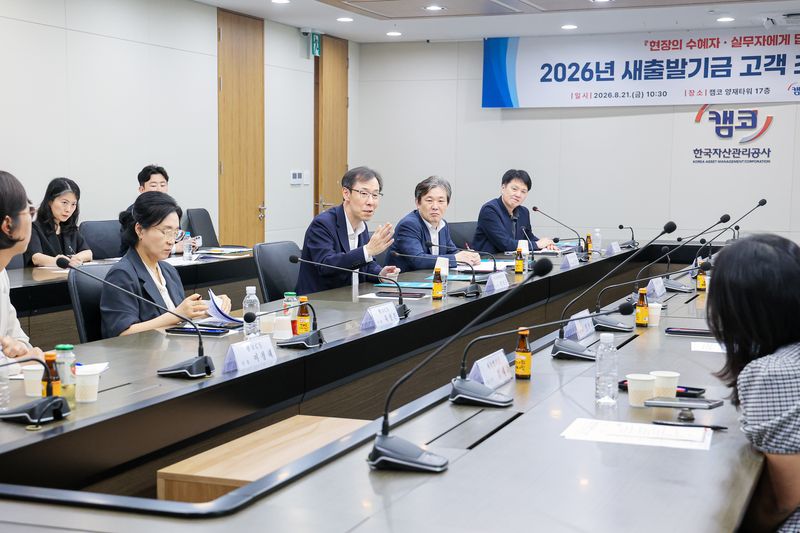
KAMCO announced on the 9th that it operates various debt-adjustment programs, including the Saechulbal Fund and New Leap Fund, while linking debtors with employment, startup, and credit-recovery support to help them return to economic activity. The measure takes into account the fact that debtors may need emergency funds for living expenses or medical bills even after receiving debt adjustments, but often have few ways to raise money because of their past delinquency records.
Accordingly, KAMCO provides emergency living expenses for medical care, education, housing, and other needs to newly contracted debtors facing financial difficulties. The aim is to help them establish a foundation for making payments faithfully without falling into the trap of high-interest loans or delinquency. KAMCO also supports the issuance of small-limit cards for debtors who make their payments faithfully. Debtors who have made regular payments for at least 12 months or who completed repayment within the past three years can receive either a debit card or a credit card with a limit of 300,000 won through a partnership between KAMCO and Industrial Bank of Korea.
After debtors repay all their debts, KAMCO also helps them build assets. Debtors who have completed repayment or are nearing completion deposit a fixed amount each month into a post office savings account, and KAMCO contributes an additional amount.
Debt-adjustment programs are also operating as a basic form of support. The Saechulbal Fund runs recovery-support programs alongside debt adjustments, with the goal of helping small business owners and self-employed people return to normal economic activity. In cooperation with 10 local governments nationwide, it operates management consulting, education, financial support, and business-closure assistance programs, with the Saechulbal Fund covering the costs.
Credit recovery after debt adjustment is also important. Even when debts are reduced, remaining delinquency records can hinder normal financial transactions. When a debtor enters into an agreement for debt adjustment, the Saechulbal Fund converts the existing delinquency information into public information on debt adjustment and removes it after the debtor makes faithful payments for one year. For debt adjustments involving claims held directly by KAMCO, delinquency information is removed as soon as the agreement is signed, and no separate public information is registered.
Jung Jung-hoon, president of KAMCO, said, “We continue to reflect feedback from the field so that beneficiaries can return to economic activity in a stable manner even after debt adjustment.” He added, “We will strengthen our post-support system so that genuine recovery is possible by organically linking financial support, credit recovery, and employment and startup assistance.”
[email protected] Tae-il Kim Reporter