Balancing Commemorative and Cultural Spaces in Sejong’s National Symbolic District: Seeking Solutions in Busan
- Input
- 2026-09-07 11:03:45
- Updated
- 2026-09-07 11:03:45
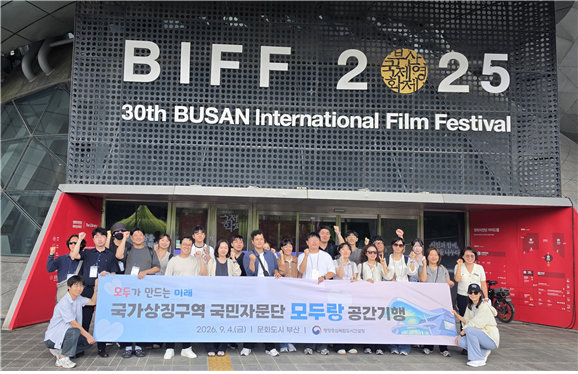
The National Agency for Administrative City Construction said on the 7th that it held the fourth field study with 24 members of the national advisory group “Modurang” in Busan on the 4th. After touring the UN Memorial Cemetery and Busan Cinema Center, the group discussed spatial elements and content that could be incorporated into the National Symbolic District.
The field study is an on-site advisory activity in which the Modurang group directly experiences major cities and spaces across the country to develop ideas needed for the National Symbolic District. The Busan visit was the group’s fourth, following visits to Sejong and Daejeon in April, Gyeongju in May, and Seoul in July.
At the UN Memorial Cemetery, the group examined how the sacrifices of United Nations forces who fought in the Korean War are represented through the site. Members toured the symbolic area featuring the flags of participating countries and the United Nations flag, as well as the main cemetery, memorial hall, and United Nations Forces Memorial, observing how historical significance and national symbolism are reflected in architecture, landscaping, and monuments.
At the Busan Cinema Center, they examined the layout of cultural facilities, including cinemas, performance venues, and outdoor spaces. They also reviewed the spatial structure linking APEC Naru Park, BEXCO, commercial facilities, and waterfront areas, allowing citizens to continue engaging in cultural and leisure activities.
The advisory group agreed that the National Symbolic District should not remain focused solely on core national facilities. Instead, it should become a place where people can visit regularly to enjoy culture, leisure, and relaxation.
During the on-site discussion, participants proposed developing symbolic content that embodies Korea’s history and future values, creating a distinct spatial identity through architecture, landscaping, and monuments, and expanding cultural content that people can stay and experience. They also emphasized the need to balance meaningful content, such as commemorative facilities, with cultural amenities that enrich everyday life.
Hong Soon-min, head of the Presidential Sejong Office Construction Task Force, said, "The National Symbolic District represents Korea’s identity and future. We will faithfully incorporate the recommendations made by the national advisory group on site so that the district can become a place where people can visit and stay in their daily lives while enjoying a wide range of experiences."
[email protected] Choi Ga-young Reporter