Even Successful Japanese Companies Are Leaving the Stock Market... Record-High Delistings
- Input
- 2026-09-07 10:51:19
- Updated
- 2026-09-07 10:51:19
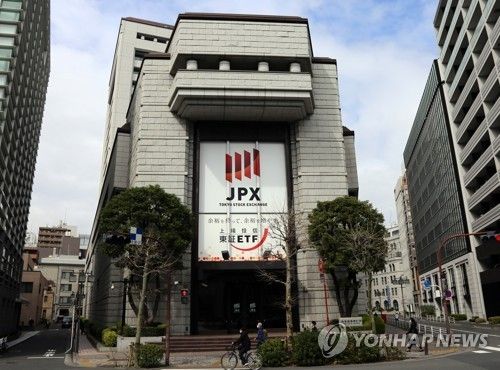
【Financial News, Tokyo = Correspondent Hye-jin Seo】The number of companies confirmed for delisting from the Tokyo Stock Exchange (TSE) this year has risen to 128, setting a new record for the third consecutive year. More companies are choosing to go private in partnership with investment funds, while the removal of companies that fail to meet listing maintenance criteria is also gaining momentum.
According to the Nihon Keizai Shimbun (Nikkei) on the 7th, 128 companies had been confirmed for delisting this year as of the 4th, surpassing last year's full-year record of 125. Another 29 companies have been designated as securities under supervision because they could potentially be delisted, so the number of delistings is expected to rise further.
Excluding companies listed on the Tokyo Pro Market, which is reserved for professional investors, the number of listed companies stood at 3,705 as of the end of August, down by 77 from the end of last year. That was a 4% decline from the peak at the end of 2023, bringing the total to its lowest level in seven years. Only 22 initial public offerings (IPOs) were conducted from January through August this year.
Of the companies that pursued going-private transactions this year, 28, or 20%, received support from investment funds. The aim was to simplify complex shareholder structures with fund capital and accelerate decision-making for business restructuring and growth investments. In some cases, pressure from activist investors to improve management served as the catalyst.
European private equity firm EQT acquired elevator maker Fujitec. Online printing company Raksul pursued a management buyout (MBO) involving its management with support from Goldman Sachs.
Some emerging companies have also left the stock market soon after listing. Mamezo, an information technology (IT) company listed on the Growth Market of the TSE in June 2024, chose to go private in partnership with EQT. The move was intended to enable bold investment in artificial intelligence (AI) without being constrained by short-term performance.
The TSE's decision in April 2022 to reorganize its existing four markets into three—Prime, Standard, and Growth—and strengthen listing maintenance criteria also contributed to the decline in listed companies. Ten companies that failed to meet the criteria after the end of transitional measures will be delisted on October 1. Additional removals are expected in 2027 as well.
In Japan, companies have repeatedly rushed to conduct IPOs to allow venture investors to recover their funds before establishing a foundation for growth, only to stagnate after listing. The TSE aims to promote the growth of smaller companies and improve the quality of the stock market by tightening its maintenance criteria.
Some companies are turning to regional stock exchanges, where the listing threshold is relatively lower. The number of companies newly listed on or approved for listing by the Nagoya Stock Exchange, Fukuoka Stock Exchange, and Sapporo Stock Exchange surged from three in 2020 to 47 last year. This year, 21 companies had chosen regional markets as of the end of August.
Hiromi Yamaji, chief executive officer (CEO) of Japan Exchange Group (JPX), which oversees the TSE, said the group would prioritize corporate value and market quality over the number of listed companies. In the United States, the number of companies listed on the New York Stock Exchange (NYSE) and Nasdaq has also fallen by half over the past 30 years, reaching approximately 3,900 at the end of last year.
[email protected] Hye-jin Seo Reporter