'Lithium alternative' sodium battery commercialization accelerated... Kwangwoon University, HiNa Battery Technology and VOLTA form 'three-way alliance'
- Input
- 2026-09-07 10:05:03
- Updated
- 2026-09-07 10:05:03
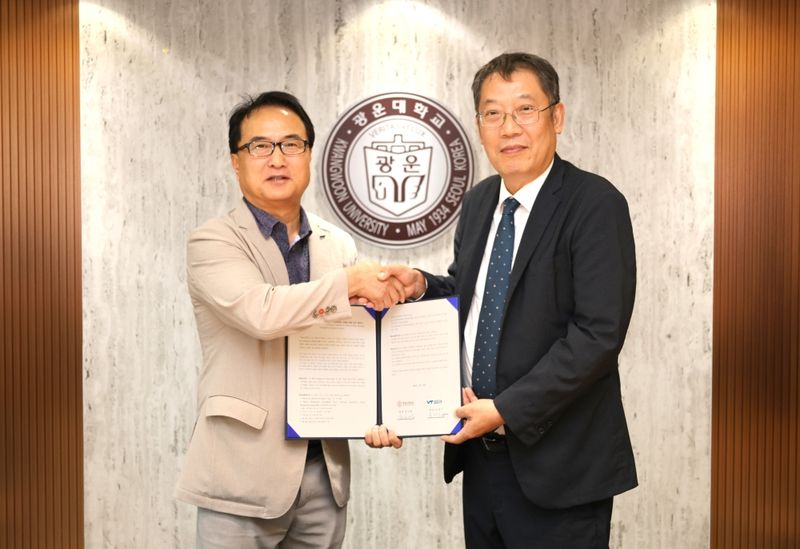
[Financial News] South Korea's academic and industrial sectors have joined forces with a global technology leader to accelerate the commercialization of sodium-ion batteries (SIBs), which are considered a 'game changer' for next-generation energy storage systems (ESS) because of their lower fire risk and cost competitiveness.
Kwangwoon University said on the 7th that it had signed a 'global three-party memorandum of understanding (MOU) for SIB technology development, demonstration and commercialization' with China's sodium battery specialist HiNa Battery Technology and energy solutions company VOLTA, launching the establishment of a full-fledged cooperation ecosystem.
The agreement was pursued to move SIBs—an emerging alternative that could address the supply-chain instability and fire risks of conventional lithium-ion batteries—beyond the laboratory and into industrial applications more quickly.
A key feature of the partnership is its integrated division of responsibilities spanning technology, research and demonstration. HiNa Battery Technology, founded on research achievements from the Institute of Physics of the Chinese Academy of Sciences (CAS), will provide foundational and manufacturing technology. Kwangwoon University will support exchanges of master's and doctoral-level talent and advanced R&D. VOLTA, an energy solutions company, will lead battery energy storage system (BESS) demonstrations and commercialization in South Korea, driving the technology's adoption in the market.
The three organizations plan to pursue SIB-BESS demonstration projects, related technology standardization and joint bids for large-scale government-funded projects in stages. Immediately after the agreement, a Kwangwoon University delegation visited HiNa Battery Technology's pilot mass-production line and advanced R&D center in China, inspecting facilities for cell characterization and safety testing.
Son Jeong-gi, CEO of VOLTA, who will oversee the demonstration and commercialization efforts, said, "I will do everything I can as a driving force to ensure that SIB technology developed at the laboratory level can quickly take root in actual industrial settings and the commercial market."
Kang Ri-bin, chief executive of HiNa Battery Technology, also said, "SIBs are a field expected to grow rapidly on the strength of their cost competitiveness and safety." Kang added that the company would actively cooperate with Kwangwoon University on exchanges of master's and doctoral-level research talent and joint R&D.
Yoon Do Young, president of Kwangwoon University, emphasized, "We will provide the university's full support so that this cooperation expands beyond basic R&D into industrial technology cooperation and a comprehensive global partnership." Jo Seon-young, chair of the Kwangwoon Foundation, added, "I hope this partnership will also make a significant contribution to Nowon District's transformation into a carbon-neutral, clean city."
Meanwhile, the signing ceremony was held on the 2nd at HiNa Battery Technology's headquarters in Liyang, Jiangsu Province, China, with Jo Seon-young, chair of the Kwangwoon Foundation; Yoon Do Young, president of Kwangwoon University; Kang Ri-bin, chief executive of HiNa Battery Technology; and Son Jeong-gi, CEO of VOLTA, in attendance.
[email protected] Man-gi Kim Reporter