"HBM Growth to Continue": Samsung Electronics and SK hynix Target Prices Raised Simultaneously; Doosan Fuel Cell Target Price Up 70% as "Uncertainty Clears"
- Input
- 2026-09-07 11:00:00
- Updated
- 2026-09-07 11:00:00
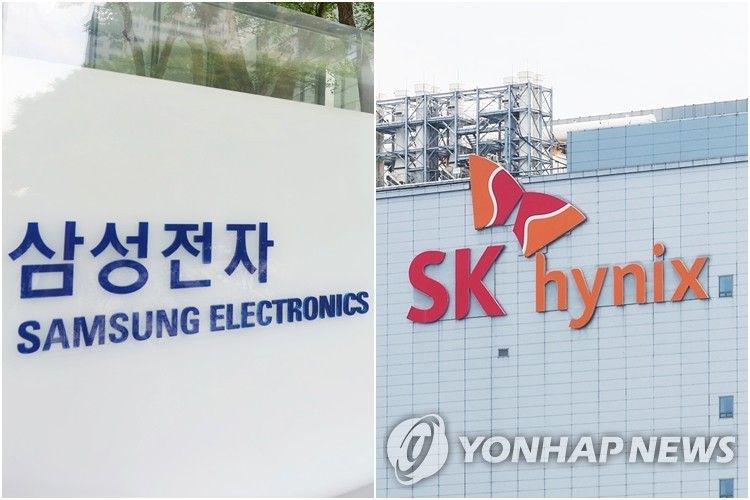
[Financial News] We summarize reports from major securities firms as of the morning of September 7.
Analysts said Samsung Electronics will maintain its leadership in memory chips by advancing its high-bandwidth memory (HBM) technology despite the negative impact of a weaker won-dollar exchange rate. SK hynix is expected to benefit from customer diversification as HBM demand expands beyond graphics processing units (GPUs) to big tech companies' proprietary artificial intelligence (AI) chips.
Doosan Fuel Cell was assessed to have cleared uncertainty surrounding its medium- to long-term growth prospects following a major fuel-cell order for a U.S. data center.
Samsung Electronics: A Contest for Leadership in Custom HBM (Mirae Asset Securities)
◆ Samsung Electronics (005930)— Mirae Asset Securities / Researcher Kim Young-gun- Target price: 400,000 won (up 8.1%, from 370,000 won) | Previous closing price: 255,500 won
- Investment rating: Buy (maintained)
Mirae Asset Securities raised its target price for Samsung Electronics to 400,000 won, saying its earnings growth trend will remain intact despite the decline in the won-dollar exchange rate.
The brokerage lowered its exchange-rate assumption from 1,553 won to 1,400 won, slightly reducing its operating-profit estimates for this year and next year. However, it raised its forecast for the average selling price (ASP) of DRAM. It expects HBM to drive overall DRAM performance through both shipment volumes and prices next year, even as price increases for conventional DRAM moderate.
Researcher Kim focused on zHBM, a next-generation architecture unveiled by Samsung Electronics. The approach places DRAM directly on top of an accelerator chip (XPU) to shorten the distance traveled by input/output (I/O) signals.
Kim said, "By placing DRAM on top of the XPU, I/O is distributed, with the goal of reducing I/O power consumption by 70% compared with HBM5 and achieving more than 2.3 times the bandwidth. The 100 watts saved can then be redirected to GPU computing," adding, "If the means of increasing bandwidth shift toward base-die manufacturing and wafer bonding, memory manufacturers could gain greater control."※High Bandwidth Memory (HBM)HBM is a high-performance form of DRAM used as computer memory. It stacks multiple layers of DRAM and connects them vertically through microscopic holes called through-silicon vias (TSVs). By greatly widening the channels through which data travels compared with conventional DRAM, it increases speed while reducing power consumption. It is widely used in AI accelerators such as NVIDIA GPUs.※zHBMzHBM is Samsung Electronics' next-generation three-dimensional (3D) memory architecture, which vertically stacks HBM directly above an accelerator, such as a GPU, that handles AI computations. Currently, the processor and memory are placed side by side and connected horizontally. zHBM instead stacks DRAM directly on top of the processor to shorten the distance data must travel. The key benefit is that power saved on signal transmission can be used for computation.
SK hynix: Still Undervalued Even with Lower Earnings (Mirae Asset Securities)
◆ SK hynix (000660) —Mirae Asset Securities / Researcher Kim Young-gun- Target price: 3.1 million won (up 10.7%, from 2.8 million won) | Previous closing price: 1.647 million won
- Investment rating: Buy (maintained)
Mirae Asset Securities raised its target price for SK hynix to 3.1 million won, saying its HBM customer base is expanding beyond GPUs to proprietary chips developed by big tech companies.
Although its earnings estimates were lowered because of the weaker exchange rate, the brokerage assessed the current share price as absolutely low, at only 3.1 times next year's estimated earnings per share (EPS) and 1.6 times book value per share (BPS).
HBM capacity per device is also continuing to rise. AMD's Instinct MI455X accelerator increased its HBM4 capacity by 50% from the previous model. In the application-specific integrated circuit (ASIC) sector, designed for specific tasks, Meta's MTIA increased its capacity from 216GB to 288GB as it moved from 300 to 400.
Kim explained, "The expansion of HBM adoption into the ASIC sector, in addition to the increase in HBM capacity, benefits SK hynix, the market leader in HBM, by diversifying its customer base. SK hynix is mass-producing 12-high HBM4 products, while its 16-high products are also in the certification stage."
This means revenue that had been concentrated at NVIDIA is being distributed among proprietary chips developed by big tech companies, reducing the risk that performance will be swayed by order fluctuations from a particular customer.※Application-Specific Integrated Circuit (ASIC)Unlike GPUs, which handle a wide range of tasks, an ASIC is custom-designed to perform one designated task particularly well. Because its circuitry is optimized for that task, it can save power and costs. Big tech companies such as Google, Meta Platforms and Microsoft are increasingly designing and using their own chips for AI inference.
Doosan Fuel Cell: Selected as a Primary, Not Backup, Power Source (NH Investment & Securities)
◆ Doosan Fuel Cell (336260)— NH Investment & Securities / Researcher Jeong Yeon-seung- Target price: 58,000 won (up 70.6%, from 34,000 won) | September 3 closing price: 43,850 won
- Investment rating: Buy (upgraded from Hold)
NH Investment & Securities upgraded Doosan Fuel Cell's investment rating from Hold to Buy and raised its target price to 58,000 won, saying an order for fuel cells for a U.S. data center had cleared uncertainty surrounding the company's medium- to long-term growth.
Doosan Fuel Cell won a 501.4 billion-won contract to supply phosphoric acid fuel cells (PAFCs) through its U.S. affiliate, HyAxiom. NH Investment & Securities estimated the order at approximately 140 megawatts, far exceeding the 50 megawatts initially expected.
Researcher Jeong explained, "Considering the scale of the supply, we believe the fuel cells supplied this time are highly likely to be used as the data center's primary power source rather than as backup power." This means the fuel cells were selected to actually operate the data center, not merely to provide emergency reserve power, suggesting that follow-up orders could also be larger.
The decisive reason for raising the investment rating was that concerns over technical limitations had eased. Jeong assessed, "This order confirmed that even PAFCs, which have relatively low power-generation efficiency, can enter the data center market based on strong U.S. demand for on-site generation."
PAFC production capacity currently stands at 275 megawatts a year and is expected to increase to 350 megawatts through expansion, leaving room to handle additional orders. Although operating losses are expected to continue this year because of low utilization, the company is forecast to turn profitable in 2027, when delivery volumes begin to increase in earnest.※Phosphoric Acid Fuel Cell (PAFC)A PAFC is a power-generation system that uses phosphoric acid as an electrolyte to generate electricity through a reaction between hydrogen and oxygen. Although its generation efficiency is lower than that of solid oxide fuel cells (SOFCs), it is less sensitive to fuel purity and can produce both electricity and heat. It is therefore mainly used for power generation near buildings or industrial facilities.※On-siteOn-site generation places power-generation equipment next to the location where the electricity will be used, allowing the required power to be produced and consumed directly. Because it does not require waiting for the transmission grid to be built out, U.S. data centers are adopting it rapidly as grid expansion fails to keep pace with demand.
[Jutopia]Jutopia is an AI-based stock-report briefing service that compiles and delivers reports from major domestic securities firms. To continue receiving [Jutopia], please subscribe to the reporter's page.
[email protected] Seong Min-seo Reporter