Heavy-Ion Therapy for Early-Stage Cancer to Be Extended to Stage 4 Lung Cancer with Limited Metastases
- Input
- 2026-09-07 09:32:45
- Updated
- 2026-09-07 09:32:45
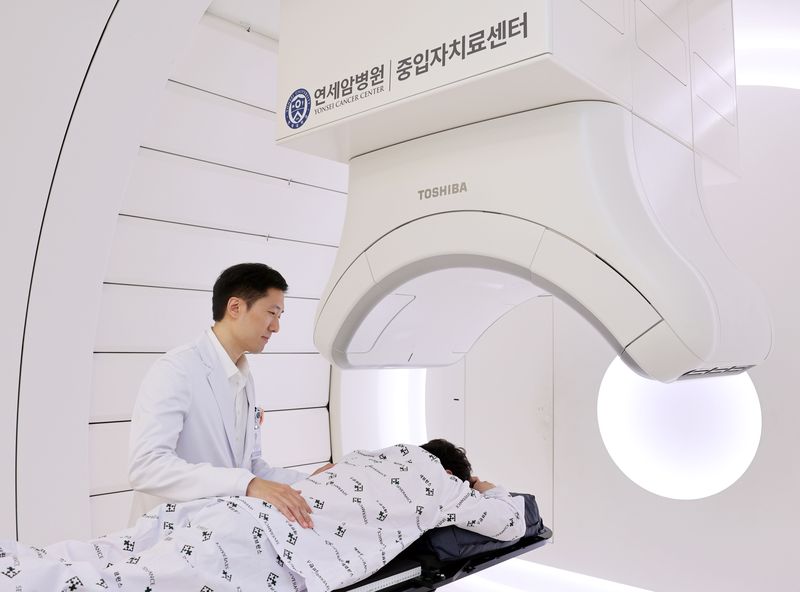
[Financial News] Stage 4 lung cancer patients with limited metastases who are elderly or have reduced lung function—and for whom conventional radiation therapy has posed significant challenges—will have access to heavy-ion therapy.
Yonsei Cancer Center said it plans to expand heavy-ion therapy, which has primarily been used for early-stage non-small-cell lung cancer, to patients with stage 4 oligometastatic lung cancer.
Lung cancer is classified as stage 4 when it has spread to other organs. However, treatment strategies may differ between stage 4 cancer that has spread extensively to multiple organs and cancer limited to a few lesions. Recent studies have shown that for oligometastatic lung cancer, in which the number of metastatic lesions is limited, combining systemic treatment such as chemotherapy or targeted therapy with local therapy to eliminate the primary and metastatic tumors through radiation may extend patients’ survival.
The effectiveness of combining systemic and local therapy has been confirmed in lung cancer with epidermal growth factor receptor (EGFR) mutations. In a multicenter phase 3 clinical trial reported overseas, radiation therapy was administered to the primary tumor and metastatic lesions alongside an EGFR-targeted therapy. Progression-free survival increased from 12.5 months to 20.2 months, while overall survival rose from 17.4 months to 25.5 months.
Another phase 3 clinical trial found that patients who received thoracic radiation therapy alongside targeted therapy had progression-free survival of 17.1 months, up from 10.6 months. Overall survival increased from 26.2 months to 34.4 months. The risk of disease progression fell by 43%, while the risk of death declined by 38%.
In South Korea, Yonsei Cancer Center also confirmed the potential of this treatment strategy through a multicenter phase 2 study. Patients with EGFR-mutated oligometastatic lung cancer received the third-generation targeted therapy lazertinib together with stereotactic body radiation therapy, which delivers concentrated radiation to cancer sites. Median progression-free survival was 34 months. No grade 3 or higher radiation pneumonitis, considered severe, occurred.
Based on these findings, Yonsei Cancer Center plans to use heavy-ion therapy as a new local treatment for oligometastatic lung cancer.
In particular, patients with interstitial lung disease or idiopathic pulmonary fibrosis have faced difficulties receiving aggressive treatment because of the risk of radiation pneumonitis or worsening of their underlying lung disease after radiation therapy. Heavy-ion therapy can concentrate powerful energy on cancer cells while reducing the radiation dose delivered to surrounding normal tissue. This applies not only to healthy lung tissue but also to other organs, including the heart and esophagus.
Kim, Kyung Hwan, a professor of radiation oncology, said, "The Heavy Ion Therapy Center plans to first expand the use of heavy-ion therapy primarily among patients with oligometastatic lung cancer who have EGFR mutations or other characteristics associated with a strong response to systemic treatment and who are expected to achieve long-term survival." He added, "We plan to continuously accumulate clinical data from treated patients and further define the effectiveness and role of heavy-ion therapy in stage 4 lung cancer."
Kim Hye-ryeon, director of the Lung Cancer Center, said, "Even among patients with stage 4 lung cancer, some may achieve long-term survival through aggressive local therapy combined with other treatments, depending on the extent of metastasis and the patient’s condition." She added, "We will organically integrate surgery, chemotherapy and targeted therapy, radiation therapy, and heavy-ion therapy to develop optimal treatment strategies for each patient."
[email protected] Medical Correspondent Jeong Myeong-jin Reporter