"They Said It Was a Patented Hair-Loss Shampoo, But..." Online Cosmetics Sellers Caught Making False Intellectual-Property Claims
- Input
- 2026-09-07 09:23:12
- Updated
- 2026-09-07 09:23:12
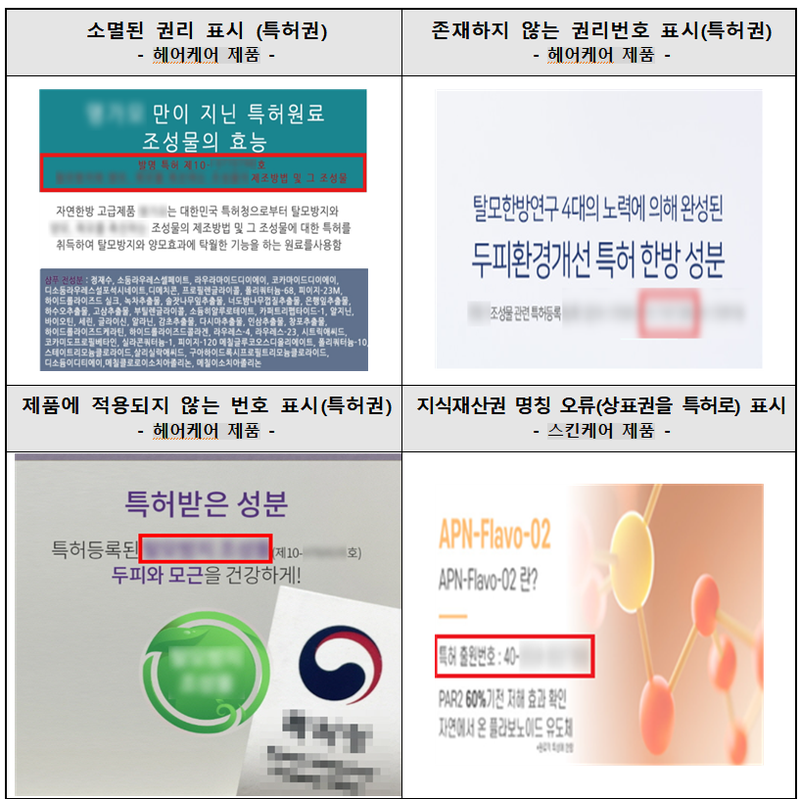
Because cosmetics are applied directly to the skin and body, consumers’ trust in their ingredients and functions has a decisive impact on purchasing decisions. The investigation was launched to prevent sellers from exploiting this fact by providing inflated intellectual-property information.
Patent rights were misused in 626 of the false-marking cases, accounting for 98.7% of the total. They were followed by design rights, with six cases, and utility model rights and trademark rights, with one case each. By type, the most common violation involved presenting expired or rejected rights as still valid, with 514 cases, or 81.1% of the total. This was followed by the unauthorized use of nonexistent rights numbers in 73 cases and claims that rights had been filed despite no application being pending in 30 cases.
By product category, hair-care products emphasizing functional effects such as hair-loss prevention or highlighting specific ingredients accounted for the largest share, with 242 cases, or 38.2%. They were followed by skin-care products with 97 cases, body-care products with 91, and cleansing products with 67. The investigation found that false markings were more frequent among products likely to stimulate consumers’ purchasing impulses.
The investigation also involved a National Advertising Monitoring Group made up of 60 members of the general public, who directly helped identify suspected false markings and enhanced the investigation’s effectiveness. The Ministry of Intellectual Property ordered the sellers involved to complete corrections to their product markings. It also plans to track their violation histories and launch stronger administrative investigations if the same conduct is repeated.
The findings are seen as a stark indication that preventive verification systems for false and exaggerated advertising are not functioning properly as the distribution of cosmetics from small brands through influencer marketing and open markets continues to grow.
Kim Yong-hoon, director general of the Intellectual Property Protection Cooperation Bureau at the Ministry of Intellectual Property, said, "False intellectual-property markings undermine sound market transaction practices and harm consumers. We will continue working with the KCA to expand investigations to a wide range of product categories closely connected to people’s daily lives and help establish a culture of accurate intellectual-property labeling."
[email protected] Kim Won-jun Reporter