LG Energy Solution and Seoul National University Solve Gas Generation Challenge in Next-Generation LMR Batteries
- Input
- 2026-09-07 09:19:20
- Updated
- 2026-09-07 09:19:20
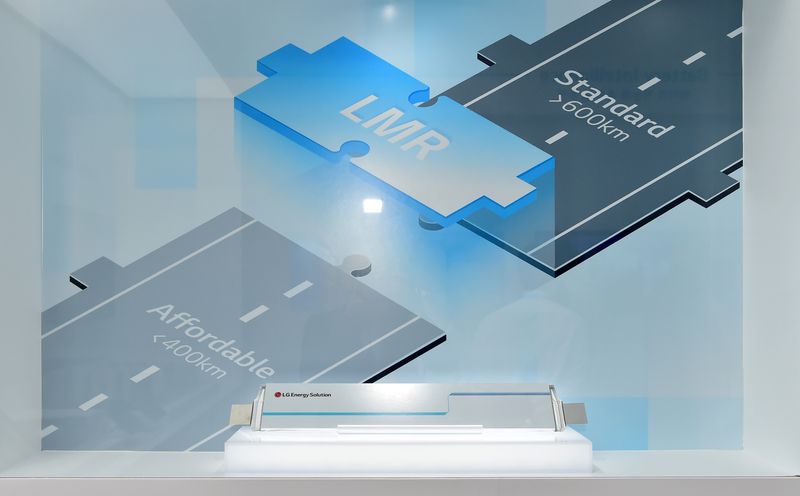
LG Energy Solution announced on the 7th that it had opened the way to applying LMR batteries to large-format cells for electric vehicles through joint research with a team led by Jongwoo Lim, a professor in the Department of Chemistry at Seoul National University. The findings were published in the international academic journal Nature Communications, underscoring their academic significance.
LMR is a next-generation cathode material that can significantly reduce material costs by using inexpensive manganese as its primary raw material instead of costly cobalt. It can use not only metals such as nickel and manganese but also oxygen within the material to store energy, giving it the advantage of higher energy density.
The problem occurs when oxygen oxidized during charging does not fully return during the discharging process. This can damage the battery's internal structure and cause gas to build up. In large-format cells for electric vehicles, where internal free space is particularly limited, the resulting pressure increase and performance degradation have long been considered the biggest obstacles to LMR commercialization.
The joint research team closely examined how oxygen undergoes oxidation and reduction under different charging and discharging conditions. It newly discovered that oxygen recovery is determined not only by the upper charging voltage limit but also by the lower discharging voltage limit. When the upper charging voltage limit was lowered from 4.6 V to 4.3 V, the reduction rate of the oxidized oxygen rose sharply from 86% to 97%. When discharging was extended to 2.0 V instead of the previous 3.0 V, the oxygen was found to return almost completely to its original state.
Based on these findings, LG Energy Solution researchers redesigned the operating voltage range and formation process conditions for a 40 Ah-class large-format LMR cell. In particular, they effectively suppressed the gas generation that had been especially pronounced in large-format cells by lowering the temperature during the formation stage.
As a result, the newly optimized 40 Ah-class large-format LMR cell retained 92.2% of its initial energy even after 883 charge-discharge cycles. The achievement is considered significant because it confirmed the commercialization potential of LMR materials in large-format cells capable of being installed in actual electric vehicles, going beyond the small-cell level.
Jongwoo Lim, a professor at Seoul National University, explained, "This study identified the cause of LMR battery degradation from the perspective of oxygen reversibility and demonstrated that cell stability can be improved solely through the design of electrochemical protocols." He added, "We confirmed that long-term stability in LMR batteries can be secured only by considering discharging conditions comprehensively, along with charging conditions."
An LG Energy Solution representative said, "This study demonstrated that stable battery life can be secured even in large-format cells by effectively suppressing gas generation, one of the major challenges facing LMR batteries." The representative added, "It has laid an important foundation for accelerating our growth in the next-generation LMR battery market."
[email protected] Kim Dong-chan Reporter