Coffee Grounds Discarded in the Morning May Be a 'Neuroprotective Agent'? [Health Check]
- Input
- 2026-09-07 09:19:56
- Updated
- 2026-09-07 09:19:56
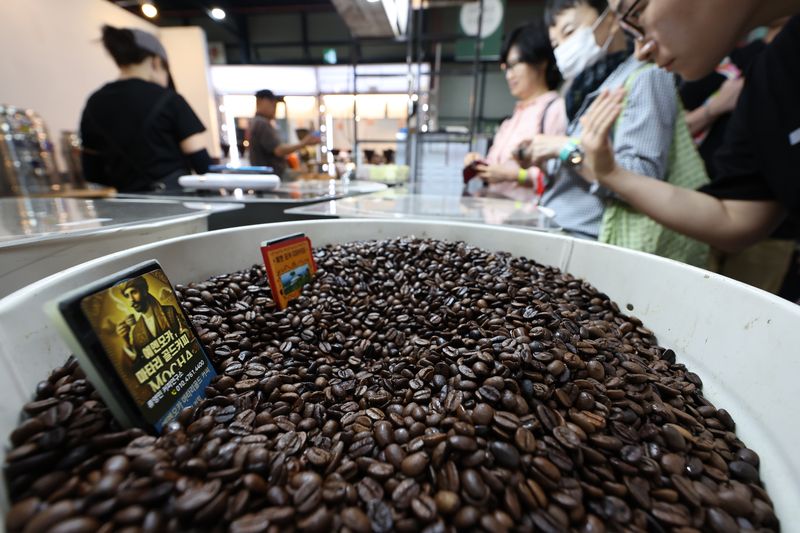
[Financial News] Coffee grounds discarded every day could potentially be repurposed as a medical material that protects nerve cells, a study has found.
A research team led by Professor Kim Chi-kyung of Korea University Guro Hospital, including Research Professor Do Hyun-myung of the Korea University Guro Hospital Biomedical Research Center and Professor Choi Jong Seob of the Department of Advanced Materials Engineering at Kongju National University, confirmed that carbon dots made from discarded coffee grounds can reduce reactive oxygen species inside cells and affect the growth and differentiation of neural cells.
The research team produced nanoscale particles called 'carbon dots' from coffee grounds and spinach and compared their properties. Carbon dots are extremely small carbon-based materials with high biocompatibility, and their potential applications in the bio and medical fields are being studied.
The carbon dots made from coffee grounds showed stronger antioxidant effects than those made from spinach. At the highest concentration, the antioxidant activity of the coffee-ground-derived carbon dots was 64.39%, approaching the 69.15% recorded for Vitamin C, a representative antioxidant, under the same conditions.
The team then treated human neural progenitor cells, which can develop into various types of neural cells, with the coffee-ground-derived carbon dots and observed the changes. Reactive oxygen species that can cause cellular damage decreased, while the tendency of the neural progenitor cells to develop into astrocytes became stronger as the concentration of the carbon dots increased. Astrocytes play an important role in protecting nerve cells and maintaining a stable surrounding environment in the brain and spinal cord.
The effects were also confirmed under conditions involving oxidative stress. After artificially inducing oxidative stress in the cells and treating them with the coffee-ground-derived carbon dots, the differentiation of the cells into astrocytes increased again, while the expression of key genes associated with neurotoxicity and inflammatory responses decreased. This suggests that coffee-ground-derived carbon dots may not only reduce reactive oxygen species but also help alleviate inflammatory responses caused by oxidative stress. The team also confirmed that the carbon dots activate signals involved in cell growth and differentiation and increase the expression of proteins involved in cell protection.
The study was conducted with support from the Korea University Guro Hospital Precision Regeneration Platform. The platform connected researchers from Korea University Guro Hospital with the research team from the Department of Advanced Materials Engineering at Kongju National University, enabling them to combine materials engineering and clinical neuroscience—fields that previously had limited interaction—into a single research project. From consulting on experimental design in the early stages of the study to conducting actual cell experiments, the platform provided support throughout the process. The project became an example of how the hospital's research-support system can lead to interdisciplinary collaboration and international academic achievements.
Professor Kim Chi-kyung said, "It is an interesting finding that coffee grounds discarded every day could potentially be repurposed as a material for protecting nerve cells. In particular, since we confirmed that carbon dots made from coffee grounds can reduce reactive oxygen species inside cells and affect the growth process of neural cells, we expect to expand this research into the field of neural regeneration in the future."
Professor Do Hyun-myung said, "The significance of this study lies in identifying potential applications in the medical and bio fields for coffee grounds that had been regarded simply as waste. Since we confirmed changes that reduce inflammatory responses and help protect cells even in environments where cells are under stress, we plan to continue follow-up research to assess their potential for practical applications."
The findings were published in ACS Applied Materials & Interfaces, an international journal covering materials, chemistry, and biotechnology published by the American Chemical Society (ACS), one of the world's largest scientific organizations. The paper was titled 'Coffee-ground-derived carbon dots as redox-regulating biomaterials for astrocyte differentiation of human neural progenitor cells.'
[email protected] Medical Reporter Jeong Myeong-jin Reporter