Kolon Global Builds Power Tunnel 90 Meters Beneath the Yellow Sea to Connect Siheung and Songdo’s High-Tech Industries [Report]
- Input
- 2026-09-07 14:04:34
- Updated
- 2026-09-07 14:04:34
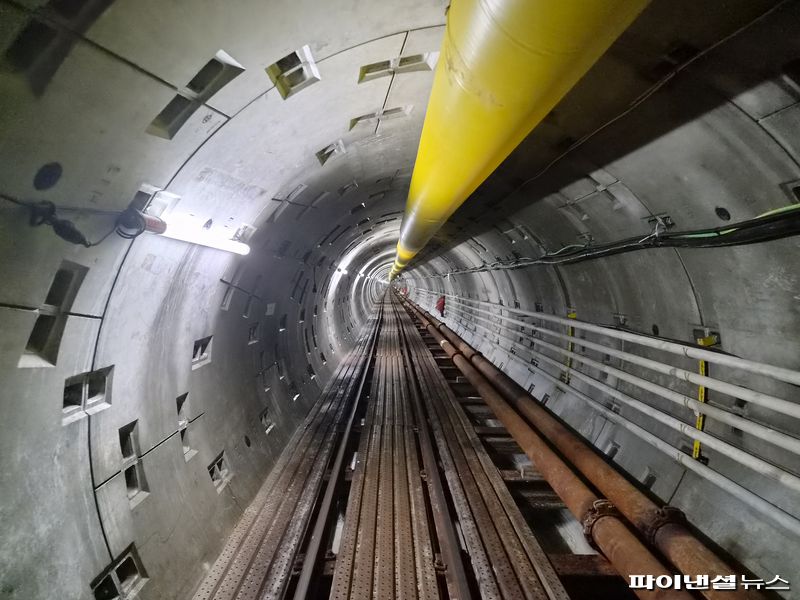
After exiting the elevator, we saw a circular tunnel approximately 3 meters in diameter stretching into the distance. Ventilation fans were operating overhead, while a thick yellow tube supplying fresh air extended along the tunnel. Rails for transporting workers and materials ran alongside pipes used to send excavated material to surface facilities.
After walking inward for about 10 minutes, we came across Segment 165, marked “Offshore Section.” This indicated that the tunnel would continue beneath the Yellow Sea from that point. Although the surface temperature rose to 31°C that day, the underground thermometer read 23°C. However, the tunnel beneath the Yellow Sea was humid, so it was not simply cool.
Kolon Global is constructing this site under a project commissioned by Korea Electric Power Corporation (KEPCO)’s Gyeongin Construction Headquarters. The project involves excavating a passage for the power grid by connecting the New Sinsiheung Substation and the New Songsongdo Substation through an underground transmission network. A total of 158 billion won will be invested to build a 6,037-meter power tunnel.
Once completed, the tunnel is expected to serve as infrastructure for reliably supplying electricity through two 345-kilovolt circuits to power-intensive facilities, including biotech companies and AI data centers in Songdo International City, as well as Seoul National University’s Siheung campus and hospitals.
Construction began in October 2024, and completion is scheduled for December 30, 2028. Jang Gi-su, the site manager, emphasized, “Our goal is to complete the work within the scheduled construction period and ensure an uninterrupted power supply to Songdo and Siheung.”
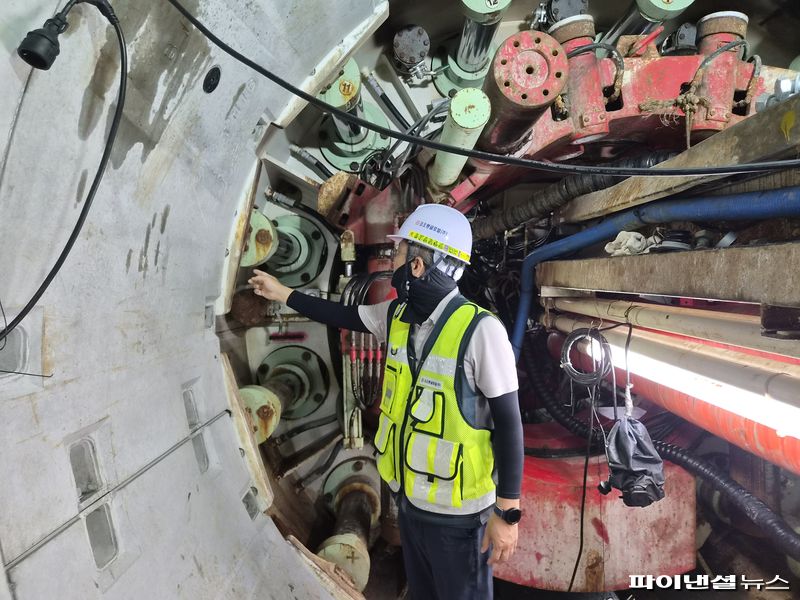
After walking another 15 minutes, we encountered a shield tunnel boring machine (TBM) filling the tunnel cross-section. The equipment was temporarily stopped for inspection that day.
The equipment deployed at the site is a slurry-pressure shield TBM. Its circular cutterhead rotates at the front to break the bedrock into small pieces, while slurry made by mixing water and bentonite transports the excavated material to the surface through pipes. At the surface plant, the rock, soil and water are separated again.
The TBM presses 12 propulsion jacks against the most recently installed segment and uses the resulting reaction force to move forward. The cutterhead cuts through the bedrock at the front, while equipment operated remotely by an operator at the rear lifts thick precast-concrete segments one by one and assembles them into a circle. Grout is injected into the gap between the segments and the excavated surface to integrate the ground with the tunnel structure.
Once excavation work in Section 4 is completed this month, the equipment will also be moved to Section 5 for deployment. Site officials expect excavation speed and the progress rate to increase further when two TBMs operate simultaneously starting next year.
Because the power tunnel is located 90 meters underground, the construction also maintains physical distance from surface residential areas. Site officials explained that this reduces residents’ direct exposure to excavation noise and vibration and keeps the completed transmission facilities a sufficient distance from living spaces. Once construction is finished, the surface area around the vertical shafts will be developed into a park.
With work continuing around the clock deep underground, safety management is as important as the construction schedule. Kolon Global operates “Golden Rules 11,” which covers the use of personal protective equipment, access control around work areas, and the prevention of electrical accidents, falls and fires. Before work begins, workers share information about hazards and inspect equipment grounding and leakage circuit breakers.
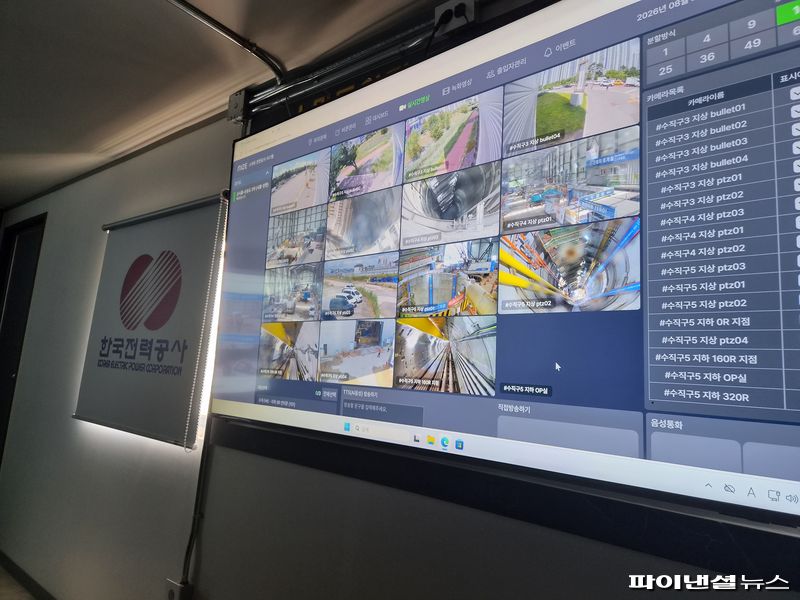
The workers encountered in the tunnel that day all moved in groups of two or three. Working alone is prohibited because an accident during solo work could delay detection and rescue. Multilingual safety signs have also been installed throughout the site for workers from Myanmar, Sri Lanka and Cambodia, who account for about half of the total workforce. Jang emphasized, “We must always move together,” adding, “Even if you are not working directly with someone, paying attention to what the person next to you is doing is the starting point for preventing accidents before they happen.”
[email protected] Choi Ga-young Reporter