Iran War Has Lasted More Than Six Months... “It Will Continue for Another Six Months”
- Input
- 2026-09-07 09:59:49
- Updated
- 2026-09-07 09:59:49
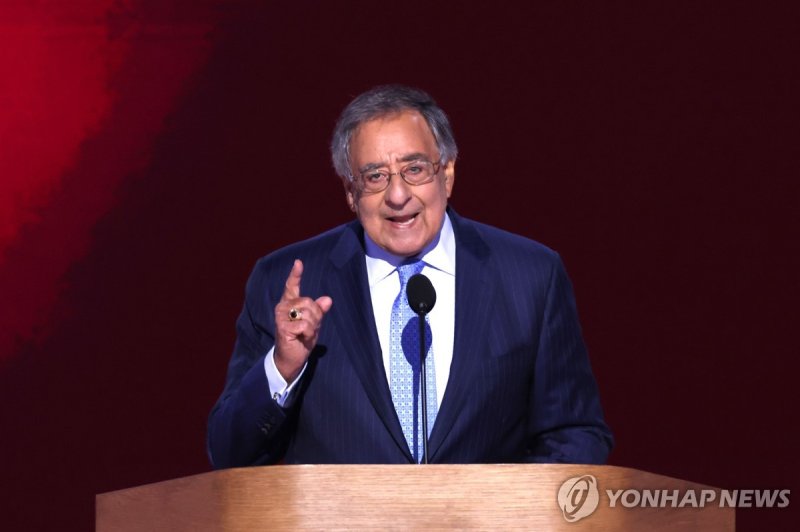
[Financial News] A former U.S. defense secretary has warned that the Iran war is highly likely to continue for another six months.
Former U.S. Defense Secretary Leon Panetta said in an interview with the British newspaper The Guardian on the 6th local time, "I believe it is highly likely to continue for another six months." Panetta served as director of the Central Intelligence Agency (CIA) and secretary of defense under the Barack Obama administration.
More than six months after the United States and Israel began attacking Iran, analysts say President Trump has put himself in a position where it is difficult to withdraw from the war.
He noted that the two sides could remain in the current stalemate, exchanging intermittent retaliatory strikes. Both sides are refusing negotiations and capitulation while seeking to avoid escalation. Panetta warned that if this situation continues, it could become another failed protracted war like the Iraq War and the Afghanistan War.
"Extreme confusion in the chain of command... It feels as though no one is in charge"
He said President Trump had the option of withdrawing from the war and acknowledging failure, but believed it would be difficult for him to make that choice.
Panetta also pointed to confusion within the United States Department of Defense (DoD), which is directing the war.
He said, "Troops are going to war while the DoD is in a state of extreme confusion in its chain of command," adding, "It gives the impression that no one is in charge." He expressed concern that this confusion was signaling to U.S. adversaries—including China, Russia, North Korea, and Iran—that the United States had grown weaker.
Army Secretary Daniel P. Driscoll submitted his resignation on the 31st of last month. Driscoll was reportedly at odds with Defense Secretary Pete Hegseth over the successive dismissals of senior generals.
Panetta also raised the issue of rotating troops who have been deployed for extended periods. "Troops should not be sent to the battlefield indefinitely without even making plans for their rotation," he said. He suggested that confidence was also eroding in whether the military was properly supporting its personnel.
"More Americans are losing faith in Trump's ability to conduct the war"
He also cited opinion polls to argue that many Americans no longer trust President Trump's ability to conduct the war. The evidence he presented was a survey showing that a majority of Americans viewed the Iran war as the wrong choice.
According to a poll conducted by The Economist and YouGov from the 14th to the 17th of last month, as cited by The Guardian, 57% of respondents said that starting a war with Iran was the wrong decision. In a separate question about ways to end the war, 65% said an agreement should be reached to end the war as soon as possible.
He argued that the United States should make the resumption of transit through the Strait of Hormuz its top priority in order to win the war. The United States, he said, must control the Strait of Hormuz, a major maritime trade route in the Middle East. Panetta believed Iran could use blockading the strait and disrupting vessel traffic as leverage against the United States. His explanation was that the United States must control the strait to eliminate that means of pressure.
Meanwhile, when asked on the 3rd whether he expected the military conflict with Iran to end before the U.S. midterm elections, Vice President JD Vance replied, "I don't know the answer to that question either. You'd have to ask Iran."
[email protected] International Affairs Specialist Lee Seok-woo Reporter