"Why Does My Vision Look Hazy Even Though My Visual Acuity Is 1.0?" What Could Be Wrong with My Eyes? [Health Talk]
- Input
- 2026-09-07 09:06:05
- Updated
- 2026-09-07 09:06:05
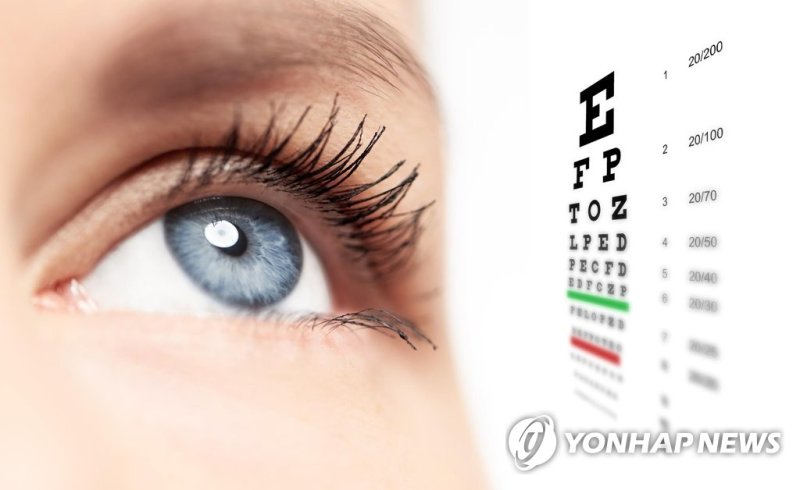
[Financial News] Many people feel that their vision is "not as clear as it used to be" even after receiving normal results on a visual acuity test. Experts explain that this is because visual acuity tests assess only part of the eye's functions.
The expression "my eyes feel hazy" does not refer to a single disease. Various causes, ranging from the natural aging of the eyes to presbyopia, cataracts, and glaucoma, can be perceived as the same symptom.
Many people experience discomfort even when no particular abnormality is found during a visual acuity test. This is often not because medical professionals fail to understand the symptoms, but because the changes may stem from a condition that cannot be explained or treated with modern medicine, or from the natural aging process. Therefore, being told that "everything is normal" does not necessarily mean there is no discomfort. Rather, it generally means that no condition has been found that can be confirmed or clearly resolved through current testing and treatment.
Every organ in the body gradually loses some function over time, and the eyes are no exception. In fact, because the eyes are among the body's most sophisticated organs, they are relatively quick to show the effects of aging. The eyes must focus accurately on both distant and nearby objects and regulate the amount of light appropriately in bright and dark environments. As time passes, the ability to focus, distinguish light, and maintain sharpness gradually declines.
Ophthalmologists usually measure visual acuity first, but this test evaluates only part of the eye's functions. Visual acuity, as commonly understood, measures how well a person can distinguish small letters under conditions with very clear contrast. In everyday life, however, contrast sensitivity becomes more important in situations with little difference in color or brightness, such as rainy weather, foggy roads, dim indoor spaces, and nighttime driving. As a result, people may feel that their vision is "not as clear as it used to be" even when their visual acuity is normal at 1.0 or higher.
Presbyopia, Cataracts, and Glaucoma: Different Causes and Treatments
Presbyopia, which appears after the age of 40, is thought to occur as the eye's ability to focus on nearby objects declines because the lens and zonular fibers lose elasticity and the function of the ciliary muscle deteriorates. However, its exact mechanism has not been fully established. It is more appropriate to regard presbyopia as a normal part of aging rather than a disease. There is also insufficient medical evidence to support claims that eye exercises can prevent or treat presbyopia.
Unlike presbyopia, a cataract is a condition that requires treatment. The lens, which should normally be transparent, gradually becomes cloudy with age, causing blurred vision. It may also lead to increased glare in bright places or faded color perception. There are currently no medications that can restore transparency to a clouded lens. If the condition progresses enough to interfere with daily life, the most effective treatment is surgery to remove the lens and insert an artificial one.
Recently, many people have chosen artificial lenses that correct astigmatism or provide multifocal or extended-depth-of-focus vision. However, multifocal lenses can cause nighttime halos or glare and do not guarantee perfect results for everyone.
Glaucoma is entirely different from a cataract and involves damage to the optic nerve. As the optic nerve is damaged, the peripheral field of vision gradually narrows. Because this can be difficult to notice in the early stages, glaucoma is often discovered only after it has progressed considerably if a person does not undergo regular checkups. Once damaged, the optic nerve cannot regenerate. Therefore, the goal of treatment is not to reverse the damage but to slow further progression as much as possible.
In Korea, normal-tension glaucoma, which develops even when intraocular pressure is within the normal range, is particularly common. Glaucoma is not determined by intraocular pressure alone. Multiple factors, including the structural characteristics of the optic nerve and blood flow, work together. Nevertheless, sufficient evidence has accumulated that treatment to lower intraocular pressure can help slow the disease's progression even when pressure is within the normal range.
Eye Health: Lifestyle Management Is Key
Although there is no way to completely prevent the aging of the eyes, regular ophthalmic examinations and healthy lifestyle habits can help maintain eye health for longer. Smoking is harmful to both cataract prevention and optic nerve health, and excessive alcohol consumption should be avoided. Regular exercise is beneficial, but people with glaucoma should be cautious about activities that can raise intraocular pressure, such as keeping the head down for long periods or doing headstands. Those who use glaucoma eye drops should apply them consistently at the prescribed times. After washing their hands thoroughly, they can gently pull down the lower eyelid and place the drops into the conjunctival sac for safer and more effective use.
Lee Kyoungmin, a professor of ophthalmology at Boramae Medical Center, emphasized, "The symptom of 'hazy vision' does not simply mean that a person is getting older. It may be a natural part of aging, but it can also signal a condition requiring management and treatment, such as presbyopia, a cataract, or glaucoma." Lee added, "Rather than judging the symptoms on your own, it is most important to accurately assess the current condition of your eyes through regular ophthalmic examinations."
[email protected] Medical Specialist Jung Myung-jin Reporter