Lebanese Traditional Performing Troupe Visits Historic Gyeongju
- Input
- 2026-09-07 09:07:42
- Updated
- 2026-09-07 09:07:42
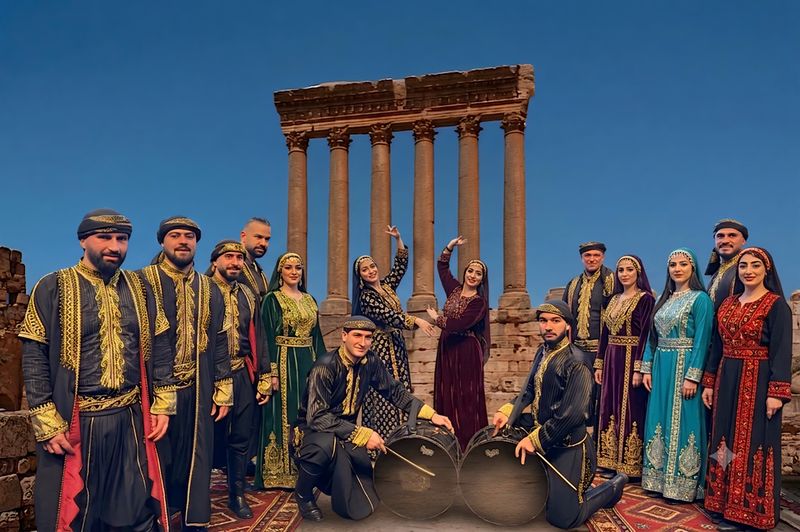
【Financial News, Gyeongju = Reporter Kim Jang-wook】Hayakel Baalbek, Lebanon’s leading traditional performing troupe, is drawing attention with its visit to Gyeongju, a city with a thousand-year history.
The 19th Arab Cultural Festival, sponsored by the Ministry of Foreign Affairs (MOFA) and jointly hosted by the Korea-Arab Society (KAS) and the Gyeongbuk Culture and Tourism Organization, will be held on the 10th at the Munmu Hall of the Culture Center at Gyeongju Expo Grand Park.
In particular, Hayakel Baalbek, a leading Lebanese dance troupe, has been invited to present Arab culture, rooted in a long history and rich traditions, to audiences in Korea.
Hayakel Baalbek previously attracted global attention by performing the traditional dance Dabke at a welcome event during Pope Leo XIV’s visit to Lebanon last December. Dabke is a representative traditional dance that has been passed down for centuries in the Levant, including Lebanon, Jordan, Syria and Palestine. It is characterized by group choreography performed by multiple people to dynamic rhythms.
Kim Nam-il emphasized, "I hope this performance, which embodies Lebanon’s traditions and culture, will broaden cultural understanding and exchanges between Korea and Lebanon and serve as an opportunity for Gyeongju to establish itself as an international cultural tourism city where the cultures and arts of countries around the world come together."
Before the performance, a culture talk hosted by Egyptian-born broadcaster Samy Rashad will also be held. Samy will explore Arab culture and the history of exchanges between Korea and the Arab world with the audience, introducing Arab culture—which may feel somewhat unfamiliar—in an accessible and engaging way.
The event holds added significance because Gyeongju is a city where traces of exchanges between Eastern and Western civilizations have remained since ancient times. As traces of international exchange can also be seen in Gyeongju, the capital of Silla, through the stone warrior statue at Gwaereung, the golden sword from the tomb of King Michu and the glass artifacts from Cheonmachong, the culture talk will offer an opportunity to understand Arab culture.
Choi Seong-su, secretary-general of the Korea-Arab Society, said, "This festival is a special occasion where Korea’s traditions blend with the exotic dances of the Arab world." He added, "It will be a valuable opportunity for Koreans to experience Lebanon’s culture and arts up close—something they do not often have the chance to encounter."
The performance is free and open to everyone. More information is available on the Gyeongju Expo Grand Park website, and admission is also available through on-site registration on the day of the performance.
[email protected] Kim Jang-wook Reporter