“Shares Down 38%, but There Will Be No Supply Next Year” — Could Samsung Electronics and SK hynix See a Reversal?
- Input
- 2026-09-07 07:17:42
- Updated
- 2026-09-07 07:17:42
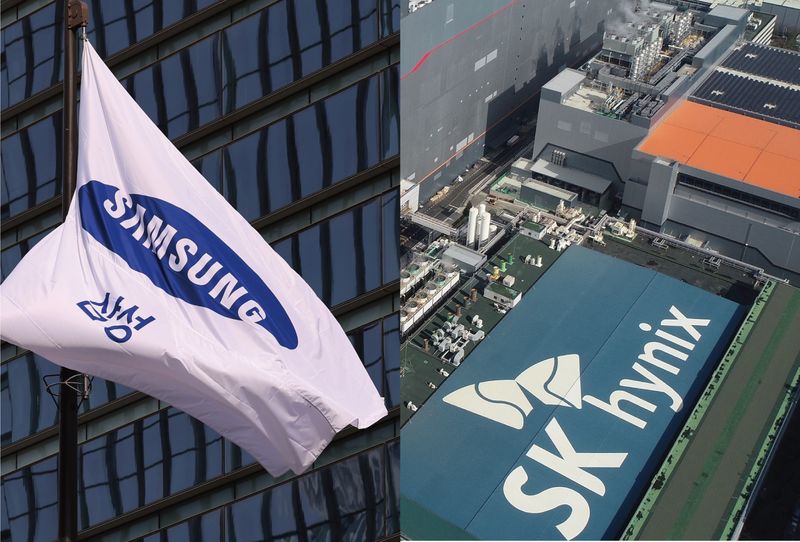
[Financial News] With the share prices of Samsung Electronics and SK hynix down 38% from their recent highs over the past three months, analysts say a severe memory semiconductor shortage next year could trigger a revaluation of the two companies. As surging investment in artificial intelligence (AI) infrastructure drives up memory demand, the companies may even face a shortage of products available for actual sale.
KB Securities said on the 7th, “The memory market next year is expected to face the tightest supply environment in history.” It named Samsung Electronics and SK hynix as its top picks in the semiconductor sector.
According to the brokerage, the two companies’ memory inventories had fallen to less than 10 days as of the third quarter of this year. The assessment is that supply itself could become absolutely insufficient, going beyond a mere recovery in demand. Kim Dong-won, head of KB Securities’ Research Division, forecast, “Next year, the possibility of an actual depletion of memory products available for sale could become a reality.”
The key driver of demand is investment in AI by major global cloud companies. Kim analyzed that their AI infrastructure investment for 2027 is being sharply revised upward to $1.3 trillion, a 60% increase from the previous year. He explained that investment is expanding as cloud AI services, token-based billing, agentic AI, and model hosting establish themselves as direct sources of revenue.
The share of memory in overall investment is also expected to grow. KB Securities estimates that memory semiconductors will account for 14% of AI infrastructure investment in 2025, 40% in 2026, and 57% in 2027. That would represent an approximately fourfold increase in two years. TrendForce’s forecast for 2027 is even higher, at 68%.
The outlook is not limited to high-bandwidth memory (HBM). AI servers are expected to absorb demand not only for HBM but also for server DDR5 and enterprise solid-state drives (eSSDs), increasing supply pressure across the memory market. Next year, demand growth for DRAM and NAND flash memory in bit terms is projected to exceed supply growth by more than 10 percentage points.
The expansion of HBM4 production was identified as a factor constraining the supply of conventional DRAM. Kim said, “HBM4 uses three times as much wafer production capacity as conventional DRAM,” adding, “The more HBM4 production increases, the less production capacity remains for conventional DRAM, which could worsen the supply shortage.”
In particular, he said, “Samsung Electronics and SK hynix shares have fallen 38% from their highs over the past three months, leaving their price-to-earnings ratios (PERs) at around 3x based on projected 2027 earnings.” He added, “With record earnings expected over the next three years and large-scale shareholder return policies likely to continue, a powerful revaluation is expected to begin after this extreme undervaluation.”
[email protected] Choi Doo-sun Reporter