Iran Declares New Control Zone in the Persian Gulf... Claims to Have Struck U.S. Navy Drone
- Input
- 2026-09-07 06:48:56
- Updated
- 2026-09-07 06:48:56
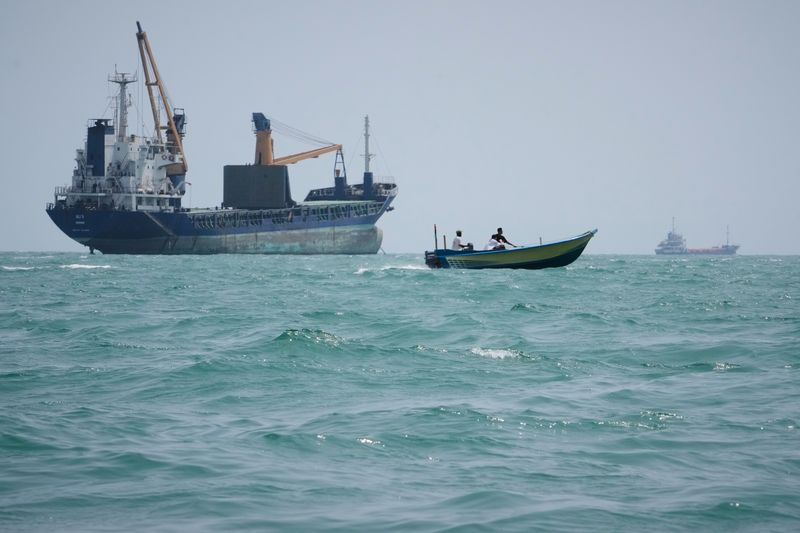
[Financial News] Iran has established a new control zone in the Persian Gulf and warned that it would place any vessel entering the United States Navy's blockade line on its sanctions list.
According to Iranian state media on the 6th (local time), Mohsen Rezaei, Secretary of the Supreme National Security Council of Iran, stated that the newly designated zone will include major waters of the Persian Gulf. Rezaei specified that the control zone begins at the United States Navy's blockade line and that any vessel entering the waters will be immediately added to Iran's sanctions list.
In addition, Iran is simultaneously taking measures to manage ship traffic within the Strait of Hormuz. Rezaei stated that Iran had agreed with Oman to produce a detailed map of ship transit routes in the Strait of Hormuz and that a final signing is scheduled to take place within a few days.
This announcement comes just one day after the United States struck three Iranian oil tankers in response to Iran firing a ballistic missile at a U.S. warship. Experts view this missile launch as a dangerous escalation of the conflict, following previous attacks targeting commercial vessels.
In an interview with state television, Rezaei stated, "The new control zone will be announced within a few days or weeks," adding that it "will start at the United States Navy's blockade line, extend to the Strait of Hormuz, and expand into the Arabian Gulf." He further warned, "Vessels detected entering this zone for the purpose of passing through the Strait of Hormuz will be placed on Iran's sanctions list."
The exact location of the United States Navy's blockade line, currently blockading Iranian ports and preventing Iranian oil exports, is not clearly known. The U.S. military stated that more than 20 warships are supporting the blockade operation and that so far, 92 commercial vessels have been diverted and three have been neutralized.
The United States and Iran resumed attacks last week, one month after a lull. The Trump administration is pursuing a two-pronged strategy of military response alongside sanctions against foreign financial institutions handling Iranian funds.
Rezaei expressed dissatisfaction with the mediating countries over the abrogation of the Memorandum of Understanding (MOU) signed by the United States and Iran in mid-June.
He emphasized, "We trusted allies who stepped forward to mediate, such as Pakistan, Qatar, and Oman, but they failed to fulfill their duty to prevent one side from violating the agreement," adding, "Now we will pursue only diplomacy that includes solid 'guarantees'."
Meanwhile, Euronews reported that Iran claimed to have struck a United States Navy drone, and the U.S. military immediately denied this.
Iranian state broadcaster reported that the Islamic Revolutionary Guard Corps successfully struck a United States Navy drone attempting to enter the Strait of Hormuz, which Iran had designated as a control zone. Iran is significantly escalating its aggressive military response within the strait, issuing warnings of the possibility of further U.S. attacks.
However, immediately after Iran's announcement, a spokesperson for United States Central Command directly refuted the claim, calling it a "complete lie."
[email protected] Yoon Jae-jun Reporter