U.S. Energy Secretary: “Allies Expected to Help Defend Strait of Hormuz”
- Input
- 2026-09-07 05:41:33
- Updated
- 2026-09-07 05:41:33
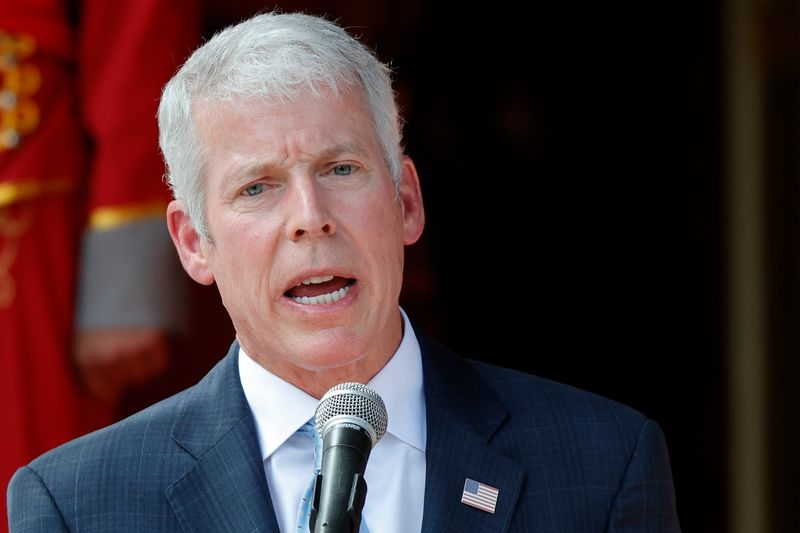
[Financial News] U.S. Secretary of Energy Chris Wright publicly called on allies and partner countries to expand their military roles in supporting crude oil shipments through the Strait of Hormuz.
In interviews with major broadcasters, including CNN and Fox News, on the 6th (local time), Wright described U.S. military operational support for crude oil shipments passing through the Strait of Hormuz as “essential.” However, he stressed that “this should not be solely the responsibility of the United States,” emphasizing the need for other countries to join the effort.
Asked whether U.S. military support operations had become the “new normal,” he acknowledged that “for now, that is the case.” He added, “I believe other countries will join this effort going forward. I hope military assets will be deployed quickly by allies outside the Middle East as well.”
Wright also said that “several countries have already indicated their willingness to cooperate,” but he did not explicitly name any specific countries, including South Korea, or detail the form of support they might provide.
The South Korean government is also reportedly considering various ways to expand its military contribution to ensure navigational safety in the Strait of Hormuz.
Meanwhile, Wright rejected claims that the daily crude oil shipment figures for the Strait of Hormuz announced by the Trump administration had been inflated, calling them “a fact, not speculation.”
He said that an average of about 18 million barrels of crude oil passed through the Strait of Hormuz each day last week, while 4 million to 5 million barrels were transported through pipelines.
U.S. President Donald Trump has repeatedly emphasized that the primary goals of the military operation are to prevent Iran from acquiring nuclear weapons and to reach a nuclear deal.
In an interview with ABC News, Wright addressed the possibility of nuclear negotiations with Iran, saying, “There may be no nuclear deal, and the matter could instead be resolved by neutralizing Iran’s nuclear development capabilities.” His remarks suggested that negotiations could be deferred to the next administration.
[email protected] Yoon Jae-jun Reporter