[Editorial] Record Export Boom: Now Is the Time for Structural Reform to Address K-Shaped Polarization
- Input
- 2026-09-06 18:53:47
- Updated
- 2026-09-06 18:53:47
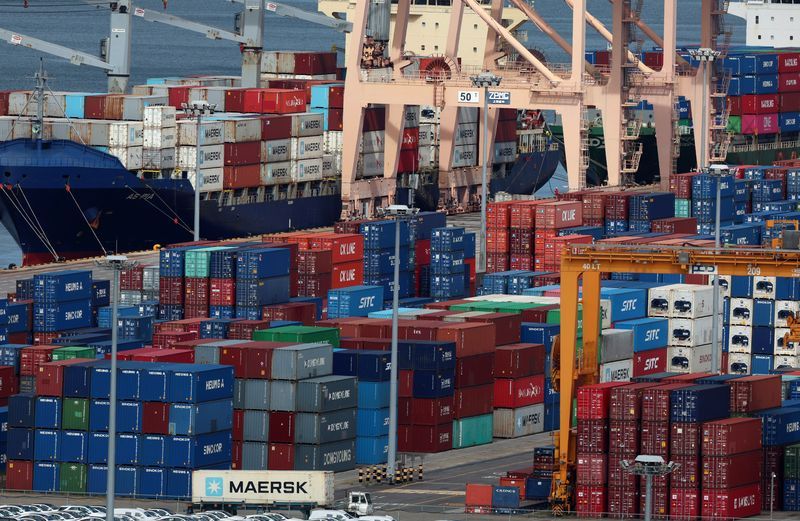
The message contained in these figures is significant. Only the United States, China, and Germany have annual exports exceeding $1 trillion. At this pace, South Korea’s economy could join the world’s top four exporting nations. The global trading environment is deteriorating, with risks stemming from the Middle East compounded by tariff negotiations with the United States. The fact that South Korean exports are setting new records despite these overlapping headwinds demonstrates the strong responsiveness and competitiveness of the country’s companies.
Yet the stronger the economy performs, the more tasks there are to address. The foremost challenge is to structurally resolve “K-shaped polarization.” A key example is the growing weakness of domestic demand compared with exports. Exports are a vulnerable pillar that can be shaken at any time by external conditions. They can fluctuate in response to a single variable, such as the situation in the Middle East, stronger protectionism, or the restructuring of global supply chains. For that reason, the economy must fly on both wings—exports and domestic demand—to remain resilient. An economic structure dependent on only one wing is bound to be severely shaken by external shocks. Ultimately, the reality of this polarization is the gap between dazzling export statistics and the livelihoods experienced by ordinary people.
A report released by the Hyundai Research Institute (HRI) on the 6th found that the economy has entered an expansionary phase, driven by strong semiconductor exports, but that the benefits have not spread sufficiently to domestic sectors such as consumption and employment. This is why warnings are emerging that K-shaped polarization could become entrenched. Exports in August surged 68.7% from a year earlier, but the retail sales index in July actually fell from the previous month, while consumption of durable goods shifted from growth to decline. Domestic competitiveness must be strengthened now so that, if export competitiveness deteriorates in the future, the domestic market can absorb the shock.
The concentration of competitiveness among industries is also intensifying. From January through August this year, semiconductor exports surged 169.6% from the same period last year and accounted for 40.6% of total exports. In August alone, that share climbed to 47.5%. The structure is one in which semiconductors are effectively driving export growth. This inevitably translates into gaps between large companies and small and medium-sized enterprises, as well as between specific industries and all others. Excessive dependence on a particular product is favorable for economic indicators during a boom. However, when the market cycle of that industry peaks and turns downward, the impact on the entire economy is also substantial.
This is not the time to be intoxicated by expectations of ushering in an era of $1 trillion in exports. The tasks are piling up: diversifying export products to reduce dependence on semiconductors, strengthening the export competitiveness of small and medium-sized enterprises, developing sophisticated price and fiscal policies to support a domestic recovery, and finding ways to manage the burden of rising national debt. The government and political circles must take seriously that postponing these tasks while basking in impressive export results could lead to a costly bill in the future. More important than the figure of $1 trillion in exports is ensuring that this achievement leads to a recovery in people’s livelihoods that they can actually feel.