The Breath of History in a Faded Sheet of Paper: BANDO MPS CEO Na Bong-ju Publishes ‘Chebu III’
- Input
- 2026-09-07 16:56:03
- Updated
- 2026-09-07 16:56:03
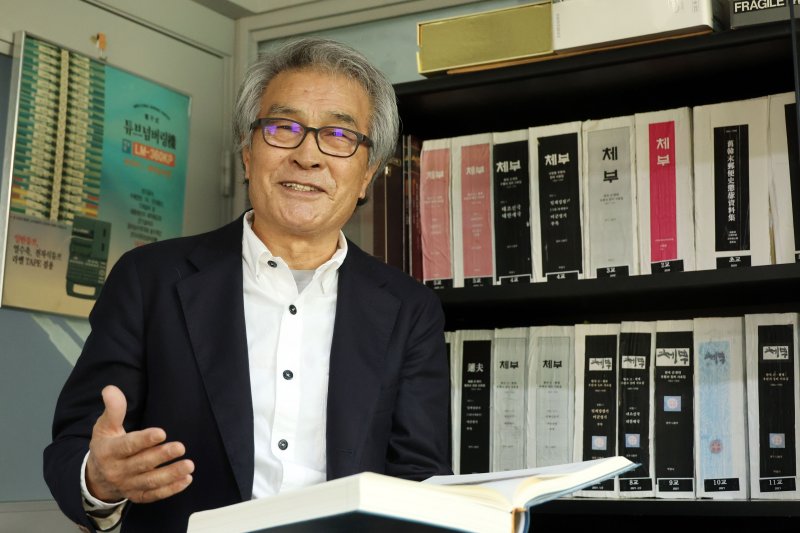
"At first, I simply wanted to create a stamp catalog. But as I organized the materials, I began to feel the breath of our history in every stamp. At some point, I even felt as though I were involved in the independence movement."
That is what says Na Bong-ju, 78, CEO of BANDO MPS, who transformed from a stamp collector into a chronicler of modern and contemporary Korean history. What began as a hobby when he was a teenager developed over six decades into an effort to preserve records of Korea’s modern and contemporary history that are gradually being forgotten.
■ Modern and Contemporary Life Seen Through Revenue Stamps
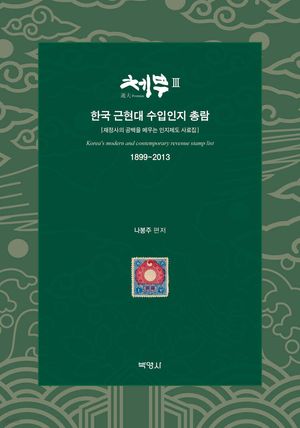
Na Bong-ju recently published “A Comprehensive Catalog of Korean Modern and Contemporary Revenue Stamps,” the third volume in the “Chebu” series, through Pakyoungsa Publishing. While the first two volumes covered stamps and postal history, the focus of this book is revenue stamps. It brings together, in chronological order, tax stamps from the Korean Empire, revenue stamps issued during the Japanese colonial period, by the Provisional Government of the Republic of Korea, during the United States Army Military Government in Korea, and by governments after liberation, along with revenue stamp labels. Through a small sheet of paper, readers can glimpse an era’s finances and administration, as well as the process by which a nation came into being.
In fact, Na had planned to conclude the massive project after publishing “Chebu II.” He was so exhausted from spending more than seven years collecting materials and writing the manuscript—publishing the second book just two years after the first—that even typing had become difficult.
What changed his mind was a revenue stamp from the Korean Empire that a dealer handed him in the fall of 2024. He discovered traces of history in the rare material, unfamiliar even to stamp collectors, and purchased a collection of Korean Empire and Japanese colonial-era revenue stamps once owned by a Japanese American collector for $300,000, or approximately 430 million won. He did so out of a sense of duty to recover Korean records scattered overseas.
The book contains a wide range of historical materials, from modern tax administration to the Provisional Government’s independence bonds and fundraising for the independence movement, as well as administrative systems introduced after the period of the United States Army Military Government in Korea. It also includes contracts and receipts bearing actual revenue stamps, vividly conveying everyday life at the time. In particular, Na carefully examined official gazettes to verify the basis for each issuance and strictly classified unclear materials as “unconfirmed,” enhancing the objectivity of the historical records.
"It is more important to preserve the materials honestly than to interpret them perfectly. If I am wrong, researchers in later generations can correct me. What matters is leaving records behind before the originals disappear."
■ “I Will Publish ‘Chebu IV’ for Children”
The name “Chebu” reflects his longstanding love of stamps, which began when he waited for the mail carrier as an elementary school student. The purpose of the books was not commercial profit. He donated the first book free of charge, at his own expense, to universities, libraries, and post offices across the country. He also sent copies to overseas embassies and cultural centers so that Korean residents abroad and foreigners could read them. A handwritten letter from an elementary school student is what he considers his greatest reward.
His plan to end the series with the third book has now led to a fourth volume for children and teenagers. He plans to include cartoons and illustrations so that younger readers can understand it more easily.
"I want children to become curious when they look at stamps and explore the era represented in them on their own. Rather than teaching history in a difficult way, I want to show it through the small window of a stamp."
The excitement a boy felt while looking at stamps more than 60 years ago has now grown into a mission to convey history in its entirety. After collecting traces embedded in stamps, revenue stamps, old envelopes, and documents and publishing three books, he now hopes to pass that legacy on at a level accessible to younger generations.
"Perhaps what I have collected throughout my life is not stamps, but time that we must not forget. Once this project is over, I think I may finally be able to get some rest."
[email protected] Jung Soon-min Reporter