"Comprehensive Real Estate Tax Burden 56.6 Times... 22 Out of 25 Seoul Districts Affected in 4 Years"
- Input
- 2026-09-06 15:34:45
- Updated
- 2026-09-06 15:34:45
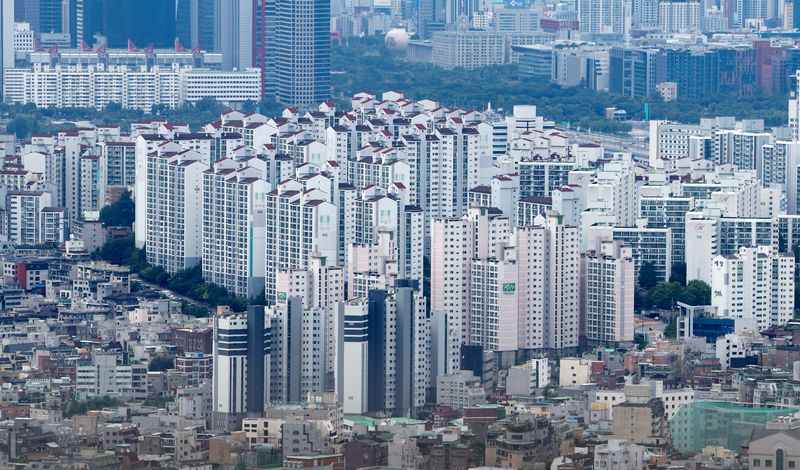
[Financial News] An analysis suggests that if Seoul's housing prices continue to rise, the Comprehensive Real Estate Tax could be levied in all areas of Seoul, excluding Gangbuk District, Geumcheon District, and Dobong District, by 2030.
On the 6th, Rep. Shin Dong-wook of the People Power Party, a member of the National Assembly's Political Affairs Committee, announced these results after analyzing the exclusive area of 112m2 (34 pyeong) in a total of 125 complexes—the top 5 complexes by KB market price in each of Seoul's 25 autonomous districts—based on data submitted by KB Kookmin Bank.
This scenario reflects the government's tax reform plan and amendments, applying a basic deduction of 1.4 billion won for actual residence and 1.2 billion won for non-residential residence after 2027, a fair market value ratio of 70%, and a tax burden ceiling of 150%.
According to the analysis, the Comprehensive Real Estate Tax will be imposed on 78 complexes in 19 districts this year. In addition, assuming that Seoul apartment prices maintain the same 11% growth rate as the past year (June 2025 to May 2026), the number will increase to 101 complexes in 22 districts based on non-residential criteria by 2030.
Currently, taxation targets will also appear in Gwanak District, Nowon District, and Jungnang-gu, where none of the five sample complexes pay the Comprehensive Real Estate Tax. This effectively expands the scope of taxation to most autonomous districts, excluding Gangbuk District, Geumcheon District, and Dobong District.
Based on the complex criteria, 23 of the 47 complexes currently exempt from taxation will newly pay the Comprehensive Real Estate Tax by 2030. This includes 4 complexes each in Gangseo District, Gwanak District, Guro District, and Eunpyeong District; 3 in Seongbuk District; 2 in Jongno District; and 1 each in Nowon District and Jungnang-gu.
It was analyzed that the number of taxpayers decreased briefly immediately after the tax reform, but increased again as the rise in housing prices accumulated.
The number of complexes subject to non-residential taxation decreased from 78 this year to 68 in 2027, then continued to increase to 82 in 2028, 94 in 2029, and 101 in 2030.
The increase in the tax burden was even greater. The Comprehensive Real Estate Tax levied on all 125 complexes, reflecting the total number of households, is estimated to rise 8.9 times from 58.9 billion won this year to 526.2 billion won in 2030 based on non-residential standards. Even based on actual residence standards, it increased 5.7 times to 334.7 billion won.
It was found that the tax burden is increasing relatively significantly in non-Gangnam areas. The total Comprehensive Real Estate Tax for major complexes in Eunpyeong District, Guro District, Seongbuk District, Gangseo District, Dongdaemun District, Gwanak District, Nowon District, and Jungnang-gu will rise from approximately 720,000 won this year to approximately 40.58 million won in 2030 based on non-residents, resulting in a 56.6-fold increase in the tax burden.
Representative Shin Dong-wook stated, "Although the government's tax reform plan was partially modified, it has caused significant confusion in the real estate market," adding, "Going forward, the Comprehensive Real Estate Tax will effectively become a 'Seoul Citizen Tax' imposed even on ordinary citizens who own a single home in Seoul."
[email protected] Choi A-young Reporter