Another 2003? National Assembly on Alert Over Possible Deployment to the Strait of Hormuz
- Input
- 2026-09-06 16:09:14
- Updated
- 2026-09-06 16:09:14
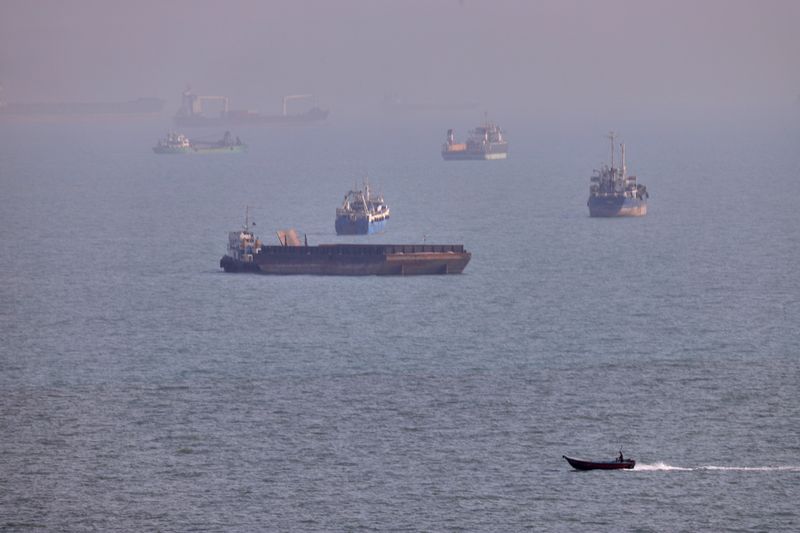
[Financial News] The National Assembly is closely watching the issue after Cheong Wa Dae announced that it is considering deploying troops to the Strait of Hormuz. Under the Constitution, overseas troop deployments require approval from the National Assembly, and the government is expected to submit a deployment-consent bill this month. Although approval requires support from a majority of lawmakers, opposition is also emerging within the ruling bloc, making passage of the bill uncertain. Concerns are growing that the issue could become a flashpoint for divisions within the ruling bloc.
According to political sources on the 6th, Cheong Wa Dae is considering a troop deployment to help stabilize the Strait of Hormuz. President Lee Jae Myung is scheduled to make a state visit to France from the 6th to the 9th, and discussions on deploying troops to the Strait of Hormuz are expected to arise during his meeting with President Emmanuel Macron.
The deployment to the Strait of Hormuz was discussed immediately after the war with Iran broke out in March, but the issue later subsided. The debate, however, appears to be reigniting after U.S. President Donald Trump said last month, while scaling back a South Korea-U.S. joint exercise, "I asked the South Korean president if they were willing to join efforts to denuclearize Iran, but they said, 'No thanks!'" A senior Cheong Wa Dae official said on the 4th regarding the possible deployment, "Freedom of navigation in the Strait of Hormuz is extremely important to our national interest," adding, "We are at the review stage, and nothing has been decided." However, as "military contributions" were mentioned directly, speculation is growing that a deployment has become more likely.
If Cheong Wa Dae decides to deploy troops to the Strait of Hormuz, it must submit a deployment-consent bill to the National Assembly. Under the Constitution, the "dispatch of the armed forces to foreign countries" requires National Assembly approval. A deployment-consent bill passes with the attendance of a majority of all lawmakers and the approval of a majority of those present. The National Assembly currently has 299 members, meaning that at least 150 votes would be needed if all members attended.
The Democratic Party of Korea currently holds 161 seats, meaning it could pass the bill on its own if its members reach a consensus in favor. Some members of the People Power Party have also expressed the view that a deployment is necessary. Lawmakers Ahn Cheol-soo, Park Su-young, and Cho Jung-hun called for a deployment to the Strait of Hormuz in March. At the time, Ahn said, "We must turn a request for troop deployment into an opportunity to secure strategic security assets," arguing, "In exchange for active participation, we must obtain an explicit commitment to the rapid construction of nuclear-powered submarines and expanded authority to enrich uranium and reprocess spent nuclear fuel."
As the details of the deployment have not yet been finalized, the People Power Party is watching the situation while pressuring the government. People Power Party spokesperson Cho Yong-sul criticized Cheong Wa Dae’s consideration of a deployment to the Strait of Hormuz on the 6th, saying, "The trial balloon over troop deployment is only undermining South Korea’s diplomatic position," and adding, "Explain the situation transparently and pursue principled diplomacy based on the national interest, rather than diplomacy driven by political calculations."
The key variable, however, is division within the ruling bloc. Some Democratic Party of Korea lawmakers, along with the RKP and the Progressive Party, oppose the deployment. Democratic Party of Korea lawmaker Lee Gi-heon declared on the 4th, "The deployment of our troops to the Strait of Hormuz cannot be tolerated under any pretext," making clear that he would oppose the deployment-consent bill. Cho Kuk, head of the RKP’s Institute for Innovation Policy, also indirectly criticized the proposal by citing the Constitution: "The Republic of Korea rejects aggressive wars." Progressive Party leader Kim Jong-hoon said, "President Lee must clearly declare that he will not deploy troops." The RKP has 12 lawmakers, while the Progressive Party has four. A considerable number of Democratic Party of Korea lawmakers are also reportedly negative about the deployment. Although they have not expressed their views publicly, they may vote against it. The Democratic Party of Korea has not yet adopted an official position and has called for deliberation, taking a cautious stance.
There are also reportedly concerns within the Democratic Party of Korea that the deployment to the Strait of Hormuz could serve as a catalyst for internal conflict. During the Roh Moo-hyun administration in 2003, a bill approving the deployment of troops to Iraq passed with 179 votes in favor, but Democratic Party lawmakers, who were then members of the ruling party, were sharply divided. Forty-nine Democratic Party lawmakers voted for it and 43 voted against it, leading to intense conflict. There are concerns that if similar divisions recur, factional conflict could once again emerge during the August 17 party convention and eventually weaken the government’s ability to govern.
[email protected] Lee Hae-ram Reporter