Why Don’t Coastal Breakwaters Erode Under Waves? [Science View]
- Input
- 2026-09-08 06:00:00
- Updated
- 2026-09-08 06:00:00
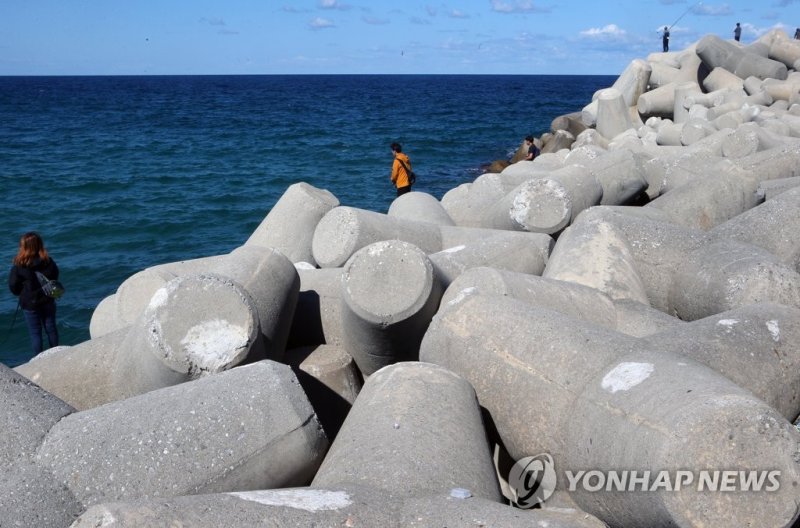
According to the science YouTube channel 'Science View' on the 8th, caltrop-shaped concrete structures with four branches or legs are randomly stacked along the coast. These are Tetrapods, which disperse the force of waves in multiple directions through diffuse reflection when waves strike them. Diffuse reflection refers to the phenomenon in which light scatters in multiple directions after hitting an uneven surface. In other words, the Tetrapods are stacked irregularly to prevent erosion from being concentrated in a single area exposed to the waves.
The surfaces of the Tetrapods are also treated to promote diffuse reflection. In addition, the structures have holes that allow some seawater to enter or bounce back out, helping prevent erosion.
A similar example is the bridge piers built in the sea, which are also made of materials capable of producing diffuse reflection. In particular, underwater bridge piers are designed with enormous mass and size so they will not be worn away by ocean waves. They are also made of special concrete that does not corrode even when exposed to seawater.
[email protected] Yeon Ji-an Reporter