"Only Semiconductors Are Booming, While Domestic Demand Is Slumping... Excessive Monetary Policy Response Could Deepen Polarization"
- Input
- 2026-09-06 15:10:52
- Updated
- 2026-09-06 15:10:52
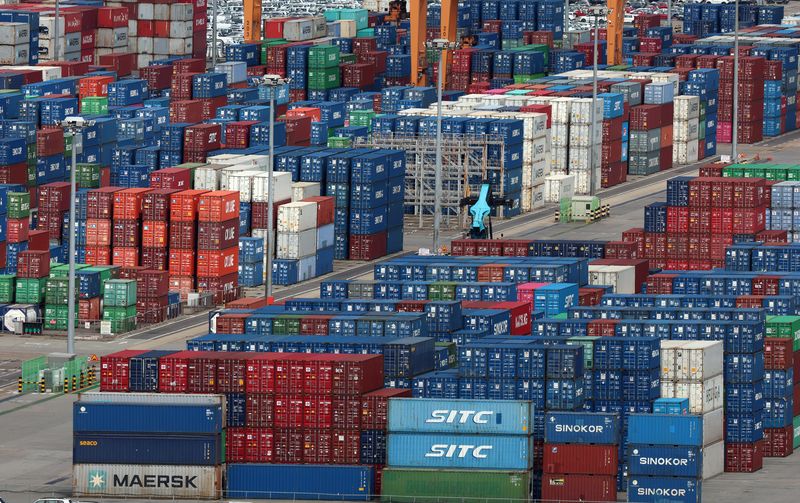
[Financial News] An analysis has suggested that although the South Korean economy has entered an expansion phase on the back of strong semiconductor exports, a rapid response involving interest-rate hikes to address inflation and household debt could make it difficult for domestic demand to recover and entrench K-shaped polarization.
The concern is that excessive central-bank rate hikes could intensify K-shaped polarization, in which the benefits of an economic recovery fail to spread evenly. Export-oriented conglomerates, particularly those in semiconductors, perform well, while other small and midsize companies dependent on domestic demand fall into a prolonged slump.
The Hyundai Research Institute (HRI) presented this analysis in a report released on the 6th titled "It is time to examine the possibility that K-shaped polarization could become entrenched due to an excessive policy response."
The advance estimate for real gross domestic product (GDP) growth in the second quarter was 0.6%, slowing from the 1.8% growth recorded in the first quarter.
Exports surged 68.7% in August from the same month a year earlier, driven by strong semiconductor shipments. Semiconductors' share of total exports rose from 25.9% to 47.5% over the same period.
By contrast, the retail sales index fell 2.4% in July from the previous month, while the growth rate of durable-goods consumption turned negative, declining from 10.3% in June to a 4.1% decrease in July.
The labor market also showed weakness. The youth unemployment rate rose to 6.8% in July, up 1.3 percentage points from a year earlier, while the number of employed young people has continued to decline for 45 consecutive months since November 2022.
In other words, export growth is heavily dependent on semiconductors, while households' perceived economic conditions, consumption, and youth employment are all relatively weak.
HRI emphasized that although the economy is continuing to grow on the strength of semiconductor exports, the slump in consumption indicators and persistently weak household income raise concerns that K-shaped polarization—strong exports alongside weak domestic demand—could become entrenched.
Although the semiconductor export boom began in the second half of last year, its benefits have not translated into stronger domestic demand or improved household finances.
The institute particularly pointed out that, with household debt already high, the sharp rise in market interest rates is rapidly increasing households' interest burden.
It is difficult to rule out the possibility that rate hikes aimed at easing inflationary pressures could trigger a credit-market crunch and weakness in asset markets, ultimately leading to a slump in consumption.
Accordingly, the institute proposed that future policy responses should stabilize prices while preventing a sharp rise in interest rates.
HRI explained, "Efforts to stabilize prices at the microeconomic level must also be pursued to prevent concerns about demand-driven inflation during an economic expansion from spreading and to stop an 'overreaction' scenario in central-bank monetary policy from becoming reality. In order to stabilize oil prices, which remain the most critical source of inflationary pressure, measures such as fuel-tax cuts and the continuation of a maximum-price system are necessary."
[email protected] Kim Hak-jae Reporter