Prosecutors Lose Their Eyes and Ears... “They Are Told to Judge Based Only on the Records” [Seocho Intersection]
- Input
- 2026-09-07 06:00:00
- Updated
- 2026-09-07 06:00:00
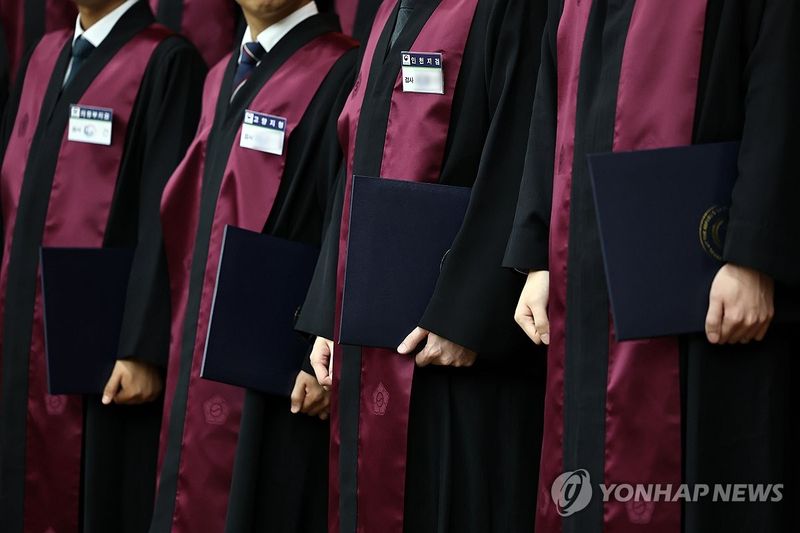
According to legal sources on the 7th, the draft decree on the organization of the Public Prosecution Office and its affiliated agencies, announced by the Ministry of Justice for legislative notice on the 4th, sets the office’s total staffing at 8,412, including 2,292 prosecutors and 6,120 general-service employees. This is 2,294 fewer positions than the current Prosecutors’ Office, which has 10,706 employees, including 2,292 prosecutors.
Information, Evidence and Personnel Disappear
The nature of the organizations being eliminated has emerged as a concern. The Crime Information Planning Officer at the Supreme Prosecutors' Office of the Republic of Korea (SPO), along with two subordinate offices that have analyzed, verified and assessed information related to crimes for which prosecutors may initiate investigations, will all be abolished. In effect, the channel through which prosecutors independently collected and confirmed crime information will be closed.
Field forensic investigation functions will also be transferred to the Serious Crime Investigation Agency. The Forensic Science Department, headed by an official at the level of chief prosecutor, will be abolished, leaving only the Forensic Science Planning Officer, at the level of deputy chief prosecutor, and three subordinate divisions. Cross-examinations needed to decide whether to indict and maintain prosecutions, as well as the operation of evidence-preservation and analysis systems, will remain. However, functions involving the direct collection and analysis of evidence will move to investigative agencies.
Facility investment plans are also being reversed. The Ministry of Justice announced to the media on the 5th that it would comprehensively reconsider whether to proceed with the expansion of the National Digital Forensic Center (NDFC) at the Supreme Prosecutors' Office. The project has been pursued since 2021, taking into account the aging of the existing building completed in 2008, the capacity of forensic personnel and equipment, safety, and international standards for forensic examinations. The Ministry of Justice cited the transfer of field forensic functions to the Serious Crime Investigation Agency and planned organizational and personnel changes as reasons for the review, saying the project “has proceeded according to the existing schedule at a practical level, without considering the separation of investigation and prosecution or the government’s plan to relocate agencies to Sejong.”
Operational personnel will also be reduced. All 67 investigation and inquiry divisions, where prosecution investigators mainly work and which have supported prosecutors’ fact-checking, will be abolished. The 43 divisions responsible for intelligence-led and joint investigations will be consolidated into 29 serious-crime divisions, reducing the number of divisions by 14. The positions of fourth deputy chief prosecutor at the Seoul Central District Public Prosecution Office and second deputy chief prosecutor at the Daegu and Busan District Public Prosecution Offices will also disappear. Seoul Central will operate with three deputy chief prosecutors, while Daegu and Busan will each operate with one.
The Remaining Tools: Reviewing Records and Hearing Opinions
The Judicial Control Division will be the main mechanism left to prosecutors. The Ministry of Justice plans to establish Judicial Control Divisions at each district Public Prosecution Office to exclusively review cases that investigative agencies, including the police, have decided not to refer. Using the fact-finding procedure introduced under Article 245-13 of the amended Criminal Procedure Act of the Republic of Korea, prosecutors will hear opinions from suspects, people involved in cases, experts and judicial police officers. If inadequate or unlawful investigations are identified, they may request reinvestigation.
However, this approach is limited to reviewing records and hearing statements. No channel will remain for prosecutors to directly examine evidence or collect information and retrace the substance of a referred case. Critics say the system has limitations in filtering out inadequate investigations or the concealment of cases because it requires investigators to confirm the records they themselves sent.
A prosecution official said, “If the Crime Information Division and similar units disappear, prosecutors will have no choice but to decide whether to indict or seek an arrest warrant based solely on records referred by judicial police officers. The prosecutor’s original function is to keep judicial police officers in check, but this means they will have to exercise oversight while relying on the very framework created by the institution they are supposed to oversee.” The official added, “There will be major confusion in the criminal justice system.”
In fact, in a case last month in which a police officer was arrested in Jeju for falsely closing a missing-person report, the Jeju Provincial Police Agency handled the investigation while the Jeju District Prosecutors' Office formed a dedicated investigative team and became involved. After the 2nd of next month, however, intervention in the same manner will no longer be possible.
The Ministry of Justice plans to give newly established and reorganized divisions, including the Judicial Control Division and serious-crime divisions, an evaluation period of up to three years to assess their workload, performance and results. In a press release distributed on the 4th, the Ministry of Justice said, “During the legislative notice period, we will gather opinions from relevant agencies, experts and the public and swiftly complete the enactment and amendment procedures so that the Public Prosecution Office can take root as a prosecutorial institution serving the public under the new criminal justice system.”
[email protected] Kim Dong-gyu Reporter