821 Trillion Won Budget, Real Estate, ETFs... Verification of Lee's Economic Policies in Government Questioning
- Input
- 2026-09-06 15:15:25
- Updated
- 2026-09-06 15:15:25
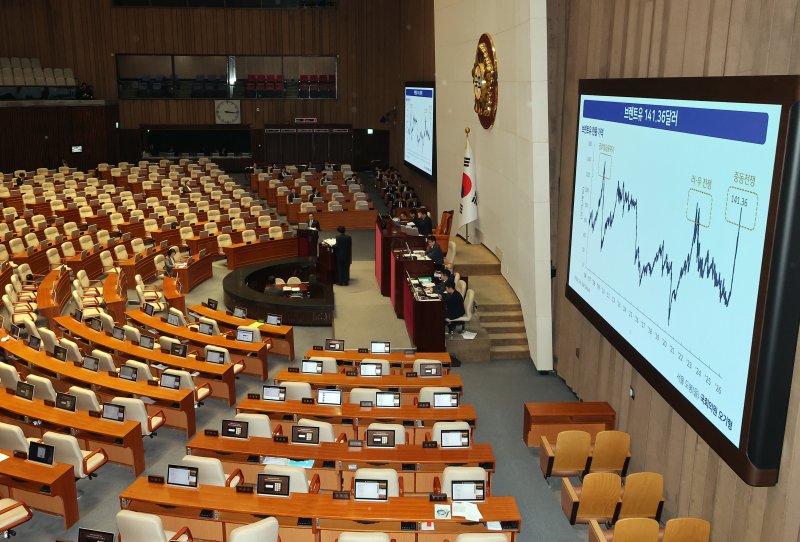
According to political circles on the 6th, the National Assembly of the Republic of Korea will conduct a four-day interpellation session starting on the 9th. On the 11th, when the economic interpellation session is held, next year's budget bill and policies regarding real estate, the stock market, and taxation are expected to be the main issues discussed.
First, a debate is expected regarding the government's expansionary fiscal stance. The government's proposed budget for next year amounts to 820.9 trillion won in total expenditures, a 12.8% increase from this year. Given that spending has been significantly increased based on improved tax revenue conditions, key subjects of scrutiny are expected to include whether large-scale fiscal investment can actually lead to a boost in growth rates and its impact on medium- and long-term fiscal soundness.
In particular, the National Growth Fund, which aims to raise over 200 trillion won over five years by combining private capital and policy financing, is also a major point of contention. The budget proposal for next year includes 1 trillion won in fiscal funds allocated for the establishment of the National Growth Fund. It is expected that the focus will be on whether investment effects commensurate with the fiscal injection can be achieved, and whether government finances can actually act as a catalyst to attract private capital.
Real estate policy is also a major battleground. Criticism is expected to be raised, primarily by the opposition party, that loan and tax regulations could make it difficult for actual buyers to secure financing and shrink the supply of jeonse and monthly rent. Since demand-suppression measures are implemented immediately while expanding supply takes time, the possibility that policy time lags could exacerbate market instability and whether stricter regulations will actually lead to housing price stability are cited as key issues.
The process of introducing single-stock leveraged ETFs, such as those for Samsung Electronics Co., Ltd. and SK hynix, reportedly spearheaded by former Cheong Wa Dae Policy Chief Kim Yong-bum, as well as the issue of financial authorities' responsibility, are also expected to come under scrutiny. Questions are likely to focus on Financial Services Commission Chairman Lee Eok-won regarding whether risk assessments, such as ETF stress tests, were sufficient prior to the system's introduction, the authorities' decision-making process, and the extent to which market volatility and potential losses for retail investors were taken into account.
The government's policy revision process is also a point of contention. Questions are expected to be raised regarding whether the policies underwent sufficient prior review and the predictability and consistency of economic policies, given that some tax reform measures, such as the Productive Finance ISA and the Comprehensive Real Estate Holding Tax, were revised following consultations between the government and the ruling party after their announcement.
The economic policy issues raised during this interpellation are expected to continue during the upcoming parliamentary audit and the Special Committee on Budget and Accounts' review of next year's budget and tax law amendments.
[email protected] Song Ji-won Reporter