"Sleeping in steel boxes instead of a hotel?"... Shock over Japan's Asian Games 'Container Athletes' Village'
- Input
- 2026-09-06 21:00:00
- Updated
- 2026-09-06 21:00:00
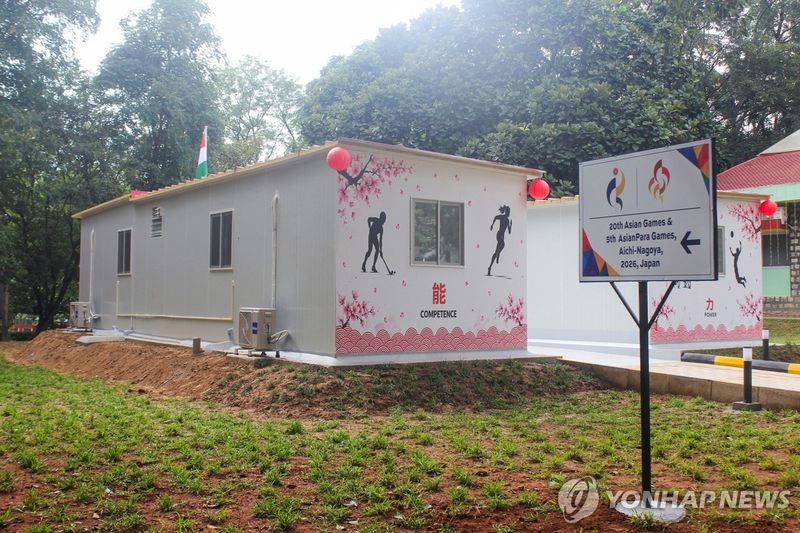
[Financial News] The unconventional operation of the athletes' village for the 2026 Aichi-Nagoya Asian Games is becoming a hot topic. Following the Japanese Organizing Committee's decision to cancel the construction of an official athletes' village, the Indian national team preparing for the Asian Games has set up 'container accommodations' at their home training grounds and has begun extreme pre-adaptation training.
On the 5th (Korean time), local Indian media outlets such as the Indian Express and The Times of India focused on the unique training environment of the Indian team, which is undergoing special training in preparation for the upcoming Aichi-Nagoya Asian Games.
The Aichi-Nagoya Asian Games Organizing Committee initially decided not to operate a traditional large-scale athletes' village to reduce the astronomical costs of hosting the Games. Instead, the plan is to provide athletes with three types of alternative accommodation options during the Games: containers, cruise ships, and existing hotels.
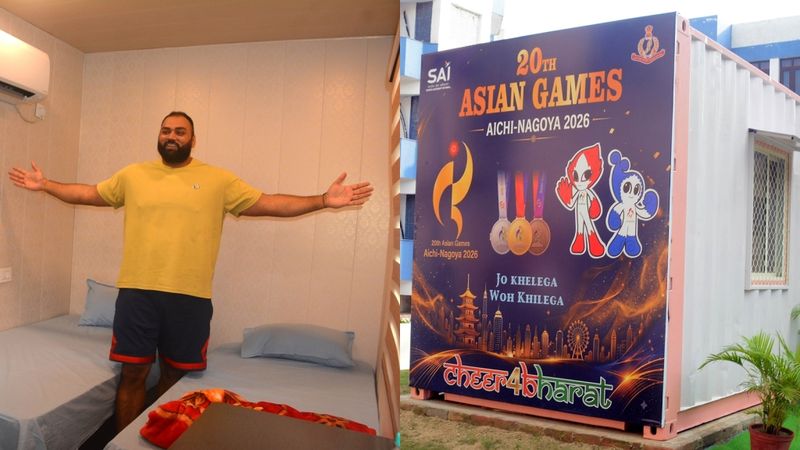
In response, the Society of Sport of India (SAI) acted swiftly. They installed container accommodations with dimensions similar to those actually used in Japan at national team training centers located in Patiala and Bengaluru, Punjab. These steel structures, measuring 40 feet (approx. 12.2m) wide and 8 feet (approx. 2.4m) long, are equipped with essential living facilities such as air conditioning, a kitchenette, a bathroom, and beds. According to local media, nine athletes have stayed and trained to adapt to the environment so far.
The Indian team's adaptation training is not limited to just sleeping quarters. The dining hall in the accommodation building serves local Japanese cuisine, such as ramen, sushi, robatayaki, and tempura, every day, allowing the team to adapt to the food as well. The container facility is scheduled to continue being utilized for national team athletes' adaptation training to the poor conditions of away games even after the Asian Games conclude.
The athletes are demonstrating a strong determination to win medals even in an unfamiliar environment.
"I naturally assumed there would be a proper athletes' village since it is a big competition like the Asian Games. I couldn't sleep properly on the first night," said national discus thrower Shima Kaliramna, expressing her determination. "However, this is also part of the adaptation process. Our ultimate goal is to wear a medal around our necks."
National shot putter Tejinder Pal Singh also showed a composed attitude, saying, "It reminds me of the time I lived crammed together with four or five people in the dormitory during my college days," and "It is essential for a national team member to steel their mindset in advance to prepare for unexpected difficulties. The effort to get used to the container accommodation is also part of that process."
Meanwhile, India plans to send a large delegation to the 20th Aichi-Nagoya Asian Games, including 503 athletes and 256 officials.
India is one of the Asian sports powerhouses, having won a total of 778 medals, including 183 gold, 238 silver, and 357 bronze medals at the Asian Games.
[email protected] Jeon Sang-il Reporter