Vicious Cycle of Retaliation: Iran War .... Iran Warns "South Korea's Support for U.S. Forces in the Strait of Hormuz Constitutes Participation in the War"
- Input
- 2026-09-06 15:05:44
- Updated
- 2026-09-06 15:05:44
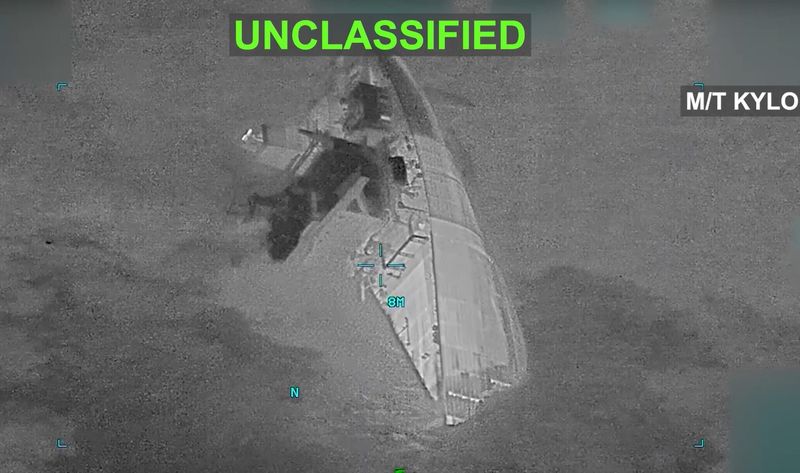
[Financial News] The armed conflict between the United States and Iran is escalating again amid a vicious cycle of retaliation, with no way out in sight.
Meanwhile, a senior Iranian official warned in a media interview that South Korea's support for U.S. military operations in the Strait of Hormuz would be regarded as participation in the war.
On the 5th (local time), Iran attacked three oil tankers and three U.S.-linked vessels passing through the Strait of Hormuz. The Islamic Revolutionary Guard Corps (IRGC) Navy said the attacks were retaliation for the United States striking three Iranian oil tankers earlier that day in response to Iran's ballistic-missile launch targeting a U.S. aircraft carrier and destroyers. In a statement that day, the IRGC said, "We attacked three oil tankers passing through an 'unauthorized route' in the Strait of Hormuz and three U.S.-linked vessels in other waters."
On the 6th, the IRGC confirmed that it had attacked one U.S. aircraft carrier and one destroyer with multiple ballistic missiles the previous day.
■ Iran: "The Retaliation Will Become Stronger and Expand Further" United States Central Command said it attacked three Iranian oil tankers in response to the IRGC firing ballistic missiles at a U.S. Navy aircraft carrier and two destroyers patrolling the area the previous day. The U.S. military said it disabled the Downey near Kharg Island, Iran's largest oil-export base, and the Stark 1 near Jask, and completely destroyed the Kylo in the Gulf of Oman. U.S. Central Commander Brad Cooper warned that additional attacks on Iran's crude-oil transport fleet were possible, saying, "If they attack two of our ships, we will strike three to impose a greater economic cost."
In response, Khatam al-Anbiya Central Headquarters, which commands the Iranian military, countered that if U.S. attacks continued, retaliation against U.S. warships "would be stronger than before, and the scope of the attacks could expand."
The armed confrontation between the two sides has intensified again since the U.S. military struck an Iranian rocket launcher used for laying mines in the Strait of Hormuz on the 30th of last month. Since then, the vicious cycle of retaliation has expanded, with Iran attacking U.S. military bases in Jordan and Kuwait and the United States again striking IRGC-related targets and oil tankers.
The IRGC announced, "These warships had interfered with Iranian vessels and participated in the naval blockade," adding that "they withdrew from the conflict zone after sustaining damage." It also said that it had attacked a U.S. surface drone attempting to enter the Strait of Hormuz.
■ Iranian Official: "South Korea's Cooperation with U.S. Military Operations in the Strait of Hormuz Constitutes Participation in the War" Meanwhile, Al Mayadeen, a pro-Iranian Lebanese media outlet, reported on the 4th (local time) that a senior Iranian official had warned that if South Korea became involved in confronting Iran in the Strait of Hormuz, it would be regarded as participation in the war.
According to the outlet, a senior Iranian security and political official said in an interview, "South Korea must not yield to U.S. pressure forcing it to cooperate with illegal U.S. military operations," and issued the warning.
The official said, "We will not tolerate any complicity in crimes that violate the Iranian people and their rights," and urged, "South Korea should not sacrifice its interests and reputation for the aggressive U.S. policies that undermine security and stability."
He also emphasized, "As long as U.S. illegal intervention, the blockade of Iran, and the economic war continue, restoring regional security will be impossible."
Fars News Agency, citing Al Mayadeen in reporting the official's remarks, warned, "The South Korean presidential office said that nothing had been decided regarding the U.S. president's pressure to participate in a war against Iran, but also stated that a 'search and rescue unit' could potentially be deployed to the Strait of Hormuz."
As tensions in the Strait of Hormuz persist and international oil prices remain high, U.S. gasoline prices over the Labor Day holiday are expected to reach an all-time high.
Ahead of Labor Day on the 7th, forecasts indicate that the U.S. national average gasoline price will reach an all-time high of $4.03 per gallon. According to figures compiled by the American Automobile Association (AAA), the U.S. national average gasoline price on the 3rd was approximately $4.14 per gallon, nearly $1 higher than last year's average. International oil prices are on an upward trend, having surpassed $90 per barrel again last week.
[email protected] Lee Seok-woo, International Specialist Reporter