Governor Wi Seong-gon: "Jeju Island Will Be the First Customer"... Sales Channels Expanded for Over 700 Social Solidarity Economy Businesses
- Input
- 2026-09-06 13:33:21
- Updated
- 2026-09-06 13:33:21
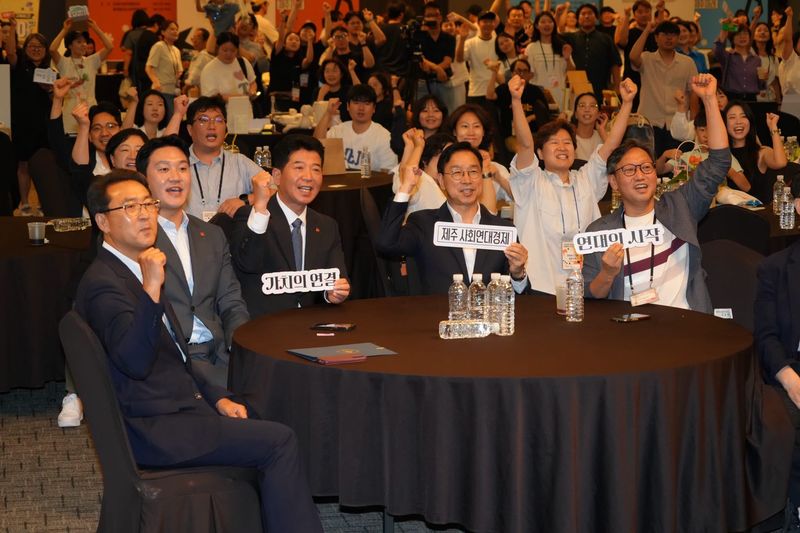
[Financial News Jeju = Reporter Jeong Yong-bok] With the passage of the Framework Act by the National Assembly of the Republic of Korea that unifies the social solidarity economy—which had been scattered across individual sectors such as social enterprises, cooperatives, and village enterprises—into a single policy framework, Jeju is moving to expand sales channels and public procurement for approximately 700 social solidarity economy organizations.
According to Jeju Special Self-Governing Province on the 6th, the '2026 Jeju Social Solidarity Economy Commemorative Week' event was held the previous day at the Halla Convention Center of Cheju Halla University under the theme 'Connecting Values, Starting Solidarity'.
The event, hosted by Jeju Province and co-organized by nine organizations affiliated with the Jeju Social Economy Solidarity Council, was attended by approximately 300 people, including Jeju Governor Wi Seong-gon, Chairman of the Jeju Special Self-Governing Provincial Council Song Young-hoon, social solidarity economy organization workers, and officials from related agencies.
This event is also significant as it marks the first Social Solidarity Economy Commemorative Week held in Jeju since the Framework Act on Social Solidarity Economy passed the National Assembly of the Republic of Korea plenary session on August 20. It crossed the threshold of the National Assembly of the Republic of Korea 13 years after the bill was first proposed in 2014. It is scheduled to take effect six months after its promulgation, following approval by the Cabinet.
The social solidarity economy refers to economic activities that pursue community interests and social values along with economic value, based on cooperation and solidarity. Representative examples include social enterprises, cooperatives, community enterprises, self-sufficiency enterprises, and social ventures.
Previously, support systems for these organizations were fragmented across ministries and individual laws. The new Framework Act focused on establishing an institutional foundation to link and coordinate social solidarity economy policies at the national level and to integrate support systems, including finance, sales channels, and public services.
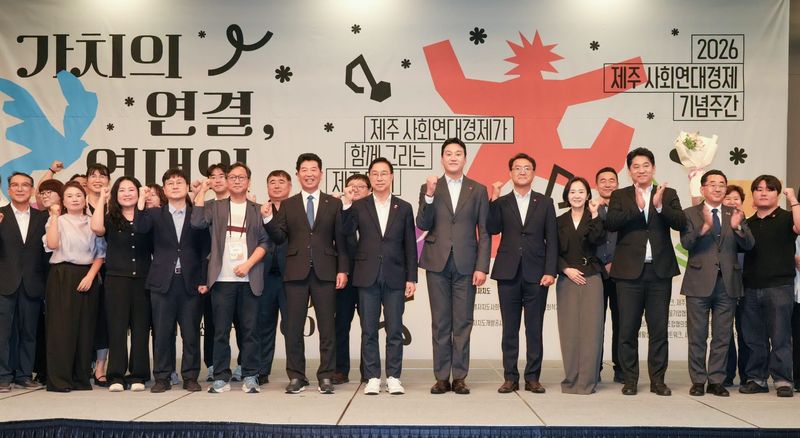
Jeju has already grown to the point where there are approximately 700 social solidarity economy organizations. Following this quantitative growth, the challenge now is how to establish corporate self-reliance, stable sales channels, and a compensation system for social value.
This is also the reason why Jeju Province emphasized the expansion of public procurement on this day. Governor Wi Seong-gon stated, "It is very important to realize social values and solve local problems based on those values," adding, "Jeju Province will become the first customer to purchase the products and services produced by social solidarity economy organizations so that they can develop robustly."
He continued by emphasizing, "The Framework Act on Social Solidarity Economy will serve as a major pillar in creating a social solidarity economy that solves local problems on its own," adding, "We will ensure that community issues and local pending matters are resolved through the social solidarity economy."
It is also noteworthy that Jeju is playing a role as a demonstration region in the government's social solidarity economy policy. This year, Jeju Province had two projects simultaneously selected among metropolitan local governments in the Ministry of the Interior and Safety (MOIS)'s 'Social Solidarity Economy Innovation Model Discovery and Dissemination Project.'
This project connects the value of Jeju agricultural products with gastronomic tourism and creates a local circular economy model by utilizing the Seongsan Port waterway and UNESCO heritage. It is an experiment to generate income and local consumption by linking local agricultural products, tourism, ports, and community assets through a social solidarity economy approach.
Actual expansion of sales channels also took place at the event venue. Twenty-six booths were operated across five sectors—local, youth, environment, care, and solidarity—showcasing products and services from social solidarity economy enterprises. Experiential events were also organized, such as making flowerpots using waste plastic and self-care programs.
Ten social solidarity economy enterprises participated in the sales channel consultation meeting, which invited purchasing managers from major distribution networks and public institutions. This indicates that the focus was on connecting the commemorative event to actual purchases and transactions, rather than merely serving as corporate promotion.
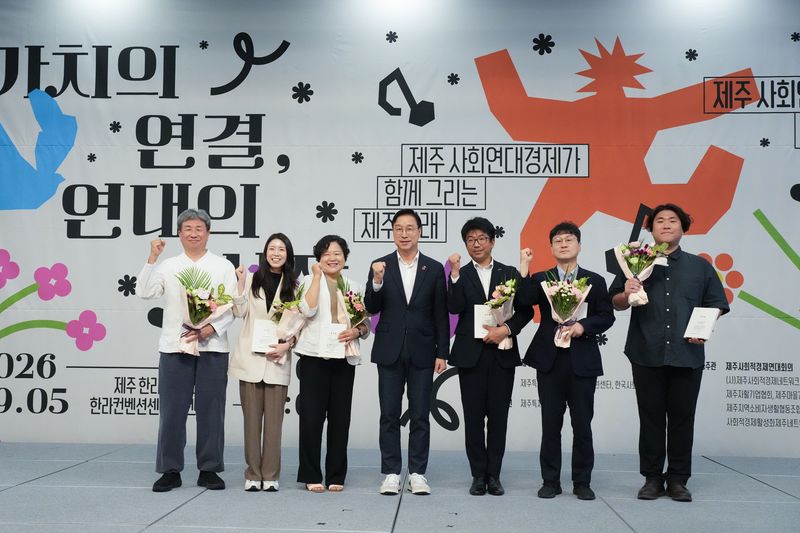
Awards were also presented to companies and individuals who have created social value. Three organizations—SSE Korea, The Green Box, and Jeju Sallim—and three individuals received commendations from the Governor of Jeju for their contributions to the revitalization of the social solidarity economy.
At the 'Social Value Realization Awards,' the Gujwa Village Travel Agency Cooperative received the top award in the social economy organization category for creating local jobs and returning profits to the community through haenyeo (female diver) experiences and the operation of the 'Uncle Cafe.' Jeongseong Enterprise, Bogujeong, and Korea Midland Power's Jeju Power Plant were also recognized for their achievements in realizing social value.
Jeju is also pursuing policies to measure and reward the social value created by social economy enterprises, such as employment, environmental impact, and contributions to the local community. This approach ensures that policy support reflects the actual achievements made within the local community, rather than evaluating companies solely on revenue and profit.
Following the implementation of the Framework Act, it becomes crucial to how closely these Jeju-style policies are linked with the national support system. The success of the next phase is expected to be determined by how much the number of self-sustaining enterprises among the approximately 700 organizations is increased, as well as by linking government-level financial and sales channel support with Jeju Province's public procurement and regionally specialized businesses.
[email protected] Jeong Yong-bok Reporter