“He Went to a Female Officer’s Quarters and Said, ‘Let’s Have Fun’”... Soldier Discharged After Military Discipline Training Loses Lawsuit
- Input
- 2026-09-07 07:00:00
- Updated
- 2026-09-07 07:00:00
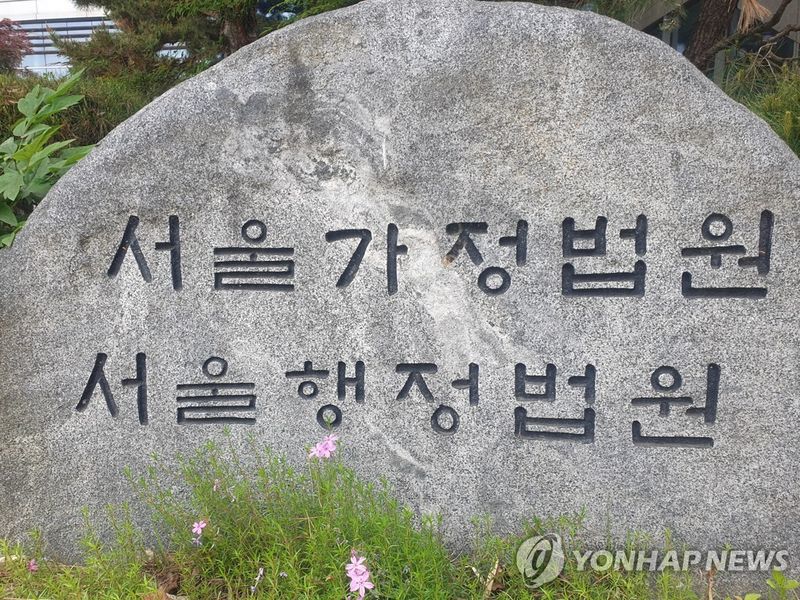
[Financial News] A soldier who was disciplined with five days of military discipline training after visiting a female staff sergeant’s quarters during his military service and asking to meet privately later filed a lawsuit seeking to overturn the disciplinary action after his discharge. The court dismissed the case.
According to legal sources on the 7th, the Seoul Administrative Court’s Administrative Division 2, presided over by Presiding Judge Gong Hyun-jin, recently dismissed a lawsuit filed by former sergeant A against the commander of an air wing, seeking to overturn the military discipline training order. Dismissal means ending a lawsuit without ruling on its merits because it fails to meet the requirements for litigation.
A, who belonged to the base battalion’s maintenance support unit at a Republic of Korea Air Force air wing, was referred to a disciplinary committee while serving as a sergeant after being assigned to night duty. At around 9 p.m. on the day of the incident, he revisited the quarters of Staff Sergeant C, a female officer whom he had contacted earlier that afternoon about repairing an air conditioner. After photographing the filter, he did not leave immediately and made personal remarks to C, including, “Let’s have fun together.”
Military authorities determined that A’s conduct violated the duty to maintain the dignity expected of a service member and imposed five days of military discipline training. Under the current Military Service Act, days spent in military discipline training do not count toward active-duty service. As a result, A was discharged five days later than originally scheduled.
After his discharge, A filed an administrative lawsuit challenging the order. His side argued, “The exchange was merely an ordinary conversation during the course of work, so there was no basis for disciplinary action. Even if the conduct was improper, it was an impulsive act, making the punishment excessive.” A also maintained that the delayed discharge postponed his promotion, causing lost pay differences, and that he would suffer practical disadvantages in future appointments to public office.
The court determined that A no longer had a “legal interest” in maintaining the lawsuit because he had already been discharged.
The court noted, “The plaintiff received all pay for the period of military discipline training, and the training itself did not result in a change in rank or a direct reduction in pay.” It added, “Any loss of the pay difference resulting from an extension of service or delayed promotion amounts only to an indirect, factual and economic disadvantage arising under statutory provisions.”
The court continued, “A soldier’s disciplinary record from service is not entered in documents issued externally, such as a certificate of military service history, and there is no statutory basis for it to affect the right to hold public office.” It further ruled, “Even if the order were canceled, the plaintiff, who has already lost his status as a service member, could not be reinstated, nor could the person with authority to promote him grant a retroactive promotion. Restoration to the original position is therefore impossible.”
The court also found that the disciplinary action would have been lawful even if it had reached the merits. It stated, “A remark made to a superior after revisiting, for work-related reasons at night, the quarters where a woman lived alone cannot be regarded as an ordinary remark by a service member. It constitutes conduct damaging to dignity that could undermine the internal hierarchical order of the military and erode public trust.” The court added, “Imposing five days of military discipline training, the minimum under the disciplinary sentencing standards in a Ministry of National Defense directive, did not constitute a deviation from or abuse of discretion.”
[email protected] Chang-hoon Lee Reporter