[Exclusive] South Korea Prepares Strategy for ‘Quarantine Easing’ in CPTPP Agricultural Talks
- Input
- 2026-09-06 17:39:16
- Updated
- 2026-09-06 17:39:16
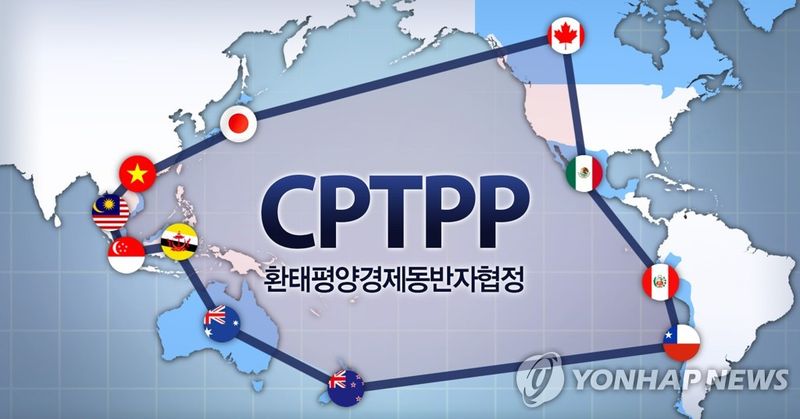
As the government pushes for South Korea’s accession to the Comprehensive and Progressive Agreement for Trans-Pacific Partnership (CPTPP), the Ministry of Agriculture, Food and Rural Affairs (MAFRA) is preparing negotiation strategies that reflect the potential impact of eased quarantine measures, sources said.
The aim is to prepare negotiation options that take into account the possibility of a surge in imports following the lifting of quarantine barriers, rather than calculating losses solely on the basis of tariff elimination. Agricultural groups, however, criticized the move, saying it effectively presupposes CPTPP accession rather than simply assessing potential damage.
A research plan titled “Responding to the New Trade Order in the Agricultural Sector,” submitted to the office of People Power Party lawmaker Kang Seung-gyu by MAFRA and the Korea Rural Economic Institute (KREI), includes the preparation of basic negotiation materials and response strategies for use if South Korea joins the CPTPP, as well as the selection of sensitive products. It also calls for an assessment of the impact on domestic agriculture by product in the event of eased sanitary and phytosanitary (SPS) measures. A separate study is being conducted on the impact on forest products. The research is scheduled for completion in December.
The study focuses on analyzing the damage that eased quarantine measures could cause for individual products. Imports previously blocked by quarantine restrictions could deliver a greater shock than additional tariff cuts. South Korea has already concluded free trade agreements (FTAs) with 10 of the 12 CPTPP members, and its agricultural market-opening rate exceeds 90%.
In 2022, the government estimated that tariff elimination following CPTPP accession could reduce agricultural production by up to 440 billion won annually on average over 15 years. At the time, however, it did not include the impact of eased quarantine measures. Once that factor is taken into account, the actual decline in production is expected to be much larger.
The study will specifically examine scenarios for minimizing agricultural damage if South Korea joins the CPTPP. It is expected to include defensive strategies that could be used at the negotiating table, such as excluding sensitive products from tariff concessions, establishing tariff-rate quotas (TRQs), and invoking emergency import restrictions. In effect, the government is preparing an agricultural “red line.” A KREI official explained, “We are also studying support measures for farmers affected by the damage,” adding, “This is research for a preliminary review, not for accession itself.”
Kang Seung-gyu criticized the move, saying, “Proceeding with accession on the premise of eased quarantine measures, whose actual scale of damage is difficult even to estimate, is an administrative process that puts the cart before the horse. Apple growers are likely to suffer significant damage.” An MAFRA official said, “We are carefully reviewing whether to pursue accession after gathering the views of the agricultural sector.”
Unlike the existing World Trade Organization (WTO) system, the CPTPP’s SPS rules restrict the quarantine authority of importing countries. If the two countries fail to reach agreement on quarantine measures, the rules require the issue to be resolved within 180 days through “cooperative technical consultations.” This could undermine the practice of effectively blocking imports by delaying quarantine procedures. In addition, quarantine areas must be divided not by country but into smaller regional or zone-based units. Imports must be allowed if it is proven that a particular farm is free of pests and diseases. Pressure to open the market to fruits such as apples and pears, as well as livestock products, is therefore likely to intensify.
[email protected] Choi Yong-jun, Agriculture Specialist Reporter