"If You Are Affected by a Public Institution Relocation... Be Careful About 'This Area'"
- Input
- 2026-09-06 15:24:02
- Updated
- 2026-09-06 15:24:02
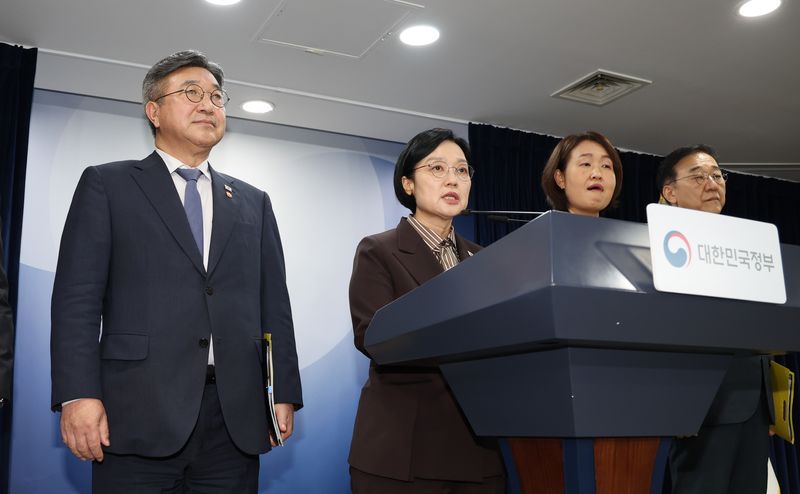
[Financial News] As the government announced the second relocation of public institutions and emphasized that the family relocation rate reached 70% during the first relocation, calls are growing to focus on long-term effects rather than short-term results. Except for some major cities, including Busan and Jeju Province, cities recorded below-average rates of married employees relocating with their families. Although the government plans to raise the short-term relocation rate by expanding cash-based support, critics argue that it should first focus on building infrastructure and improving living conditions.
Family Relocation Rate Rose, but Small Cities Remained Below Average
According to the government on the 6th, the family relocation rate reached approximately 70% through the first relocation of public institutions, carried out from 2005 to 2019. Through the second relocation of public institutions to regional areas, the government plans to raise the family relocation rate above the previous level.The fact that 70% of married employees relocated with their families to cities hosting relocated public institutions is viewed positively. As of December last year, when relocation figures for both families and single-person households were examined, Busan recorded 86%, Jeju Province 83.2%, and North Jeolla Province 77.6%, all above the 71% average. Even taking into account the inclusion of single-person households, the figures show that many married employees moved with their families over roughly 14 years.
However, cities other than some major ones, such as Busan and Jeju Province, were found to be below the average. The closer an area was to the Seoul metropolitan area, the lower its residential rate tended to be. Gyeongsangbuk-do recorded 51.3%, while North Chungcheong Province recorded 50.5%. Gangwon State barely exceeded the average at 71.8%. In Gyeongsangbuk-do and North Chungcheong Province, public transportation such as KTX makes commuting possible. Even when employees live in official residences or on their own, many travel to their homes in the Seoul metropolitan area on weekends.
Commuter buses running between Innovation Cities and the Seoul metropolitan area also support this pattern. By the end of last year, there were 197 commuter buses in operation. Although there may be various reasons, including business trips to the Seoul metropolitan area, critics said the practice runs counter to the original purpose of relocating public institutions—to revitalize regional areas. In response, the relevant institutions proceeded with abolishing commuter services to the Seoul metropolitan area through June.
Infrastructure Should Come Before Cash-Based Support
To address the problems associated with the first relocation of public institutions, the second relocation substantially expanded cash-based support to encourage moves to regional areas. In addition to the existing support, including the 200,000 won paid during the first relocation and moving expenses, employees will receive up to 700,000 won per month through long-distance preferential allowances and early-relocation allowances. The measure is understood as an effort to increase the early relocation rate while also promoting settlement.However, academics and the construction industry argued that building infrastructure is more urgent than providing cash-based support to raise the relocation rate. Although the first relocation established a certain level of infrastructure, the actual relocation rate remains low, making schools, hospitals, and other facilities needed for residents a priority. An official from the construction industry explained, "Telling people to relocate because they will receive cash does not help increase the actual relocation rate," adding, "The period when the actual family relocation rate rose was not the early stage of the move, but the later stage, after infrastructure construction had progressed to a certain extent." Another industry official also said, "Providing cash-based support now merely as a way to appease people will have absolutely no effect."
Some also argued that the issue should be viewed from a long-term rather than short-term perspective. Kim Jae-sik, vice chairman of the Korea Housing Association, emphasized, "Even if this support appears ineffective right away, the settlement rate will ultimately rise in the long term," adding, "The same was true of Sejong City, Busan, and Jinju—the settlement rate was higher in the later period than in the early stages."
[email protected] Kim Jaeong-su Reporter